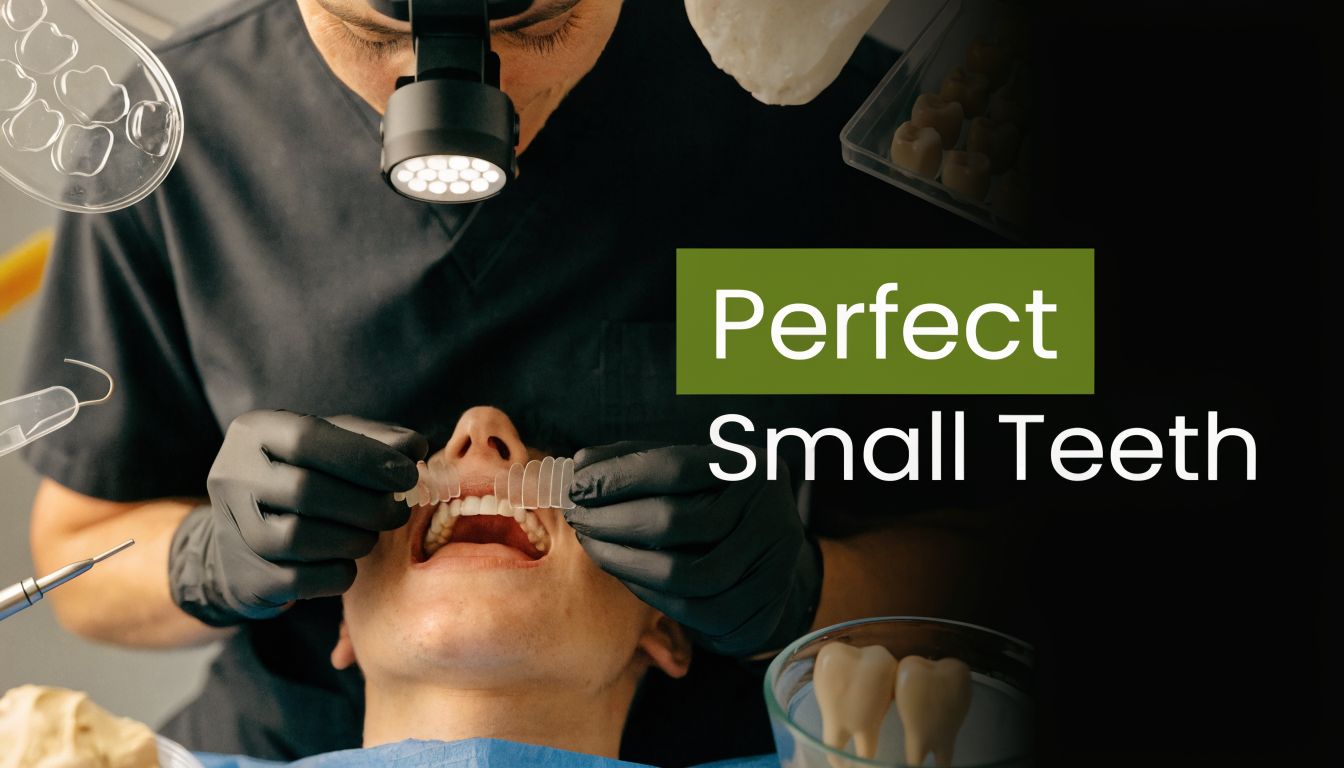
If you’ve spent years smiling with your lips closed, tilting your head in photos, or feeling like your front teeth look too short or too narrow, you’re not overthinking it. Small teeth can change the whole balance of a smile. They can make spacing more noticeable, throw off symmetry, and leave people feeling self-conscious even when their teeth are healthy.
Porcelain veneers are one of the most effective ways to reshape that smile without making it look artificial. They can add proportion, improve contour, and create a more even look across the front teeth. They’re also widely used. The global dental veneers market reached $1,816.71 million in 2026, with porcelain veneers as the leading choice, and reported survival rates are about 96% after 5 years and 83% after 20 years according to 2026 veneer market and survival data.
Your Confident Smile Awaits in Vienna VA
Those inquiring about porcelain veneers small teeth rarely seek a dramatic celebrity smile. They want their teeth to look like they fit their face. They want the front teeth to feel less tiny, less uneven, or less worn down. They want to stop noticing the same few teeth every time they look in the mirror.
That concern usually falls into a few familiar patterns. Some patients naturally have smaller lateral incisors or peg-shaped teeth. Others have teeth that look short because years of grinding have worn them down. Some have normal-sized teeth that appear small because of spacing, gum display, or the way the smile line frames them.
What veneers can change
Porcelain veneers are thin custom restorations bonded to the front of the teeth. When they’re planned well, they can improve:
- Width and length so teeth look more proportional
- Shape when one tooth is tapered or undersized
- Symmetry across the front teeth
- Surface appearance if the enamel is worn or uneven
- Smile balance when gaps or minor alignment issues draw attention
Patients often hear veneers described as “instant orthodontics.” That can be true in the right case, but it only works when the tooth shape, bite, and gum line are all considered together.
Small teeth usually aren’t one isolated problem. Size, spacing, gum display, and bite all interact. Good veneer planning treats the whole smile, not just the tooth in the middle of the photo.
The best porcelain veneer results don’t look like veneers. They look like naturally proportioned teeth that were always meant to be there.
Are Veneers the Right Choice for Your Small Teeth

The first question isn’t “Can veneers work?” It’s “Why do the teeth look small in the first place?” That answer matters because the right treatment depends on the cause.
Common reasons teeth look too small
Some patients have microdontia, meaning one or more teeth developed smaller than expected. This often affects the upper lateral incisors and can create the classic peg lateral look.
In other cases, the teeth aren’t undersized. They may only appear that way because of:
- Bruxism, which wears edges down over time
- Spacing, which makes each tooth look narrower
- Mild misalignment, which changes how width is seen from the front
- Excess gum display, which hides part of the visible tooth structure
- Asymmetry, where one tooth is noticeably smaller than its partner
What makes someone a good veneer candidate
A strong veneer candidate usually has healthy gums, manageable bite forces, and enough enamel for reliable bonding. Enamel matters because porcelain bonds best to enamel, not to heavily restored surfaces or large areas of exposed dentin.
That’s especially important with small teeth. A 2023 systematic review found that overall 5-year survival for porcelain veneers was 94%, but survival dropped to 87% for small teeth with reduced enamel surface area because of higher debonding risk, as summarized in this review of survival rates for veneers on small teeth.
Practical rule: if a tooth is small, tapered, and has limited bonding surface, bite analysis becomes more important, not less.
What the consultation should uncover
A veneer consultation for small teeth should answer a few specific questions:
Is the problem size, position, or both?
If spacing or rotation is the bigger issue, orthodontic movement may need to come first.How much enamel is available?
This affects long-term bonding reliability.Is grinding part of the story?
If it is, the treatment plan has to include protection afterward.Would the smile still look short because of the gums?
Sometimes reshaping the gum line is part of the final result.
A careful diagnosis keeps veneers from becoming a shortcut that fixes one issue while creating another.
Porcelain vs Composite Veneers A Clear Comparison
At our Vienna office, this is often the point where patients ask the most practical question: “Which one will look right on my teeth?” For small teeth, that question matters because the material affects not just color, but edge shape, surface texture, stain resistance, and how much refinement we can build into the final smile.
Porcelain and composite can both improve small or undersized front teeth. The right choice depends on the kind of change you want, how long you want it to last, and whether you prefer the lower upfront cost of composite or the stronger long-term polish and color stability of porcelain.
Porcelain vs. Composite Veneers At a Glance
| Feature | Porcelain Veneers | Composite Veneers |
|---|---|---|
| Appearance | More enamel-like translucency and polish | Good cosmetic improvement, but usually less lifelike |
| Longevity | Often lasts longer with good care | Usually needs earlier maintenance or replacement |
| Best use | Strong option for reshaping small, uneven, or worn front teeth | Useful for limited shape changes and touch-ups |
| Lab work | Usually made in a dental lab | Usually sculpted directly on the tooth |
| Stain resistance | Better resistance to coffee, tea, and surface discoloration | More likely to show staining and wear over time |
| Repairability | Often replaced if chipped or fractured | Often easier to repair chairside |
| Upfront cost | Higher | Lower |
The trade-off is straightforward. Porcelain usually gives the more polished and stable result. Composite is more budget-friendly and easier to adjust, but it tends to lose surface luster sooner and can require more upkeep.
For patients with small teeth, porcelain is often the better fit when several front teeth need to be lengthened or widened in a way that still looks natural. It allows tighter control over symmetry, contour, and light reflection, which matters if the goal is a smile that blends in rather than looking “done.”
Composite works well for smaller changes. I commonly recommend it when a patient wants to close a minor space, improve one undersized tooth, or make a conservative cosmetic change before committing to a larger smile redesign.
At Vienna Implant and Family Dentistry, we do not choose the material first and force the smile design to match it. Dr. Chauhan evaluates the tooth size, bite pattern, smile line, and your goals, then recommends the option that fits the case. That keeps the plan personal and keeps surprises to a minimum.
For a closer look at the pros, cons, and maintenance differences, read our guide to composite veneers vs porcelain.
The best veneer material is the one that matches the job. For small teeth that need precise reshaping across the smile, porcelain usually gives the cleaner and more stable finish.
Your Veneer Journey at Our Vienna VA Dental Office

The veneer process feels much easier when you know what each appointment is for. For small teeth, precision matters at every step because the goal isn’t just to make teeth bigger. It’s to make them look naturally proportioned, comfortable, and cleanable.
Step one begins with planning
The first visit focuses on diagnosis and design. Photos, digital scans, and a bite evaluation help determine what’s causing the small-tooth appearance and whether veneers alone will solve it.
This is also where smile design matters. A digital preview can show how adding width or length changes the smile line, lip support, and overall balance. That planning stage prevents a common cosmetic mistake: making the teeth larger without making them look natural.
Step two is careful tooth preparation
Porcelain veneers for small teeth usually require measured enamel reduction so the finished restoration sits flush instead of looking thick. For optimal aesthetics and health, preparation typically needs 0.5 to 0.7 mm of enamel reduction, and insufficient preparation can lead to bulky contours and gum irritation, according to this overview of proper veneer preparation for small teeth.
That number matters. Too little reduction can leave the veneer overcontoured. Too much can remove enamel that would have helped create a stronger bond.
Veneer prep should be deliberate, not aggressive. The point is to create room for porcelain, not to cut away healthy tooth structure unnecessarily.
During this visit, local anesthesia is typically used if needed for comfort. Impressions or digital scans are then sent for fabrication, and temporary veneers may be placed if the case calls for them.
Step three is the try-in and final bond
At the delivery visit, each veneer is checked for fit, contour, color, and how it interacts with speech and bite. This is the moment to verify that the smile looks balanced from every angle, not just straight on.
Bonding is the most technique-sensitive part of the process. Isolation, surface preparation, and cement selection all affect long-term performance. If a patient is anxious about treatment, comfort options can make the appointment much more manageable, especially when multiple veneers are being placed.
What patients usually notice first
Most patients notice three things right away:
- Their smile looks fuller, not just whiter
- The front teeth match each other better
- The teeth still feel like teeth, not bulky shells
The best veneer cases don’t announce themselves. They remove the distraction that small teeth used to create.
Exploring Alternatives to Porcelain Veneers
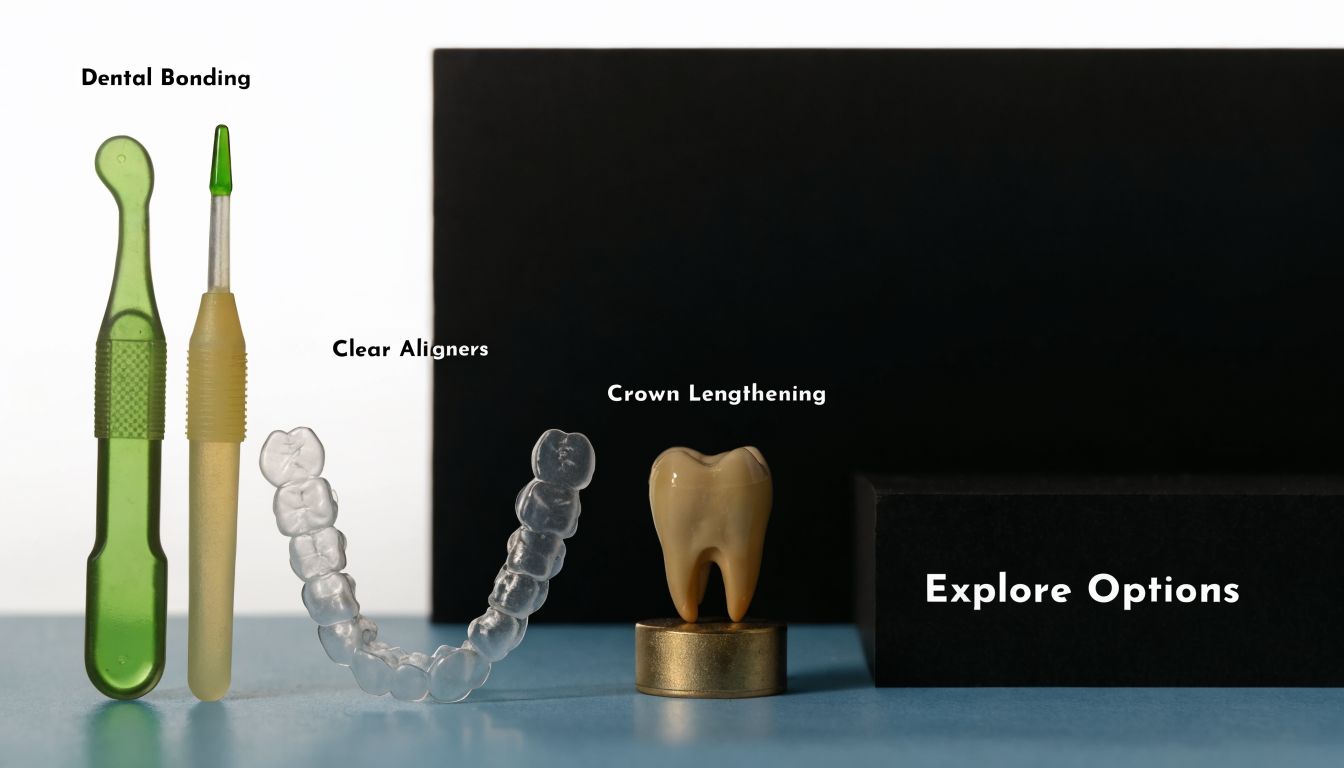
Porcelain veneers aren’t the only way to improve small teeth. In many cases, they’re the best cosmetic answer. In other cases, another treatment works better on its own, or a combined approach gives a healthier and more stable result.
When another treatment may fit better
Composite bonding can be a good option when the change needed is limited. It can add width to a narrow tooth, soften a small gap, or improve a slightly undersized lateral incisor without committing to porcelain right away.
Orthodontic treatment, including clear aligners, may be the better starting point when the teeth are crowded, rotated, or widely spaced. Moving teeth into a better position first can reduce how much restorative work is needed later.
Crowns may be more appropriate when the tooth is heavily restored, structurally weak, or missing too much natural enamel for a predictable veneer bond.
Gum reshaping can help when the teeth look short because gum tissue is covering too much visible tooth. In some smiles, revealing more natural crown height changes the proportions enough that fewer cosmetic restorations are needed.
The financial side over time
Upfront cost and long-term value aren’t always the same thing. A 2025 ADA report analyzing 10-year costs found that porcelain veneers cost more initially, but their lower replacement rate can make them more cost-effective over a lifetime than composite bonding, which may need more frequent repairs and replacements, according to this summary of veneers and long-term cost considerations.
That doesn’t mean porcelain is always the right financial choice. It means the least expensive starting point isn’t always the least expensive path over the years.
A smart treatment plan weighs what the smile needs now, what the teeth can support biologically, and how often the work may need maintenance later.
A balanced way to choose
A practical way to decide is to ask:
- Do I need subtle improvement or a full redesign?
- Is my bite stable enough for veneers now?
- Would tooth movement reduce the amount of cosmetic dentistry needed?
- Am I choosing based on today’s price or long-term upkeep?
The right answer is personal. Good cosmetic treatment respects both the smile and the structure underneath it.
Longevity and Aftercare for Your New Smile

A common question I hear in our Vienna office is simple. “Will they feel like my teeth, and how long will they last?”
After veneers are bonded, patients usually adjust to the new shape quickly. The goal at Vienna Implant and Family Dentistry is not a smile that looks done. It is a smile that feels comfortable at work, in photos, and over years of normal use.
What helps veneers last
Porcelain veneers often hold up for many years with good planning, careful bonding, and healthy habits at home. Our own guide on how long porcelain veneers can last with proper care explains the usual lifespan and the factors that shorten or protect it.
Placement is only part of the equation. Long-term success also depends on gum health, bite forces, and whether a patient grinds, clenches, or chews on hard objects.
I tell patients this clearly. Beautiful veneers are not high-maintenance, but they are not maintenance-free either.
Daily care that protects your smile
Good aftercare is straightforward:
- Brush and floss every day to keep the margin where veneer meets tooth clean and the gums healthy.
- Do not use your teeth as tools for opening packages, biting nails, or tearing plastic.
- Wear a nightguard if we recommend one because grinding can chip porcelain or stress the underlying tooth.
- Keep recall visits on schedule so we can check the bite, polish where needed, and catch small problems early.
Coffee, tea, and normal meals are usually not what cause trouble. Repeated pressure, neglected hygiene, and delayed follow-up visits are far more common reasons veneers need repair sooner than expected.
For patients with naturally small teeth, aftercare also includes protecting the proportions we created. If the bite starts to shift or a veneer edge chips, even a small change can affect symmetry. That is why I like seeing veneer patients for regular reviews here in Vienna, especially during the first year.
Veneers last best when the dentistry is done carefully and the bite is respected afterward.
Patients do well when they treat veneers the same way they would protect healthy natural teeth. Clean them well, protect them from grinding, and let us monitor them over time.
Begin Your Smile Transformation in Vienna Today
Small teeth can make a smile look unfinished, uneven, or younger than you want it to look. The right treatment can change that in a way that still feels natural to your face.
Porcelain veneers are often an excellent option when the goal is to improve shape, proportion, and symmetry with a polished long-term result. The key is choosing treatment based on diagnosis, not trends.
If you’re in Vienna, VA or nearby Northern Virginia communities and you want honest guidance about your options, schedule a cosmetic consultation with Dr. Vikram Chauhan at Vienna Implant and Family Dentistry. You can also review what veneers may cost before your visit so you can plan with confidence.
Frequently Asked Questions About Porcelain Veneers
| Question | Answer |
|---|---|
| Do veneers ruin healthy teeth? | No. Veneers do require preparation in many cases, but the goal is conservative reshaping so the porcelain fits naturally. Good planning preserves as much healthy structure as possible. |
| Are veneers a good option for peg laterals? | Often, yes. Veneers can work very well for peg-shaped lateral incisors because they can improve both width and contour in a controlled way. |
| Will my veneers look too big if my teeth are small now? | They shouldn’t. The entire design process is meant to avoid that. Tooth size has to match the face, lip line, and neighboring teeth. |
| Is the procedure painful? | Most patients tolerate veneer treatment very well. Local anesthesia is used when needed, and anxious patients can often benefit from comfort-focused options. |
| Can one small tooth be treated without doing the whole smile? | Yes, sometimes. A single veneer or bonding treatment can work if the shade, shape, and symmetry can still be matched well. |
| Are veneers the only fix for small teeth? | No. Bonding, clear aligners, crowns, or gum reshaping may be better depending on the reason the teeth look small. |
| How do I know whether porcelain veneers small teeth treatment is right for me? | The answer depends on enamel, bite, gum health, and your cosmetic goals. A consultation with photos, scans, and a bite review is the best way to decide. |