A dark spot on a tooth, a sudden zing with cold water, or a dull ache when you chew can send your mind straight to the worst-case scenario. Many patients in Vienna ask the same question when that happens: can a decaying tooth be saved?
In many cases, yes, it can.
Decay is common, but it isn't something to ignore and hope away. The good news is that modern dentistry gives us several ways to stop the damage, remove infection, and restore strength without losing the tooth. The earlier we see the problem, the more conservative the solution usually is.
Your Guide to Restoring a Healthy Smile in Vienna VA
A decaying tooth doesn't usually go from healthy to hopeless overnight. Most of the time, there is a window where we can intervene and protect the tooth before the damage becomes too advanced. That matters because preserving your natural tooth is almost always the first goal.
Patients are often surprised to learn that treatment depends on where the decay is, how deep it has traveled, and how much healthy tooth is still left. A small cavity may only need a filling. A more weakened tooth may need a crown. If the decay has reached the nerve, root canal therapy may be the right way to save it instead of removing it.
What doesn't work is waiting for pain to become severe. Tooth decay can keep spreading even during periods when symptoms come and go.
Practical rule: If a tooth feels different, looks darker, traps food, or reacts to hot, cold, or sweets, have it checked before the problem gets deeper.
For worried patients, the most important point is simple. A decayed tooth is often treatable, and modern care is far more comfortable than many people expect. Clear diagnosis, staged treatment, and comfort options can turn a stressful dental problem into a manageable one.
Understanding the Stages of Tooth Decay
Tooth decay behaves a lot like a pothole in a road. It starts small. If nobody repairs it, the surface breaks down further, and the damage spreads into the deeper structure.
Early enamel changes
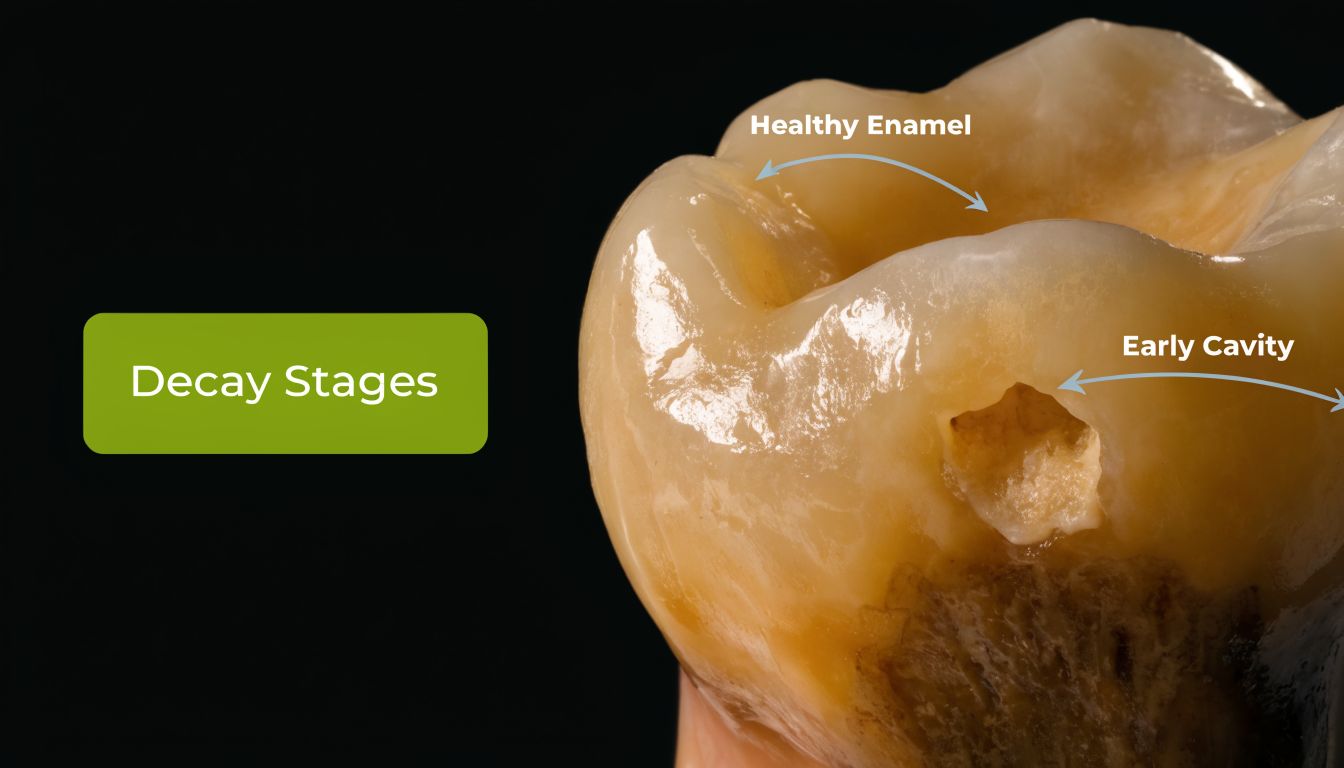
The first stage often affects the enamel, which is the hard outer shell of the tooth. You may not feel anything yet. Sometimes patients notice a chalky area, a faint dark spot, or no visible change at all.
At this point, the problem is still limited to the outer layer. That's one reason routine exams matter so much. These early changes are easier to catch when they aren't obvious at home.
When a cavity forms
Once the enamel surface breaks down, a true cavity forms. Food can collect more easily, brushing may not fully clean the area, and decay can move forward faster. A tooth may start to feel sensitive to sweets or temperature.
When cavities remain small and confined to the enamel or early dentin layers, they can usually be treated with simple dental fillings, as noted in MedicineNet's explanation of when rotting teeth can be saved. If you're unsure whether what you're feeling sounds like early decay, this guide on how to tell if you have a cavity can help you spot common warning signs.
Dentin decay and deeper damage
Beneath enamel is dentin, a softer layer. Once decay reaches dentin, it tends to move more quickly. Patients often report more noticeable sensitivity, discomfort with biting, or a visible hole in the tooth.
This is the stage where a small problem can become a structural one. Even if the tooth can still be saved, it may need more than a simple filling to hold up well over time.
- Common clues: lingering sensitivity, food packing between teeth, rough edges, or a tooth that feels weak
- Why timing matters: deeper decay removes more healthy structure, so the restoration usually becomes more involved
- What to avoid: delaying care because the pain "isn't that bad yet"
Pulp involvement
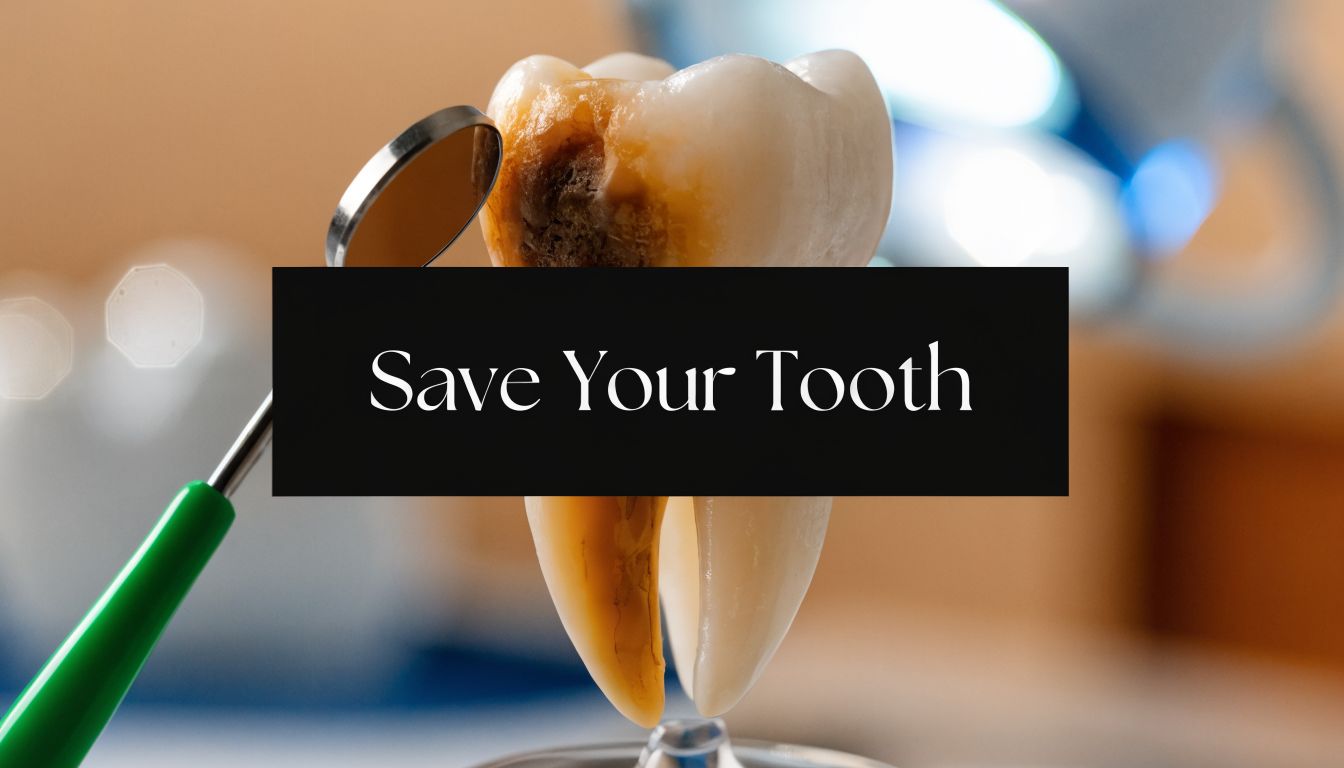
At the center of the tooth is the pulp, where the nerve and blood supply live. If decay reaches this area, the tooth can become inflamed or infected. That may cause spontaneous pain, throbbing, swelling, or tenderness when chewing.
At that stage, saving the tooth is still often possible, but treatment becomes more urgent.
Deep decay is much easier to manage before infection reaches the inside of the tooth.
How We Determine If Your Tooth Is Salvageable
Saving a tooth isn't guesswork. It depends on careful diagnosis and a realistic look at whether the tooth can be restored to health and function.

What the exam tells us
The first step is a close clinical exam. I look at the visible decay, any cracks, old fillings, gum irritation, and whether the tooth has enough stable structure above the gumline to support a long-term restoration.
We also check symptoms. Is the tooth sensitive to cold? Does the pain linger? Is it tender to pressure or tapping? Those details help us judge whether the nerve is irritated, infected, or already nonresponsive.
What imaging adds
Digital X-rays help reveal what the eye can't see. They show how far the decay extends, whether it is close to the nerve, and whether the root and surrounding bone look healthy enough to support treatment.
In some situations, imaging also helps us identify fractures or hidden decay under existing dental work. If the root is intact and the surrounding support looks favorable, the odds of saving the tooth usually improve.
The ferrule effect matters
One of the most important questions is whether enough healthy tooth remains for a crown to hold securely. The viability of a decayed tooth often depends on the "ferrule effect," which refers to having at least 1.5 to 2mm of solid tooth structure above the gumline, according to Whalom Dental's discussion of restorability and the ferrule effect.
That ring of remaining tooth acts like a grip point for the final restoration. Without it, even well-done treatment may not last as predictably.
Signs a tooth may be restorable
- Decay is reachable and removable: We can clean out the damaged area without leaving the tooth too weak.
- The root appears sound: A healthy root gives us a foundation to work with.
- Enough structure remains above the gumline: Long-term crown retention becomes realistic.
- The tooth still has support: The surrounding bone and gums need to help hold the tooth in place.
Signs prognosis may be poor
Some findings change the conversation quickly. Severe damage extending well below the gumline, a root fracture, or too little remaining tooth structure can make restoration unreliable. In those cases, trying to save the tooth may mean investing time and money into something with a poor long-term outlook.
A tooth is salvageable only if it can be restored to function predictably, not just patched temporarily.
That distinction is important. Good dentistry isn't about doing everything possible. It's about doing what has a sound chance of lasting.
Modern Treatments to Save a Decayed Tooth
Once we know the tooth is restorable, the next step is matching the treatment to the stage of damage. The right solution should remove disease, protect what remains, and let you chew comfortably again.
Fillings for smaller areas of decay
When decay is limited and the tooth still has good overall strength, a tooth-colored filling is often the most conservative option. The decayed portion is removed, the area is cleaned, and the material is bonded into place.
This works best when the cavity hasn't taken away too much of the tooth's structure. It's efficient, preserves more natural tooth, and usually gets patients back to normal quickly.
Inlays onlays and crowns for weakened teeth
Sometimes a tooth is technically saveable, but too compromised for a basic filling to hold up well. In those cases, partial coverage or full coverage restorations may be the better answer.
An inlay or onlay can rebuild a damaged chewing surface while preserving healthy areas. A crown covers the visible part of the tooth and helps protect it from splitting under pressure. If a large cavity, old filling, or crack has weakened the tooth, this added coverage can make the restoration much more durable.
For patients who want fewer visits, modern same-day crown technology can shorten the process. At Vienna Implant and Family Dentistry, same-day CEREC crowns are one option for restoring damaged teeth without a long wait between appointments.
Root canal therapy when decay reaches the nerve
If infection or inflammation has reached the pulp, root canal therapy is often the treatment that saves the tooth. Despite its reputation, the goal of a root canal is straightforward. Remove the infected pulp, clean the inside of the tooth, and seal it so reinfection is less likely.
Modern root canal therapy has a success rate exceeding 90% for saving badly decayed teeth, according to Mose Family Dentistry's review of root canal treatment. The tooth is often restored afterward with a crown because a tooth that has had root canal therapy usually needs added protection for long-term function. If you're wondering when that step becomes necessary, this page on why a root canal may be recommended explains the reasoning in patient-friendly terms.
Root canal treatment doesn't create the infection. It removes the infected tissue that's already causing the problem.
For many patients, this is the turning point in understanding treatment. A root canal is not a punishment for waiting. It's a way to stop pain, clear infection, and keep your natural tooth in place.
Comparing Treatments for Tooth Decay
| Treatment | Best For | Process Overview | Typical Lifespan |
|---|---|---|---|
| Filling | Small cavities in enamel or early dentin | Remove decay and bond tooth-colored material into the space | Varies based on the tooth, bite forces, hygiene, and cavity size |
| Inlay or onlay | Moderate damage when more support is needed than a filling can provide | Remove decay, prepare the tooth, and place a custom restoration over part of the tooth | Varies based on material, bite forces, and home care |
| Crown | Teeth with significant structural loss or after root canal therapy | Shape the tooth and cover it with a full restoration for protection and function | Varies based on fit, habits, bite, and maintenance |
| Root canal plus crown | Deep decay involving the pulp | Remove infected pulp, clean and seal the canal system, then restore the tooth for strength | Varies based on infection control, tooth structure, and final restoration |
What works and what doesn't
Some choices help. Some don't.
- What works: treating decay while enough healthy tooth remains, restoring weakened teeth with proper coverage, and following through with the final restoration after root canal therapy
- What doesn't: patching a large broken tooth repeatedly with small fillings, ignoring a tooth that already shows signs of nerve involvement, or using pain relief as a substitute for treatment
- What patients often misunderstand: if pain fades, the problem hasn't necessarily improved. Sometimes the nerve has become more damaged
The best plan is the one that fits the actual condition of the tooth, not just the symptoms you happen to feel that week.
When Extraction and Replacement Is the Healthiest Choice
There are times when saving a tooth is no longer the most predictable option. That can be hard to hear, especially if the tooth has been bothering you for a while and you're hoping for a simpler fix. But an honest recommendation matters more than a temporary patch.
When a tooth is too compromised
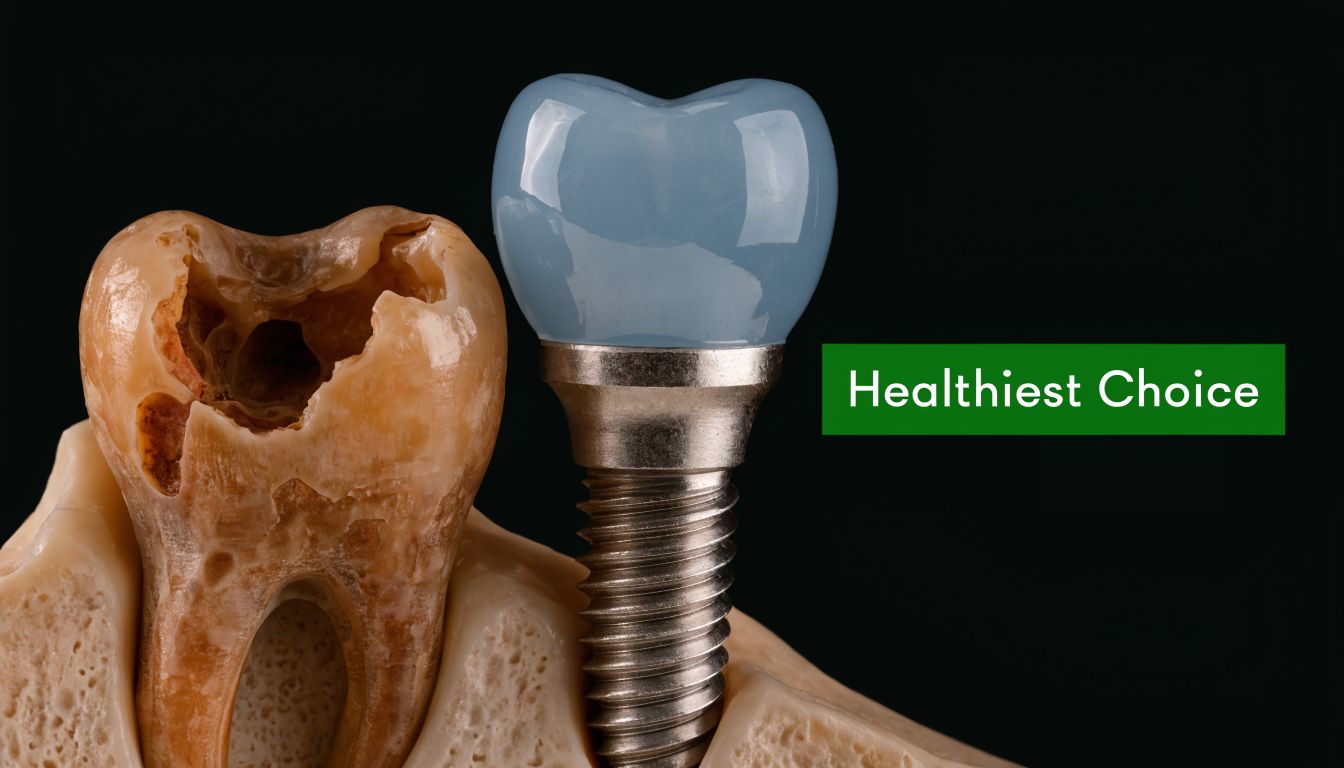
A tooth may be considered non-restorable if decay extends too far below the gumline, if the remaining structure is too limited to support a reliable restoration, or if the root is fractured. In those cases, trying to save the tooth may only delay the permanent solution.
That is why timing matters. Root canal treatments demonstrate a high success rate in saving teeth, but early intervention significantly improves the prognosis and helps prevent a situation from becoming irreversible, as explained in Sun Creek Dental's review of saving a dead tooth.
Why replacement should be part of the plan
If extraction is the healthiest choice, the next question should be how to replace the tooth properly. Leaving a space can affect chewing, allow neighboring teeth to shift, and change how the bite comes together.
A dental implant replaces the root as well as the visible tooth. After healing, a custom crown attaches to the implant, giving you a stable replacement that looks and functions much more like a natural tooth. Patients who want a clearer overview can review how dental implants work before deciding between options.
Other restorative choices may include a bridge, depending on the condition of nearby teeth and your overall treatment goals.
The real trade-off
Keeping a natural tooth is usually preferable when the tooth can be restored predictably. But preserving a compromised tooth at all costs isn't always the healthiest decision.
Consider the trade-off this way:
- Saving the tooth makes sense when: the root is healthy, the structure is restorable, and treatment has a reasonable long-term outlook
- Extraction makes sense when: the tooth can't support a durable restoration or keeping it would risk repeated infection, pain, or fracture
- Replacement becomes essential when: you want to restore normal chewing, appearance, and bite stability
The goal isn't simply to avoid extraction. The goal is a stable, healthy mouth that works comfortably for the long term.
That may mean saving the tooth. It may mean replacing it well. Both can be good care when the diagnosis is sound.
Your Anxiety-Free Experience at Vienna Implant and Family Dentistry
Dental anxiety changes behavior. People put off treatment, try to chew around a painful tooth, and hope the problem settles down on its own. By the time they come in, the decay is often deeper than it would have been weeks or months earlier.

A fear-based delay is more common than many patients realize. A significant percentage of adults avoid dental care due to fear, allowing decay to worsen, according to the CDC data brief on dental care and fear-related avoidance. Comfort options matter because they help patients get through the treatment they need before the tooth deteriorates further.
What a calmer visit feels like
The first part of an anxiety-free appointment is not the medication. It's the pace. A good visit starts with being heard, getting a clear explanation, and knowing what the next step is before anything begins.
Sedation dentistry can help patients who feel tense about procedures such as crowns, root canals, or extractions. Nitrous oxide and oral sedation are common options used to reduce stress and make treatment more manageable. For many people, that changes everything. They stop postponing care and start solving the problem.
Comfort also comes from efficiency
Patients often assume discomfort comes only from the procedure itself. In reality, repeated visits, long waits between steps, and uncertainty can add just as much stress.
That's why efficient workflows matter. When a tooth can be diagnosed, treated, and restored with fewer interruptions, many patients feel more in control. Financial transparency helps too, especially for families planning treatment or patients using an in-house savings plan instead of traditional insurance.
- Judgment-free communication: You shouldn't feel lectured for coming in late with a problem tooth.
- Sedation options: These can help anxious patients tolerate necessary care comfortably.
- Modern restorative tools: Faster crown workflows can reduce time in the chair and time spent waiting for the final result.
Need Urgent Dental Care in Vienna VA Don't Wait
If you're asking can a decaying tooth be saved, the answer often depends on how quickly you act.
A tooth with early or moderate decay is usually easier to restore than one that has been left alone until it breaks, swells, or becomes intensely painful. Even if the situation feels advanced, don't assume extraction is your only option. Many teeth can still be treated with the right diagnosis and timely care.
The most helpful next step is simple. Get the tooth evaluated while options are still open.
For patients in Vienna, VA, and nearby Northern Virginia communities, prompt care can mean the difference between a filling, a crown, a root canal, or losing the tooth entirely. If you're dealing with pain, visible decay, sensitivity, or a broken area in a tooth, don't wait for it to become an emergency in the middle of the night.
Call the office, request an urgent visit, and get answers. Clear diagnosis and comfortable treatment can move you from worry to relief faster than you may expect.
If you've noticed pain, swelling, sensitivity, or a cavity that seems to be getting worse, schedule an evaluation with Dr. Chauhan. Early treatment gives you the best chance of saving your tooth and restoring your smile comfortably.