When you’re thinking about enhancing your smile, the conversation almost always comes down to composite vs. porcelain veneers. The core difference is actually pretty straightforward. Porcelain veneers are the gold standard for durability and that natural, light-reflecting look you see in total smile makeovers. On the other hand, composite veneers offer a faster, more budget-friendly fix for smaller cosmetic issues, often in just one visit.
Here at Vienna Dental Implant & Family Dentistry, our job is to help you figure out which path makes the most sense for your smile goals and brings you renewed confidence. We are dedicated to serving the Vienna, VA community with trusted, compassionate dental care.
Comparing Your Veneer Options in Vienna, VA
Deciding to get veneers is an exciting first step, but it’s completely normal to wonder which type is the right fit for you. Both composite and porcelain veneers are fantastic cosmetic solutions designed to hide things like chips, gaps, stains, or teeth that are just a little out of line. The way they achieve those beautiful results, though, is quite different in terms of materials, the process, and what to expect long-term.
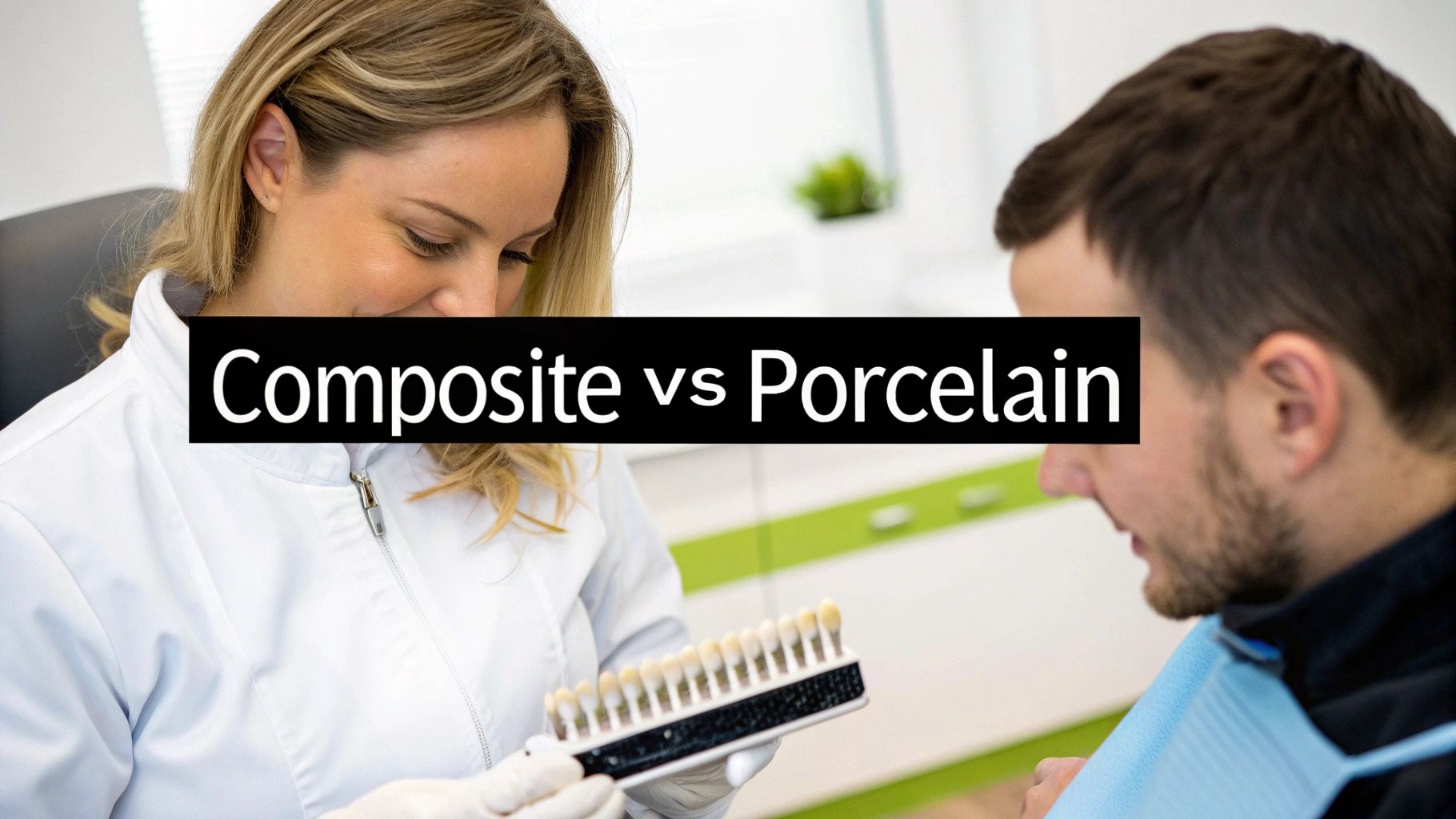
Understanding these key distinctions is how you make a decision you’ll feel great about for years to come. Dr. Vikram Chauhan and our team in Vienna, VA, are here to give you clear, honest information to guide you. We truly believe in empowering our patients with knowledge so they feel secure and comfortable in their treatment plan.
To make things a bit easier, we’ve put together a simple comparison of the two options we offer right here at our Vienna dental practice.
Composite vs Porcelain Veneers at a Glance
This table breaks down the main factors to consider when you're weighing your options. It's a great starting point for our conversation during your consultation.
| Factor | Composite Veneers | Porcelain Veneers |
|---|---|---|
| Material | Tooth-colored composite resin | High-grade dental ceramic |
| Treatment Time | Typically completed in one visit | Usually requires two or more visits |
| Durability | Good, but can be prone to chipping | Excellent, highly resistant to wear |
| Longevity | Lasts approximately 5-7 years | Lasts 10-15 years or more |
| Stain Resistance | Porous; can stain over time | Non-porous; highly stain-resistant |
| Appearance | Natural and aesthetically pleasing | Superior, mimics natural tooth translucency |
| Cost | Lower initial investment | Higher initial investment |
| Reparability | Easily and affordably repaired | Requires replacement if significantly damaged |
| Best For | Minor chips, gaps, budget-conscious fixes | Complete smile makeovers, lasting results |
While this table gives you a solid overview, remember that the best choice always comes down to your unique smile, lifestyle, and what you want to achieve. At Vienna Dental Implant & Family Dentistry, we take the time to really talk through these factors with you. We want to ensure the veneer solution you choose delivers the beautiful, confident smile you deserve.
Your journey starts with a simple conversation, and we’re here to answer every single question you have.
Understanding the Materials Behind Your New Smile
The final look, feel, and durability of your smile all come down to one thing: the material used to make your veneers. While both composite and porcelain veneers can deliver a stunning cosmetic result, they are fundamentally different substances with completely unique properties. Getting a handle on this difference is the key to making the right choice in the composite veneers vs porcelain conversation.
At Vienna Dental Implant & Family Dentistry, we believe an educated patient is a confident one. Let's break down the science behind each option.
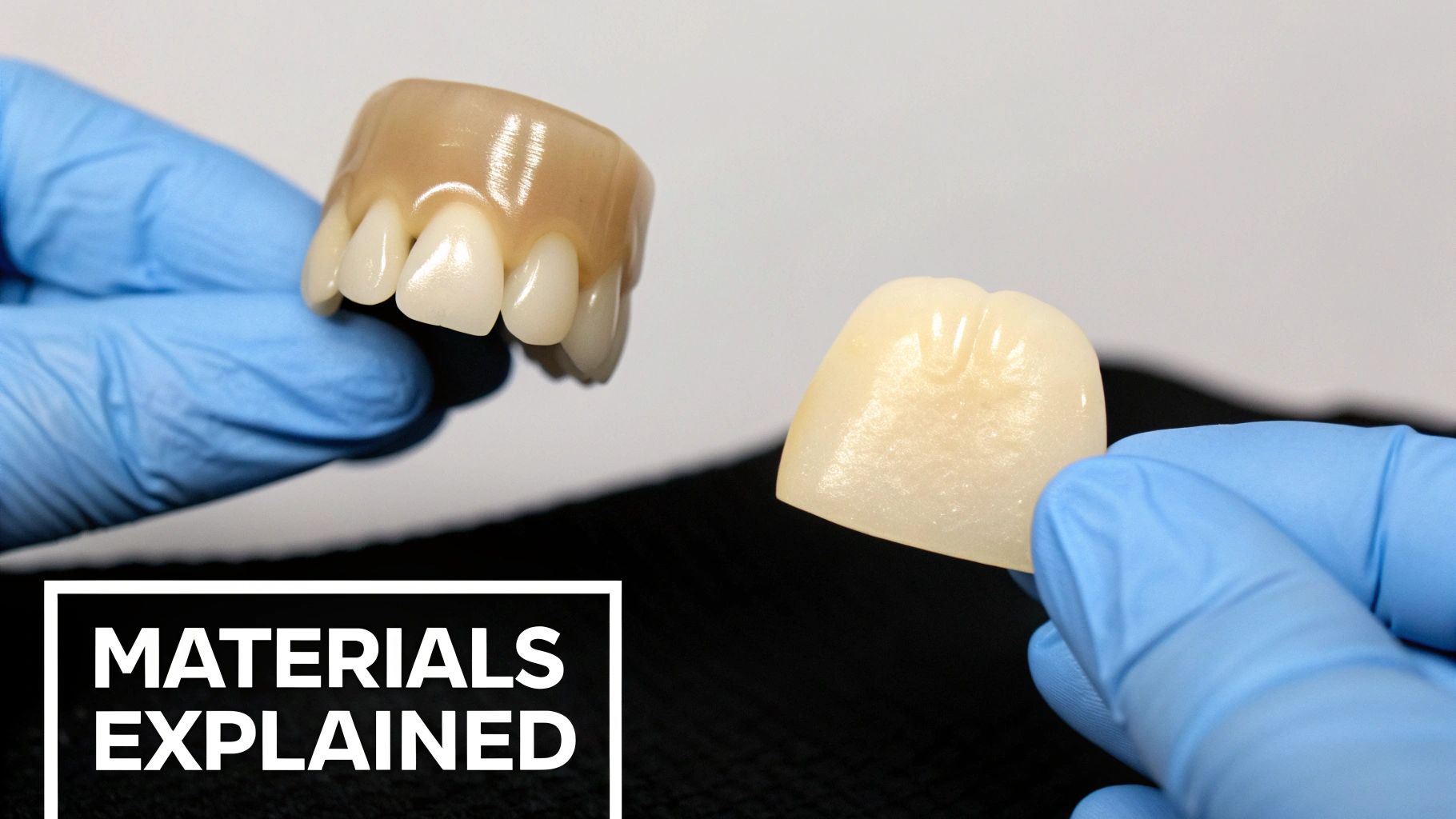
The Artistry of Composite Resin
Composite veneers are made from a biocompatible, tooth-colored resin. This is the very same trusted material we use for modern dental fillings, well-known for being safe and bonding securely to your natural tooth structure.
Placing composite veneers is a hands-on display of artistry. Dr. Chauhan applies the putty-like resin directly onto your tooth in layers, skillfully sculpting, shaping, and then curing the material with a special light. He essentially builds the veneer right there in the chair, with you in it.
This direct technique gives composite a major advantage in speed and convenience. The entire transformation is often done in a single appointment at our Vienna office, allowing for real-time tweaks to ensure the final shape perfectly matches what you envision.
The Precision of Dental Porcelain
Porcelain veneers are a different story altogether. They aren't sculpted chairside but are custom-fabricated in a specialized dental lab by a master ceramist, using advanced dental ceramics.
Think of them as ultra-thin, incredibly strong shells of medical-grade ceramic, each one meticulously designed to your smile's exact specifications. Here, the material itself is the real star.
Dental porcelain is chosen for its remarkable ability to mimic the translucency and luster of natural tooth enamel. It interacts with light just like a real tooth, giving it a depth and vitality that is exceptionally lifelike.
This inherent quality makes porcelain the premium choice for patients seeking the most natural and seamless smile transformation possible.
How Material Affects Your Lifestyle
The core makeup of each material directly impacts its performance over time, which is a vital part of the composite vs porcelain veneers decision.
- Stain Resistance: Porcelain is a non-porous ceramic, much like a glazed coffee mug. This makes it exceptionally resistant to staining from culprits like coffee, tea, red wine, and tobacco. Its color stays bright and stable for its entire lifespan.
- Composite Porosity: Composite resin, on the other hand, is more porous. While it's polished to a beautiful shine initially, it can absorb pigments over the years, which can lead to discoloration.
For our patients in Vienna, VA, who want a permanently bright smile with minimal worry, porcelain's stain resistance is a game-changing benefit.
Strength is the other big factor. Porcelain is harder and more durable, offering superior resistance to wear and tear. But if it chips or fractures, it typically requires a full replacement. Composite is softer and less durable overall, but it has the unique advantage of being easily and affordably repaired if a small chip occurs. This reparability makes it a flexible and practical option for certain lifestyles.
Navigating the Veneer Treatment Journey in Vienna
Knowing what to expect from any dental treatment is the key to feeling confident and prepared. Here at Vienna Dental Implant & Family Dentistry, we believe in being completely transparent about the process. While both composite and porcelain veneers lead to a gorgeous new smile, the paths to get there are quite different.
Your comfort is our top priority every step of the way. For patients in Vienna and surrounding areas who feel anxious or nervous, we offer sedation dentistry to ensure the entire experience is relaxed and positive. Dr. Chauhan and our team will make sure your visit to our Vienna, VA, practice is calm from start to finish.
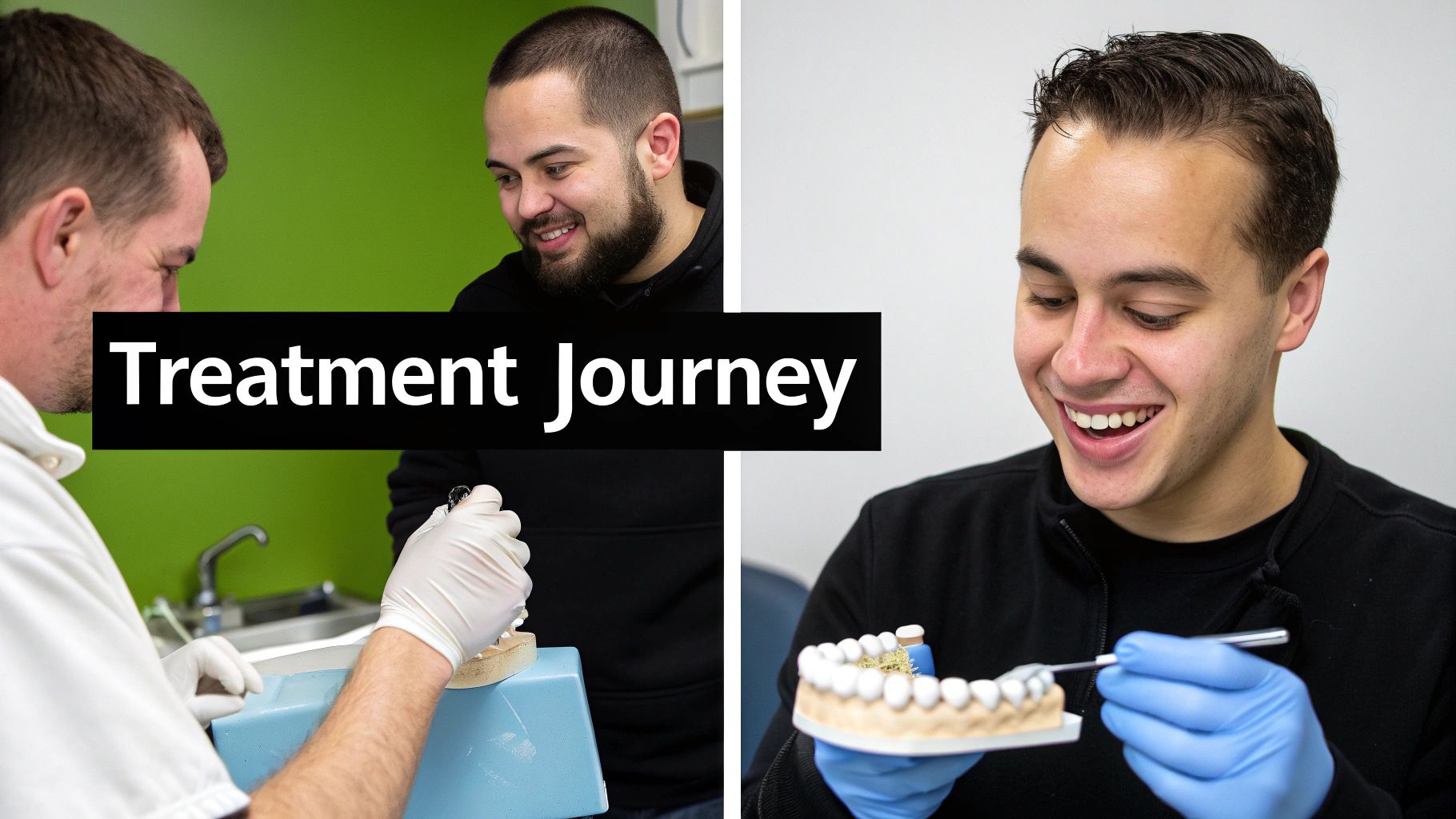
The Composite Veneer Process: A Single-Visit Transformation
One of the biggest draws of composite veneers is just how fast the transformation happens. For many of our Vienna patients, we can completely enhance their smile in just one appointment, which is a game-changer for anyone with a busy schedule.
The process itself is direct, artistic, and minimally invasive.
- Initial Preparation: Dr. Chauhan starts by choosing the perfect shade of composite resin to blend seamlessly with your natural teeth. He’ll then gently clean and prepare the tooth surface, a step that often requires little to no removal of your natural enamel.
- Direct Application and Sculpting: Next comes the artistry. He applies the tooth-colored resin directly onto your tooth and skillfully sculpts the material by hand, shaping it to create the ideal size and contour for your smile.
- Curing and Polishing: Once the shape is just right, a special curing light hardens the resin, bonding it securely to your tooth. The final touch is a meticulous polish until the veneer gleams with a natural, healthy shine.
You walk out of our Vienna office that very same day with a renewed smile. It’s this straightforward approach that makes composite veneers such a popular fix for smaller cosmetic issues.
The Porcelain Veneer Process: A Meticulous Smile Design
The journey to getting porcelain veneers is a more detailed, multi-step process, and for good reason—it reflects the custom, lab-fabricated nature of these premium restorations. This meticulous approach guarantees a result that is both stunningly beautiful and perfectly integrated with your smile, and it typically takes two to three visits.
Your first appointment is all about comprehensive smile design. This is a collaborative conversation where you and Dr. Chauhan dive into your aesthetic goals. We’ll look at tooth color, shape, and size, all while considering your overall facial harmony to create a blueprint for your perfect smile.
This initial design phase is crucial. It ensures the final porcelain veneers not only look beautiful but also function perfectly within your bite and complement your unique features.
After the consultation, the treatment unfolds in two main phases.
- Visit One: Preparation and Impressions: Dr. Chauhan will gently prepare your teeth by removing a very thin layer of enamel—only about 0.5mm. This tiny bit of space allows the veneer to sit flush with your gumline for a seamless look. He will then take a precise digital impression of your teeth to send to a master dental lab. You’ll leave this appointment with a set of high-quality temporary veneers, which protect your teeth and let you "test drive" your new smile.
- Visit Two: Final Bonding and Reveal: About two weeks later, your custom porcelain veneers will arrive from the lab. At this final appointment, Dr. Chauhan will remove the temporaries and carefully check the fit and color of your permanent veneers. Once you’ve given the final approval, he will expertly bond them to your teeth with a powerful dental adhesive, revealing your durable and radiant new smile.
This multi-visit process at our Vienna, VA, practice allows for an unmatched level of precision and customization. It’s exactly why porcelain remains the premier choice in the composite veneers vs porcelain debate for a complete and lasting smile makeover.
Comparing Durability, Longevity, and Aesthetics
When you're investing in your smile, three things really matter: how long the results will last, how well they stand up to daily life, and of course, how they actually look. The debate between composite vs. porcelain veneers truly comes down to these practical, real-world considerations.
Each option performs differently over time, and understanding these nuances is key to making a choice you’ll love for years to come. At Vienna Dental Implant & Family Dentistry, we help our patients weigh these factors against their personal priorities, ensuring the outcome aligns perfectly with their vision.
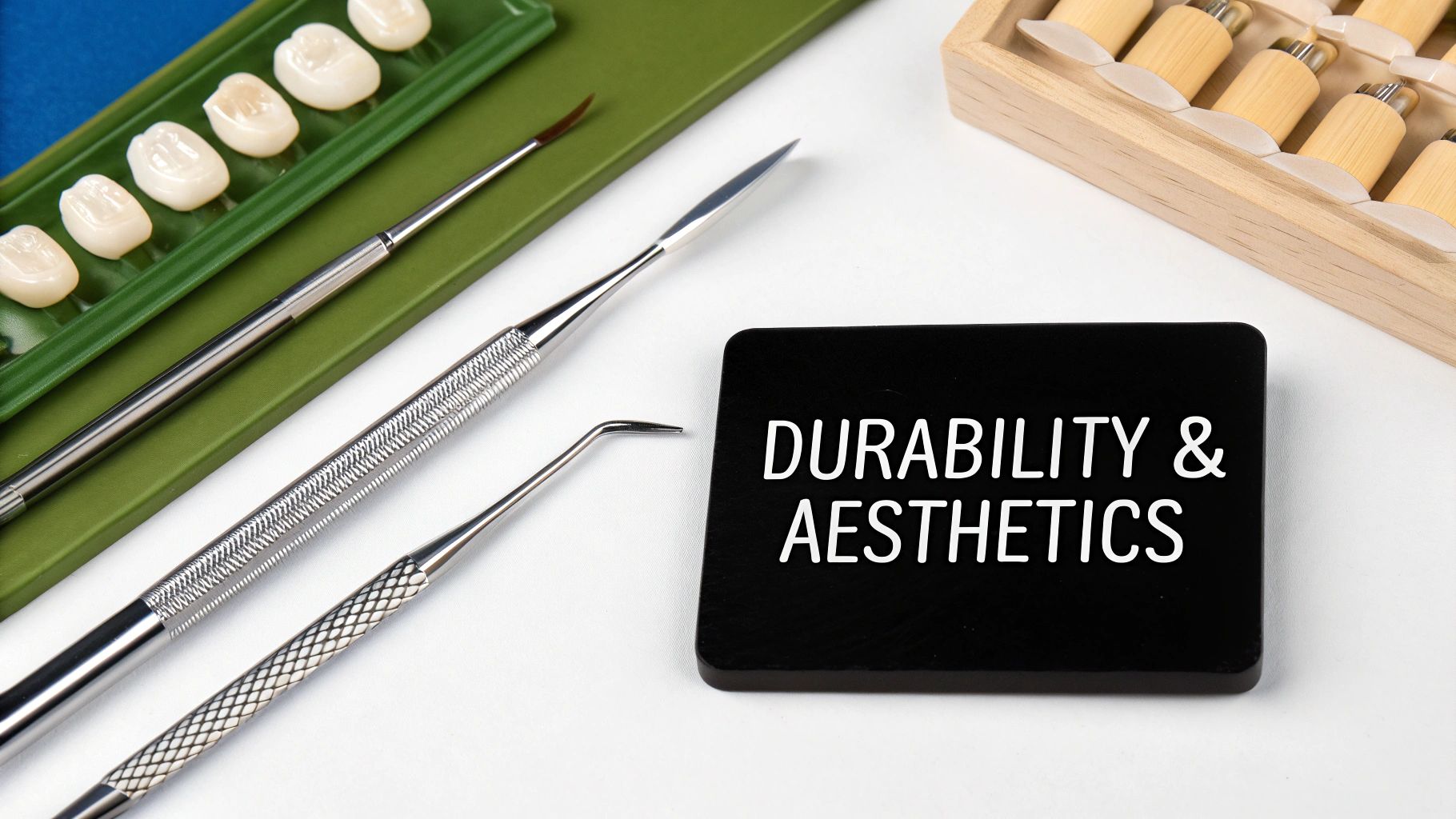
Longevity: The Long-Term Outlook
One of the most significant distinctions between the two veneer types is their expected lifespan. For our patients in Vienna, VA, who are looking for a lasting solution, this is a crucial point.
Porcelain veneers are the clear winner for long-term performance. With proper care—which means excellent oral hygiene and regular dental checkups—they can easily last 10 to 15 years, and often even longer. This makes them a durable, set-it-and-forget-it solution for a complete smile makeover.
Composite veneers have a shorter lifespan, typically lasting around 5 to 7 years. After this period, they may start to show signs of wear, staining, or chipping. They will likely need professional polishing, repairs, or full replacement to maintain their appearance. While their initial cost is lower, this shorter duration is an important factor in the overall value.
Durability: Standing Up to Daily Life
Your teeth work hard every day, so your veneers need to be strong enough to handle chewing, biting, and everyday pressures.
Porcelain is a tough, resilient ceramic material that’s highly resistant to the wear and tear of daily function. However, much like glass, it can be brittle under extreme, focused force. A hard impact from an accident or biting down on something like a cherry pit could potentially cause a chip or fracture.
Composite resin is a softer material and not as durable as porcelain. It's more susceptible to chipping and wear over time. The major advantage, however, is its reparability.
If a composite veneer chips, Dr. Chauhan can often repair it easily and affordably in a single visit, right here in our Vienna office. Repairing a damaged porcelain veneer is far more complex and almost always requires a full replacement of the veneer.
This trade-off between ultimate strength and ease of repair is a key conversation we have during every consultation.
Aesthetics: The Quest for a Natural Look
For most patients, the final look is what it's all about. Both options create beautiful smiles, but they achieve their look in different ways.
Porcelain veneers are widely considered the gold standard in cosmetic dentistry for one simple reason: their ability to mimic natural tooth enamel is exceptional. The ceramic material has a translucent quality that lets it catch and reflect light just like a real tooth. This creates a depth, vitality, and luster that is virtually indistinguishable from a flawless, healthy tooth.
Composite veneers deliver a wonderful, aesthetically pleasing result and can dramatically improve a smile. However, the resin material is opaque and just can't fully replicate the subtle translucency of porcelain. While they look great, they may not achieve that same level of lifelike brilliance that makes porcelain the premier choice for the most natural-looking transformation. You can see the stunning results of these cosmetic treatments in our before-and-after smile gallery.
Porcelain veneers are the leading choice worldwide, accounting for a significant majority of the market due to their superior durability and natural appearance. For our patients, this translates to a choice between 10-15 years of stain-resistant beauty with porcelain versus 5-7 years with composite, though composites offer a more accessible upfront cost.
The Cost and Long-Term Value of Your Investment
Let's talk about the financial side of things—it’s a crucial part of making the right choice for your smile. Here at Vienna Dental Implant & Family Dentistry, we believe in being completely upfront about costs so you feel confident and clear about the investment you're making. The conversation around composite vs. porcelain veneers isn't just about looks; it's also about practical, long-term value.
It’s true that composite veneers have a lower upfront cost. This makes them a fantastic and accessible starting point for our Vienna patients who want to enhance their smile on a more conservative budget or need to address minor cosmetic fixes quickly.
On the other hand, porcelain veneers do require a higher initial investment. This is a direct reflection of the superior ceramic materials and the intricate, custom fabrication process that involves a master dental lab.
Looking Beyond the Initial Price Tag
While the upfront cost is a key factor, we always encourage our patients to look at this decision through the lens of long-term value. Porcelain veneers aren't just a purchase; they are a lasting investment in your confidence and oral health.
Because they are so incredibly durable and have a much longer lifespan, porcelain veneers often end up being more cost-effective over the years. Their ability to last 10-15 years or more means you avoid the recurring costs of replacing or repairing less durable options down the road.
When you consider that a beautiful, stain-resistant smile can last for over a decade without needing replacement, the higher initial cost of porcelain is offset by its incredible longevity and minimal maintenance needs.
This long-term perspective is crucial. The global dental market reflects this value, with porcelain veneers holding a massive share of the industry. Their dominance comes directly from this superior longevity, which easily outpaces the typical 5-7 year lifespan of composites. For our Vienna families, this data simply confirms that porcelain delivers a significant return on investment for a smile that truly lasts.
Making Your Dream Smile Attainable in Vienna, VA
At Vienna Dental Implant & Family Dentistry, we're committed to making a beautiful smile attainable for everyone in our community. We know that budget is a real-world consideration, and we're here to help you navigate it. Dr. Chauhan and our team will sit down with you and discuss all the financial aspects openly during your consultation.
We offer several pathways to make your treatment plan manageable:
- Flexible Payment Options: We'll work with you to find a payment structure that fits comfortably within your budget.
- Smile Savings Plan: This in-house plan is designed specifically for our uninsured patients, giving you access to premium care at a more affordable rate.
- Clear Cost Breakdowns: You will receive a detailed breakdown of all costs, so there are absolutely no surprises.
We firmly believe that financial concerns should never be a barrier to achieving the smile you deserve. Whether you're considering veneers or another restorative option like dental crowns, we provide clear, honest guidance every step of the way. You can learn more about our dental crowns here.
Choosing the Right Veneer for Your Unique Smile
Deciding between composite vs porcelain veneers isn't about picking the "better" option—it's about finding the best option for you. Every person who walks into our Vienna practice has a unique smile, different goals, and their own priorities. This final step is all about matching the right solution to your specific situation.
We’re not here to give generic advice. The choice involves more than just materials; it’s about your lifestyle, your budget, and what you envision for your smile in the long run.
When Composite Veneers Are the Ideal Choice
Composite veneers are a fantastic solution in several key scenarios. Their conservative nature and incredible flexibility make them a perfect fit for certain goals and patients.
We often find that composite veneers are the best fit for:
- Younger Patients: For teens or young adults who aren't quite ready for a permanent commitment like porcelain, composites offer a beautiful, less invasive way to enhance their smile.
- Minor Imperfections: If you just want to fix a few small chips, close a little gap, or correct a single discolored tooth, direct bonding is a precise and highly effective fix.
- Budget-Conscious Goals: Composites deliver a major cosmetic boost at a lower upfront cost, making a smile refresh much more accessible. You can see more on how this material works in our article on cosmetic dental bonding.
When Porcelain Veneers Are Recommended
Porcelain veneers are, without a doubt, the premier choice for anyone seeking a total and lasting smile transformation. They are a true investment in achieving a flawless, incredibly durable result.
Porcelain is usually the best path forward for:
- A Complete Smile Makeover: For those who want to redesign their entire smile and address multiple cosmetic issues at once, nothing compares to the stunning, cohesive look of porcelain.
- Significant Cosmetic Issues: Deep stains, moderate crookedness, or irregularly shaped teeth are all problems that porcelain can correct with truly remarkable results.
- The Most Durable and Beautiful Result: If your absolute top priorities are longevity, stain resistance, and the most natural, lifelike appearance possible, porcelain veneers are the undisputed gold standard.
The best way to know for sure is to have a conversation. A one-on-one consultation allows us to understand your personal goals and assess your oral health, giving you a clear and honest recommendation.
The final decision is always yours, but our role is to give you the expert guidance you need to make that choice with total confidence. Dr. Vikram Chauhan and the team at Vienna Dental Implant & Family Dentistry are here to help you explore every option. We invite you to schedule a cosmetic consultation at our Vienna, VA, office to design a treatment plan that finally brings your dream smile to life.
Your Veneer Questions, Answered
When you're exploring a smile transformation, you're bound to have questions. It's a big decision! Below, we've answered some of the most common ones our Vienna patients ask when weighing composite vs. porcelain veneers. Getting clear, straightforward answers is the best way to feel confident about your choice.
How Much of My Natural Tooth Gets Removed?
This is probably the number one concern we hear, and it’s a major difference between the two options. For porcelain veneers, we need to gently prepare the tooth by removing a tiny layer of enamel. We're talking about 0.5mm—roughly the thickness of a contact lens.
This step is crucial because it ensures the veneer sits perfectly flush against your tooth and doesn’t look bulky. The result is a seamless transition from the veneer to your gumline that looks completely natural.
Composite veneers, on the other hand, are often called "additive" because they typically require little to no tooth preparation at all. We bond the resin material directly onto the surface of your tooth, which means we preserve nearly all of your natural tooth structure.
Can I Whiten Veneers Down the Road?
This is a critical point to understand before you start. The short answer is no—whitening gels don't work on either porcelain or composite materials. The color we choose for your veneers before they are placed is the color they will stay.
Porcelain is a fantastic material because it's highly resistant to staining. That bright, beautiful shade you pick on day one will stay that way for years to come. Composites can pick up stains over time, much like natural teeth, but they can't be whitened. To change their shade, they would need to be professionally polished or replaced entirely.
We always advise patients to do any teeth whitening before starting their veneer journey. That way, we can match the veneers to your newly brightened smile for a stunning, uniform look that lasts.
What if I Get Anxious at the Dentist?
Your comfort is our top priority here at Vienna Dental Implant & Family Dentistry—period. We know that dental anxiety is very real for many people, and our entire team is focused on creating a calm, supportive, and judgment-free space for your care.
We are proud to offer sedation dentistry options to help you feel completely relaxed during your smile makeover. Dr. Chauhan will sit down with you to discuss your comfort level and what we can do to make your experience positive and stress-free, from your first visit to your final smile reveal. If you're ready to explore your options for a brighter smile, contact our Vienna, VA dental practice today to schedule your consultation.