Preventing tooth decay naturally is not only possible, it's something you can achieve with the right daily habits. This isn't about a miracle cure; it's about a consistent, thoughtful approach that combines excellent oral hygiene with a tooth-friendly diet. At Vienna Dental Implant & Family Dentistry, we believe in empowering our patients in Vienna, VA, and the surrounding communities to take control of their oral health. The goal is simple: remove plaque bacteria and strengthen your tooth enamel through things you do every single day.
A Natural Path to a Cavity-Free Smile in Vienna

Are you concerned about cavities or looking for ways to improve your family's oral health? The great news is you have far more control than you might realize. While genetics can play a role, your daily choices are the most powerful defense against the bacteria that cause tooth decay. This guide is your practical resource for building that strong, natural defense and achieving lasting smile confidence.
Here at Vienna Dental Implant & Family Dentistry, our team is passionate about helping families across Vienna and Northern Virginia understand the simple yet effective strategies that can protect their teeth for a lifetime. We are your trusted local provider for everything from family dentistry to more advanced restorative dentistry solutions.
Understanding the Basics of Tooth Decay
Tooth decay, or dental caries, doesn't just appear overnight. It's a gradual process that starts when plaque—that sticky film of bacteria—builds up on your teeth. These bacteria feast on the sugars and starches in your food and drinks, producing acids as a byproduct.
Over time, this constant acid attack wears away at your tooth enamel, the hard, protective outer layer. This process is called demineralization, and it leaches essential minerals like calcium and phosphate from your teeth, leaving them weak and vulnerable. If this erosion continues, it eventually creates a small hole—a cavity.
The secret to natural prevention is tipping the scales back in your favor. It's about consistently clearing away plaque and creating an oral environment that supports remineralization—your body's incredible, built-in process for repairing enamel.
Your Role in Natural Cavity Prevention
Taking a natural approach to preventing tooth decay means you’re working with your body and your dental team. It’s not a substitute for professional care but a powerful way to make that care even more effective. The core principles are refreshingly straightforward:
- Diligent Oral Hygiene: This is about mastering the techniques to physically remove plaque, every single day, without fail.
- A Tooth-Smart Diet: It’s choosing foods that actively strengthen your teeth and limiting the ones that feed harmful bacteria.
- Supportive Natural Habits: This involves adding simple, science-backed strategies to give your defenses an extra boost.
- Professional Partnership: Recognizing that regular checkups and cleanings are absolutely essential to your success.
By building your routine around these pillars, you create a robust defense system that keeps your smile healthy and vibrant. For a deeper dive, you can learn more about why preventative dentistry is the key to a healthy smile in our detailed article. This guide will walk you through each of these steps, giving you actionable advice you can start using today.
Mastering Your Daily Oral Hygiene Ritual
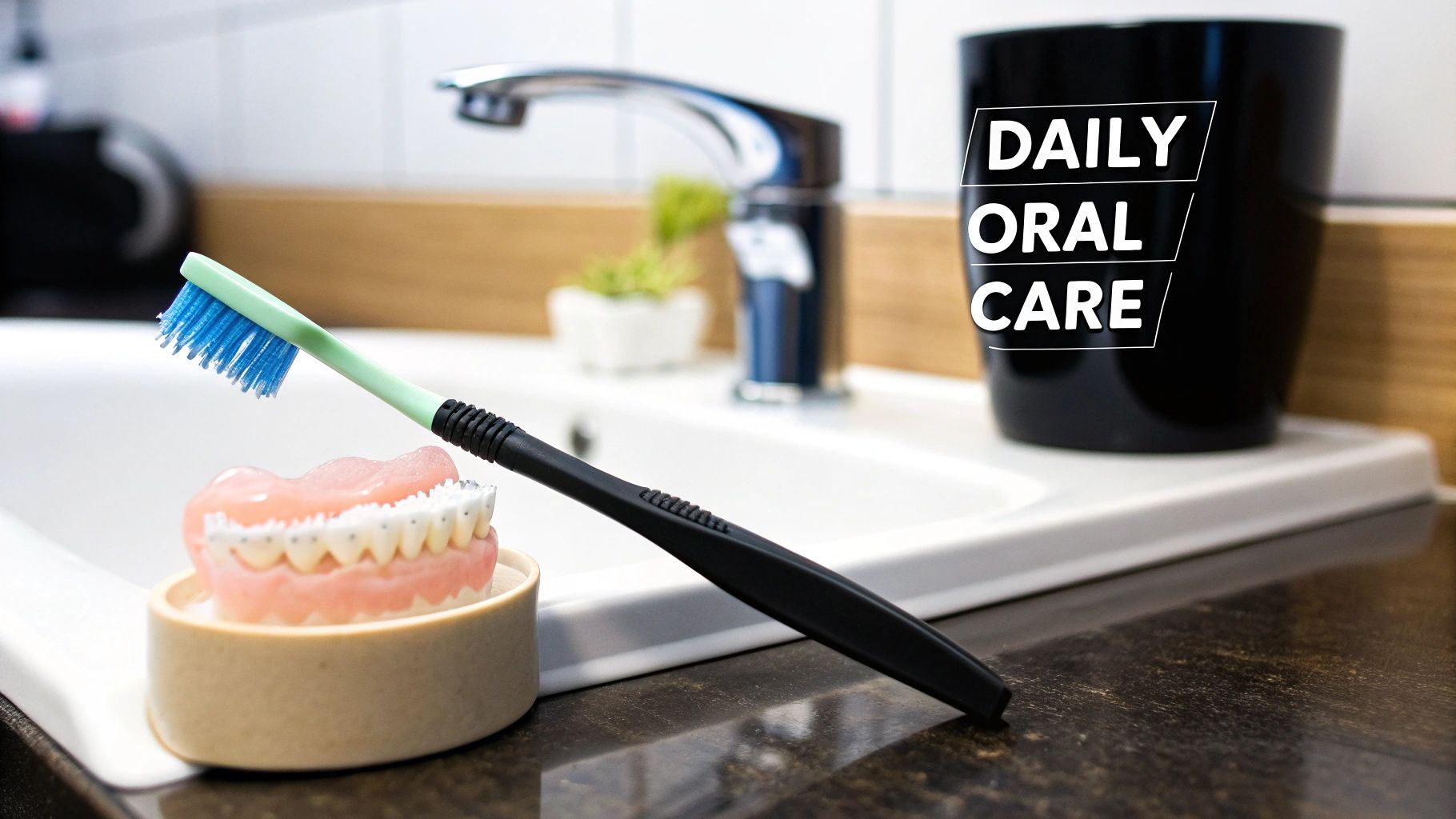
Your daily oral hygiene routine is the absolute cornerstone of preventing tooth decay. We all know the “brush twice a day” rule, but the real power is in the details—how you brush, what you use, and the crucial steps you take beyond just the toothbrush.
Think of it less as a chore and more as a deliberate practice to protect your smile. This ritual is your frontline defense, and by mastering a few key techniques, you can physically remove harmful plaque, neutralize acids, and give your enamel the support it needs to stay strong and resilient. It’s all about being intentional.
Refine Your Brushing Technique
The goal of brushing isn’t to scrub your teeth into submission. It’s to gently and effectively dislodge that sticky film of plaque clinging to tooth surfaces and along the gumline. Brushing too hard can be ineffective at best and damaging at worst, leading to enamel wear and gum recession over time.
For the most effective plaque removal without harming your teeth and gums, here’s what you need to do:
- Choose a Soft-Bristled Brush: This is non-negotiable. Medium or hard bristles are simply too abrasive for daily use.
- Angle Your Brush at 45 Degrees: Position the bristles right where your teeth meet your gums, tilted at a 45-degree angle. This specific approach allows the bristles to sweep just below the gumline, where plaque loves to hide.
- Use Gentle, Short Strokes: Think small, circular motions or short back-and-forth strokes. Apply just enough pressure to feel the bristles against your teeth—let the bristles do the real work.
- Cover All Surfaces: Systematically brush the outer, inner, and chewing surfaces of every single tooth. To do this right, it should take a full two minutes.
This precise method ensures you’re cleaning the most vulnerable areas without causing unnecessary damage.
The Role of Fluoride in a Natural Approach
Even when focusing on natural prevention, we have to use tools backed by proven science. Fluoride, a naturally occurring mineral, is arguably the most effective ingredient out there for strengthening tooth enamel. It works by integrating into the tooth’s crystal structure, making it far more resistant to acid attacks from bacteria.
This isn’t just a theory; it's a globally recognized health strategy. The World Health Organization (WHO) highlights adequate fluoride exposure as essential. Untreated cavities in permanent teeth affect a staggering 2 billion people worldwide, making it the most common health condition.
By using a fluoride toothpaste, you’re actively helping your teeth remineralize and repair themselves from the earliest stages of acid damage. You can learn more about the scientific backing for fluoride's role in cavity prevention here.
Don't Skip Flossing (Seriously)
No matter how good your brushing technique is, your toothbrush simply cannot reach the tight spaces between your teeth and under your gums. These areas account for roughly 35% of your tooth surfaces. When you skip flossing, you’re leaving a huge amount of plaque behind to produce acid completely undisturbed.
To floss effectively, don’t just snap it between your teeth. Gently guide about 18 inches of floss (wrapped around your middle fingers) and curve it into a "C" shape against the side of each tooth. Carefully slide it beneath the gumline to clear away that hidden plaque. This small daily habit is a game-changer for preventing cavities that form between teeth.
A common mistake is thinking flossing is only for removing chunks of food. Its primary job is to disrupt the invisible plaque biofilm that your toothbrush misses, stopping the decay process before it even has a chance to start.
Complete the Routine with Tongue Scraping
The final piece of a masterful oral hygiene ritual is cleaning your tongue. Your tongue's surface is covered in tiny bumps that can trap food particles and bacteria, contributing not only to bad breath but also to the overall bacterial load in your mouth.
Using a dedicated tongue scraper is far more effective than just brushing your tongue. A quick scrape from back to front each morning removes this bacterial film, promoting fresher breath and a healthier oral environment. It's a simple addition that makes a huge difference.
Pairing this detailed at-home care with regular professional cleanings is the ultimate strategy for a healthy smile. If you want to learn more about professional care, check out our guide on the differences between a regular teeth cleaning and a deep cleaning. A few extra minutes devoted to these techniques each day is a powerful investment in the long-term, natural health of your teeth.
How Your Diet Can Naturally Fight Tooth Decay
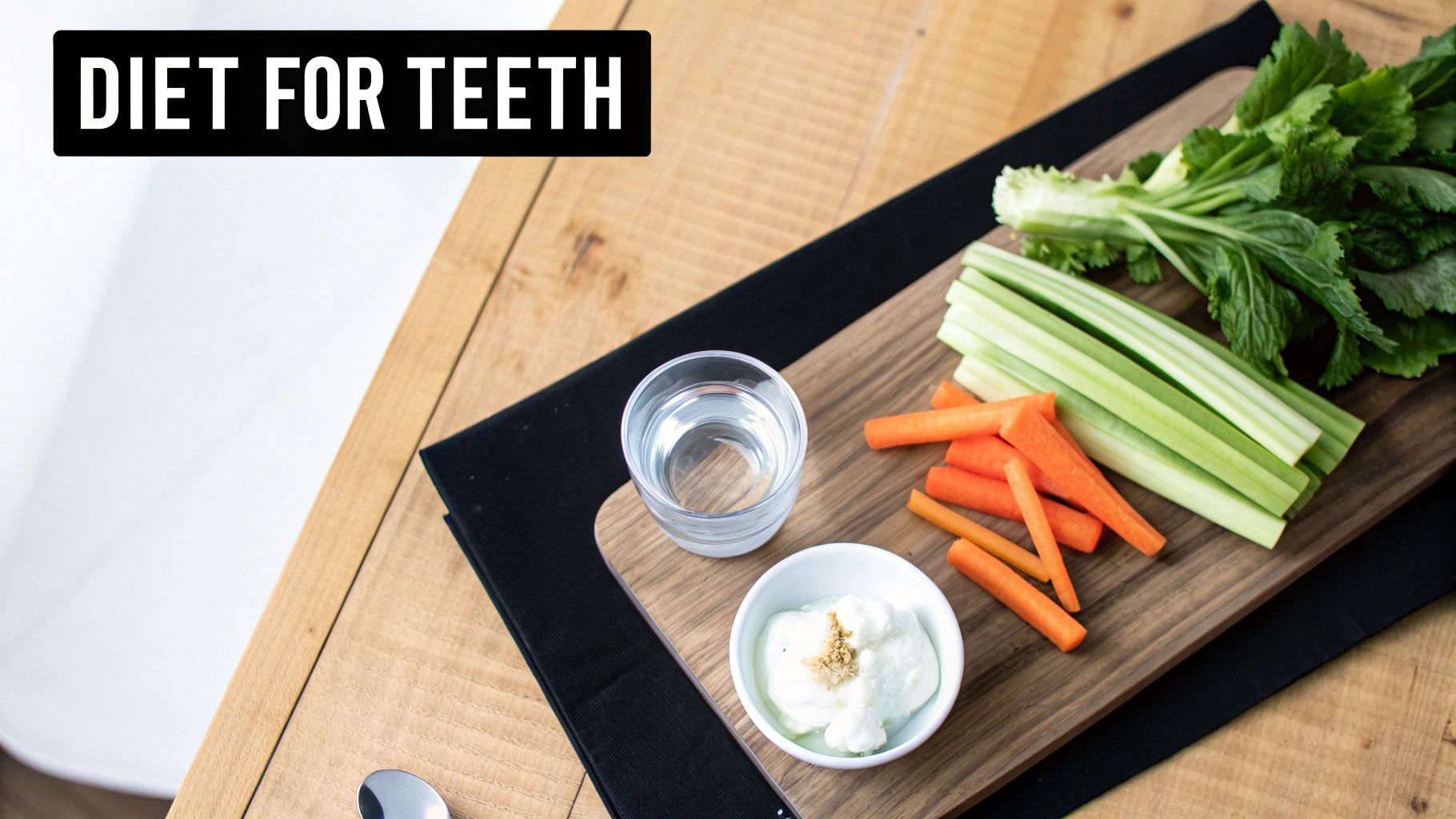
We all know brushing and flossing are non-negotiable, but what you put on your plate has a massive impact on the health of your teeth. The connection is pretty direct: the food you eat either feeds the harmful bacteria that cause cavities or it provides the essential nutrients your body needs to build strong, resilient enamel.
This isn't just about cutting out candy. It's about being strategic with your meals and snacks to turn your diet into a powerful, natural tool against tooth decay. Every bite is an opportunity to either weaken your smile or fortify it from the inside out.
The Science of Sugar and Acid Attacks
Sugar and acid are the dynamic duo behind tooth decay. When you eat sugary or starchy foods—think candy, soda, crackers, and even some fruit juices—the bacteria living in your plaque have a feast. As they break down these simple carbs, they produce powerful acids as a waste product.
These acids are the real enemy. They leach crucial minerals like calcium and phosphate right out of your tooth enamel in a process called demineralization. Repeated acid attacks create weak spots that, over time, can collapse into a full-blown cavity.
It's a huge global issue. Dental caries, another name for tooth decay, affects an incredible 2.5 billion people worldwide, making it the most common noncommunicable disease out there. But a simple dietary fix can make a world of difference. The World Health Organization (WHO) has shown that cutting free sugars to less than 10% of your daily energy intake—and ideally under 5%—slashes your risk of cavities. You can read more about the link between sugars and dental caries on WHO.int.
This statistic really drives home how much power we have over our oral health just by making smarter choices at the grocery store. Limiting sugar literally starves the bacteria responsible for decay.
Building Stronger Teeth with Nutrient-Dense Foods
While some foods cause damage, others are your smile's best friends, actively helping your teeth stay strong and even repair themselves. Think of them as your personal nutritional support team for a healthy mouth.
Here are the key players your teeth need:
- Calcium: The main building block of your teeth and bones. It’s absolutely essential for maintaining tough, resilient enamel. You’ll find it in dairy like milk, cheese, and yogurt, but also in leafy greens like spinach and kale and fortified non-dairy milks.
- Phosphorus: This mineral works hand-in-hand with calcium to form the strong crystal structure of your enamel. It’s easy to find in protein-rich foods like fish, lean meats, eggs, and nuts.
- Vitamin D: This vitamin is the gatekeeper for calcium, helping your body actually absorb and use it. Without enough Vitamin D, the calcium you consume can't do its job. Your body makes it when you get some sun, and you can also find it in fatty fish, fortified milk, and egg yolks.
- Vitamin A: Crucial for healthy gums and saliva production. Saliva is your mouth’s natural defense system—it rinses away food debris and neutralizes acids. Carrots, sweet potatoes, and bell peppers are packed with it.
Loading your diet with these foods gives your body the raw materials it needs to constantly defend and rebuild your teeth.
Smart Snacking and Meal Timing
It's not just what you eat, but when you eat it. Every single time you eat or sip on anything other than plain water, you kickstart that acid production cycle in your mouth. If you're grazing all day long, your teeth are under a constant state of attack, never getting a break for saliva to do its job and remineralize your enamel.
The best approach? Stick to distinct meals and limit snacking in between. If you do need a snack, make it a tooth-friendly one.
Choosing the right foods can make all the difference. Some foods actively clean and protect your teeth, while others are a direct pipeline for decay-causing bacteria.
Tooth-Friendly Foods vs Decay-Causing Culprits
| Tooth-Friendly Choices | Why It Helps | Decay-Causing Culprits | Why It Harms |
|---|---|---|---|
| Crunchy Vegetables (Carrots, Celery) | High in water and fiber, they physically scrub plaque off teeth and stimulate saliva flow. | Sticky Candies (Caramels, Taffy) | Cling to teeth for extended periods, providing a long-lasting sugar source for bacteria. |
| Cheese and Yogurt | Rich in calcium and phosphates, they help rebuild enamel and balance pH levels in the mouth. | Carbonated Sodas | Extremely acidic and high in sugar, creating a perfect storm for rapid enamel erosion. |
| Nuts (Almonds, Walnuts) | Low in sugar and a good source of calcium and phosphorus. Chewing them also promotes saliva. | Dried Fruits (Raisins, Apricots) | Concentrated in sugar and very sticky, they adhere to tooth crevices and fuel acid production. |
| Water (Especially Fluoridated) | Rinses away food particles, neutralizes acids, and helps keep you hydrated for healthy saliva production. | Sports and Energy Drinks | Often contain even more sugar and acid than soda, posing a significant risk to enamel. |
Simple swaps can have a huge impact. Reaching for a handful of almonds instead of crackers, or choosing water over soda, is a small change with big rewards for your teeth. Here in Vienna, VA, our tap water is fluoridated, which gives you an extra layer of natural protection with every glass. By focusing your diet on minerals and limiting how often you expose your teeth to sugar, you create the best possible nutritional defense against cavities.
Going Beyond Brushing and Flossing
Once you’ve got your daily brushing and flossing routine down and your diet is tooth-friendly, there are a few other habits you can layer in to really boost your natural defenses against decay. Think of these as powerful backup for your core routine—not replacements—that help create an even healthier environment in your mouth.
These strategies are perfect for anyone in Vienna looking to take their cavity prevention game to the next level. They’re simple, easy to work into your day, and can make a real difference when you stick with them.
Try Oil Pulling
Oil pulling is an ancient practice that’s getting a lot of modern attention, and for good reason. It’s simple: you just swish a tablespoon of an edible oil, like coconut oil, around your mouth for 15-20 minutes before spitting it out.
The idea is that the fatty lipids in the oil attract and trap harmful bacteria, essentially "pulling" them off your teeth and gums. While it’s not a physical scrub like a toothbrush, some studies suggest it can lower the overall bacterial load in your mouth, including the specific bugs responsible for plaque and gingivitis. It's an easy ritual to add to your morning while you're getting ready for the day.
Keep in mind, oil pulling is a supportive measure. It can never replace the mechanical cleaning of brushing and flossing, which are still the most critical parts of your daily routine.
Use the Power of Xylitol
Xylitol is a natural, plant-derived sweetener that looks and tastes like sugar but acts completely differently when it comes to your teeth. The bad bacteria in your mouth, especially Streptococcus mutans, thrive on regular sugar, producing acid that erodes your enamel.
But here's the trick: these bacteria can’t digest xylitol. When they try to eat it, they essentially starve and can't produce any acid. Using xylitol regularly—often found in sugar-free gum and mints—can seriously reduce the number of decay-causing bacteria in your mouth. Plus, chewing xylitol gum after meals gets your saliva flowing, which is your body's natural way of neutralizing acid.
Add Oral Probiotics
Just like your gut has a microbiome of good and bad bacteria, so does your mouth. The science of oral probiotics is all about introducing beneficial bacteria to crowd out the harmful ones that lead to cavities and gum disease.
Available as lozenges or chewable tablets, these probiotics work to restore a healthy balance to your oral ecosystem. By loading your mouth with the "good guys," you make it much tougher for the "bad guys" to take hold and cause problems. It’s a promising approach to natural oral health that works with your body's own defenses.
Don't Underestimate Simple Hydration
This might be the most underrated strategy of all: just drink plenty of water. Staying hydrated throughout the day helps continuously rinse away food debris, sugar, and acid before they can do any damage. It also prevents dry mouth, which is crucial for producing enough saliva—your body’s absolute best defense against decay.
Here in Vienna, VA, we also benefit from fluoridated tap water, which adds another layer of natural protection. The American Dental Association (ADA) endorsed community water fluoridation way back in 1950, and today the CDC calls it one of the greatest public health achievements of the 20th century. Studies show it still cuts tooth decay by 18-40% in kids and nearly 35% in adults. You can read more about the benefits of community water fluoridation on MCHOralHealth.org.
When you combine these supplemental strategies with regular professional care, you can make a huge impact on your oral health. For the younger members of your family, you might also want to look into how dental sealants offer an extra layer of protection against cavities on those hard-to-reach chewing surfaces.
Why Professional Care Is Your Best Natural Ally
Your commitment to natural, at-home oral care is the absolute foundation of a healthy smile. But even the most diligent routine needs a professional partner to reach its full potential. It's best to think of regular dental visits not as a last resort for when things go wrong, but as a core part of your natural prevention strategy.
Here at Vienna Dental Implant & Family Dentistry, we see our role as your supportive ally in health. We work right alongside you, blending our clinical expertise with your daily efforts to build the strongest possible defense for your smile. That partnership is the real secret to keeping your teeth healthy for a lifetime.
Catching Problems Before They Start
No matter how well you brush and floss, there are always spots in your mouth that are incredibly tricky to clean perfectly every time. Over time, any plaque you miss hardens into a substance called calculus, or tartar. Once that happens, it simply cannot be removed with a toothbrush or floss at home.
Tartar’s rough, sticky surface becomes a magnet for new plaque, which can seriously accelerate the decay process. The only way to safely get rid of it is with a professional cleaning using specialized tools. This is one of the biggest reasons routine checkups are non-negotiable in any effective plan for preventing tooth decay naturally.
By scheduling regular cleanings here in Vienna, VA, you’re essentially hitting the reset button on your oral health. You're clearing away the stubborn tartar buildup that at-home care just can't touch.
Boosting Your Natural Defenses
We view certain professional services not as aggressive interventions, but as powerful ways to boost your teeth's own natural strength. They work in harmony with your body’s protective mechanisms, providing an extra layer of defense against those decay-causing acids.
Two of the most effective supportive treatments are:
- Professional Fluoride Treatments: This isn't just a stronger version of what's in your toothpaste. It's a highly concentrated application of the same natural mineral that gives your enamel a massive remineralization boost, making it far more resistant to acid attacks for months.
- Dental Sealants: These are thin, protective coatings we paint onto the chewing surfaces of your back teeth (molars). The deep grooves in these teeth are prime real estate for bacteria to hide and start cavities. A sealant smooths over these areas, physically blocking out food particles and plaque.
These are simple, painless procedures that perfectly illustrate how professional care can support a natural, prevention-first philosophy.
Your Expert Guide and Partner in Health
When you visit us at Vienna Dental Implant & Family Dentistry, you get so much more than just a cleaning. We can offer personalized guidance based on your specific oral health needs, whether you're interested in cosmetic dentistry like veneers, orthodontic solutions like Invisalign, or complex restorative dentistry. We can spot the earliest signs of demineralization and suggest simple tweaks to your routine to reverse it before a cavity ever gets the chance to form.
This proactive approach is everything. Catching a small issue early might just mean a minor change in your diet or brushing technique. Letting it go unchecked, however, could lead to restorative procedures like fillings or crowns.
Our goal is to help our patients in Vienna and the surrounding Northern Virginia communities avoid these treatments altogether. We believe in providing friendly, reassuring care in a relaxed environment where you feel comfortable asking questions. By working together, we can ensure your smile stays healthy, strong, and cavity-free for years to come. Schedule your consultation at Vienna Dental Implant & Family Dentistry today and let us partner with you in achieving optimal oral health.
Your Questions About Natural Cavity Prevention Answered
When you start digging into natural oral health, it’s only natural for questions to pop up. Here in our Vienna, VA practice, we love it when patients get curious and take an active role in their dental wellness. We hear a lot of the same great questions, so we’ve put together some clear, experience-based answers to help you move forward with confidence.
Our goal at Vienna Dental Implant & Family Dentistry is to clear up the confusion and empower you with solid knowledge. Knowing the "why" behind each piece of advice is what helps you build a routine that actually works and lasts.
Can I Really Reverse a Cavity Naturally?
This is one of the best questions we get, and the answer is a definite "it depends"—specifically, on the stage of the decay. In its absolute earliest phase, what we call demineralization, the enamel has started to lose minerals and weaken, but a physical hole hasn't formed yet. At this point, you absolutely can turn things around.
This is where your body's natural repair systems, supercharged by your efforts, can work wonders. Meticulous oral hygiene, the use of fluoride, and a diet packed with minerals like calcium and phosphorus give your saliva the raw materials it needs to remineralize and essentially heal those weak spots.
But once that line is crossed and the enamel is physically broken, creating a true cavity, the damage is structural. Natural methods alone can no longer rebuild the tooth. At that point, professional care from your Vienna dentist is crucial to stop the decay from burrowing deeper. A filling is the only way to clean out the diseased tissue and restore the tooth's structure, stopping the problem in its tracks.
Are Fluoride-Free Toothpastes Good Enough for Preventing Cavities?
While fluoride-free toothpastes can do a decent job of cleaning your teeth—physically scrubbing away plaque and food particles—they're missing the single most effective, scientifically-backed ingredient for making enamel stronger. Fluoride is a natural mineral that literally integrates into your tooth's crystalline structure, making it far more resistant to the acid attacks that cause cavities.
For the most robust natural prevention strategy, both the American Dental Association (ADA) and our team here at Vienna Dental Implant & Family Dentistry strongly recommend using a toothpaste with fluoride. It provides a direct, topical defense that works hand-in-hand with all the other healthy habits you're building.
Can Oil Pulling Replace Brushing?
In a word: no. It's really important to view oil pulling as a supplemental practice, not a replacement for the fundamentals. Swishing with coconut or sesame oil can be a nice addition to your routine and may help reduce some of the bacteria in your mouth.
However, oil pulling simply cannot physically remove the sticky, organized biofilm of plaque that clings to your teeth. Only the mechanical friction of toothbrush bristles and the targeted cleaning of floss can effectively break up and clear away that film.
Think of it this way: Oil pulling is like a quick rinse for your car, but brushing and flossing are the detailed hand wash that actually scrubs off the road grime. One can support the other, but you’d never trade one for the other. Never skip the non-negotiables: brushing twice a day and flossing daily.
Vienna’s Water Has Fluoride. Do I Still Need Fluoride Toothpaste?
Yes, you absolutely do. Using both isn't redundant; it creates a powerful two-pronged defense for your teeth. They work together in different but complementary ways.
- Community water fluoridation here in Vienna, VA, offers a fantastic, low-level systemic benefit. It strengthens teeth from the inside out as they're developing and bathes your enamel in a gentle, protective solution all day long.
- Fluoride toothpaste is like calling in reinforcements. It delivers a concentrated, topical dose of fluoride directly onto the tooth surfaces where acid is doing the most damage, giving your enamel an immediate, high-impact boost to fight off decay and remineralize.
By combining the background protection from our local water with the targeted power of your toothpaste, you're giving your smile the best possible defense against cavities.