The real difference between a teeth cleaning vs deep cleaning comes down to one simple idea: a regular cleaning is all about preventive maintenance for a healthy mouth, while a deep cleaning is a necessary treatment to stop active gum disease in its tracks.
Think of it like taking care of your car. A regular cleaning is the routine car wash that keeps things looking good and prevents buildup. A deep cleaning is more like a detailed engine repair—it's a specific fix for an existing problem. At Vienna Dental Implant & Family Dentistry, our goal is to help our patients in Vienna, VA, understand their oral health so they can feel confident in their treatment plan.
Understanding Your Dental Cleaning Options in Vienna
When you visit our Vienna, VA office, the type of cleaning we recommend is based entirely on the current health of your gums. At Vienna Dental Implant & Family Dentistry, we want you to feel confident and empowered in your care plan, and that starts with understanding the "why" behind each procedure.
A standard dental cleaning is a cornerstone of great oral hygiene, designed to keep healthy gums healthy. A deep cleaning, on the other hand, is a specific therapy we prescribe to treat an infection that has already taken hold in your gums. This isn't a matter of preference; it's a direct response to what your mouth needs to get healthy again.
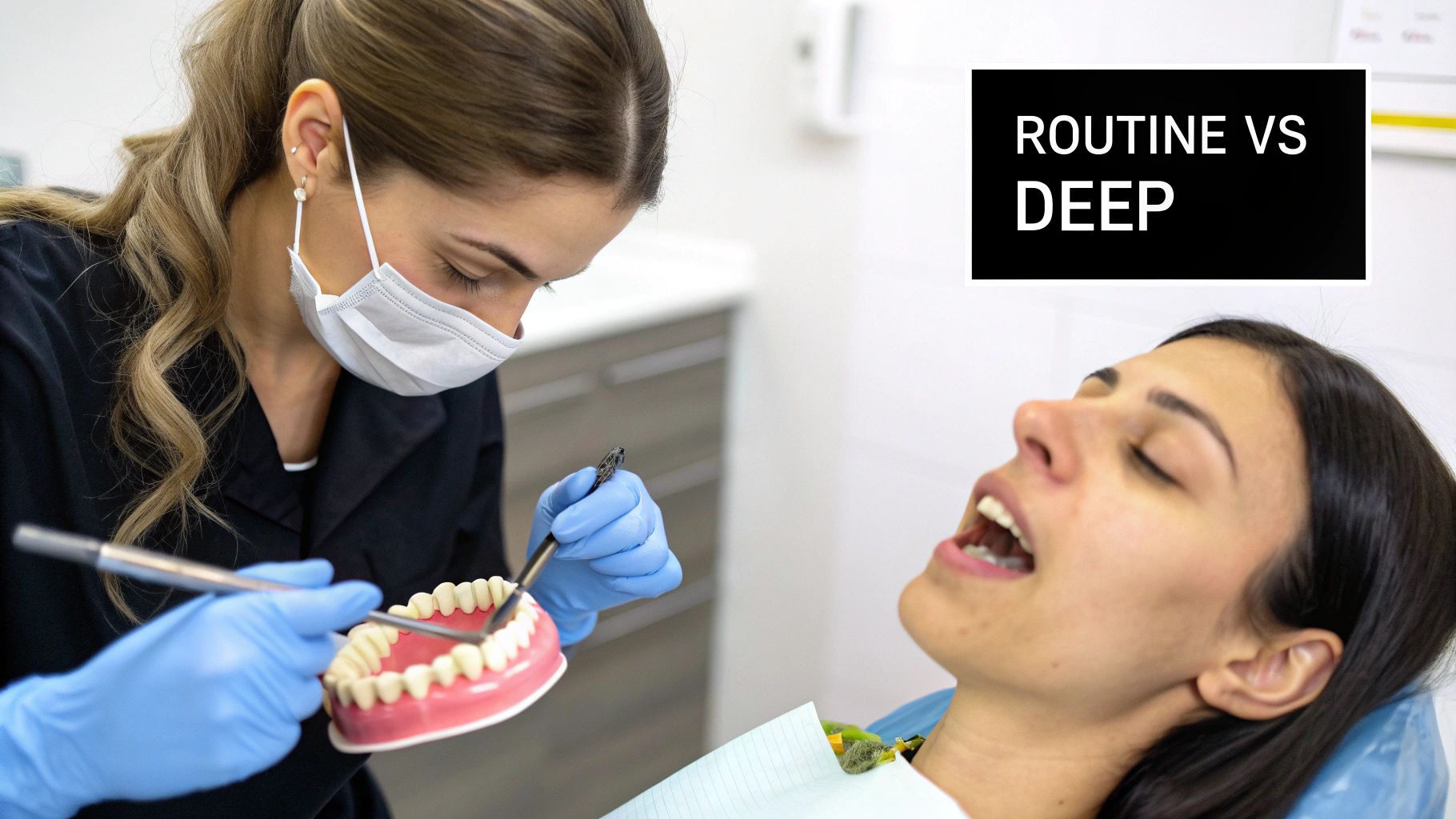
At a Glance Comparing Dental Cleanings
To help our Vienna, VA patients see the differences clearly, we've put together a simple side-by-side comparison of these two common dental procedures.
| Comparison Point | Regular Teeth Cleaning (Prophylaxis) | Deep Cleaning (Scaling & Root Planing) |
|---|---|---|
| Purpose | Preventive Care: To maintain healthy gums and prevent future disease. | Therapeutic Treatment: To treat active periodontal (gum) disease. |
| Cleaning Area | Above the gumline: Removes plaque and tartar from the visible surfaces of the teeth. | Above and below the gumline: Cleans deep pockets between the teeth and gums. |
| Anesthesia | Not typically needed: The procedure is generally comfortable and non-invasive. | Almost always used: Local anesthetic is used to numb the gums for patient comfort. |
| Frequency | Every 6 months: Recommended as part of a routine dental check-up. | As needed: A one-time treatment followed by a specialized maintenance plan. |
| Ideal Candidate | Patients with healthy gums: Those with minimal plaque buildup and no signs of gum disease. | Patients with gum disease: Those with deep gum pockets, bleeding, and bone loss. |
If there's one thing to take away, it's that these cleanings serve entirely different purposes. A regular cleaning is for prevention, much like an annual physical with your doctor. A deep cleaning is a targeted intervention—like taking an antibiotic for an infection—designed to halt the progression of gum disease and prevent more serious issues like tooth loss or the need for restorative dentistry.
Our team at Vienna Dental Implant & Family Dentistry is here to accurately diagnose your needs and recommend the right path forward for your smile.
The Prophylaxis Procedure: A Routine Teeth Cleaning
You might hear us call it prophylaxis in the office, but you know it as a routine teeth cleaning. This is the absolute cornerstone of preventive dental care and a key part of our family dentistry services. It’s much more than just a quick polish; it’s a detailed, multi-step process we use to keep your gums healthy, stop cavities in their tracks, and make sure your smile stays bright.
This type of cleaning is all about maintenance. It focuses entirely on the surfaces of your teeth at and above the gumline, making it the perfect service for patients who already have healthy gums and want to keep them that way. The whole experience at our Vienna practice is designed to be comfortable and straightforward.
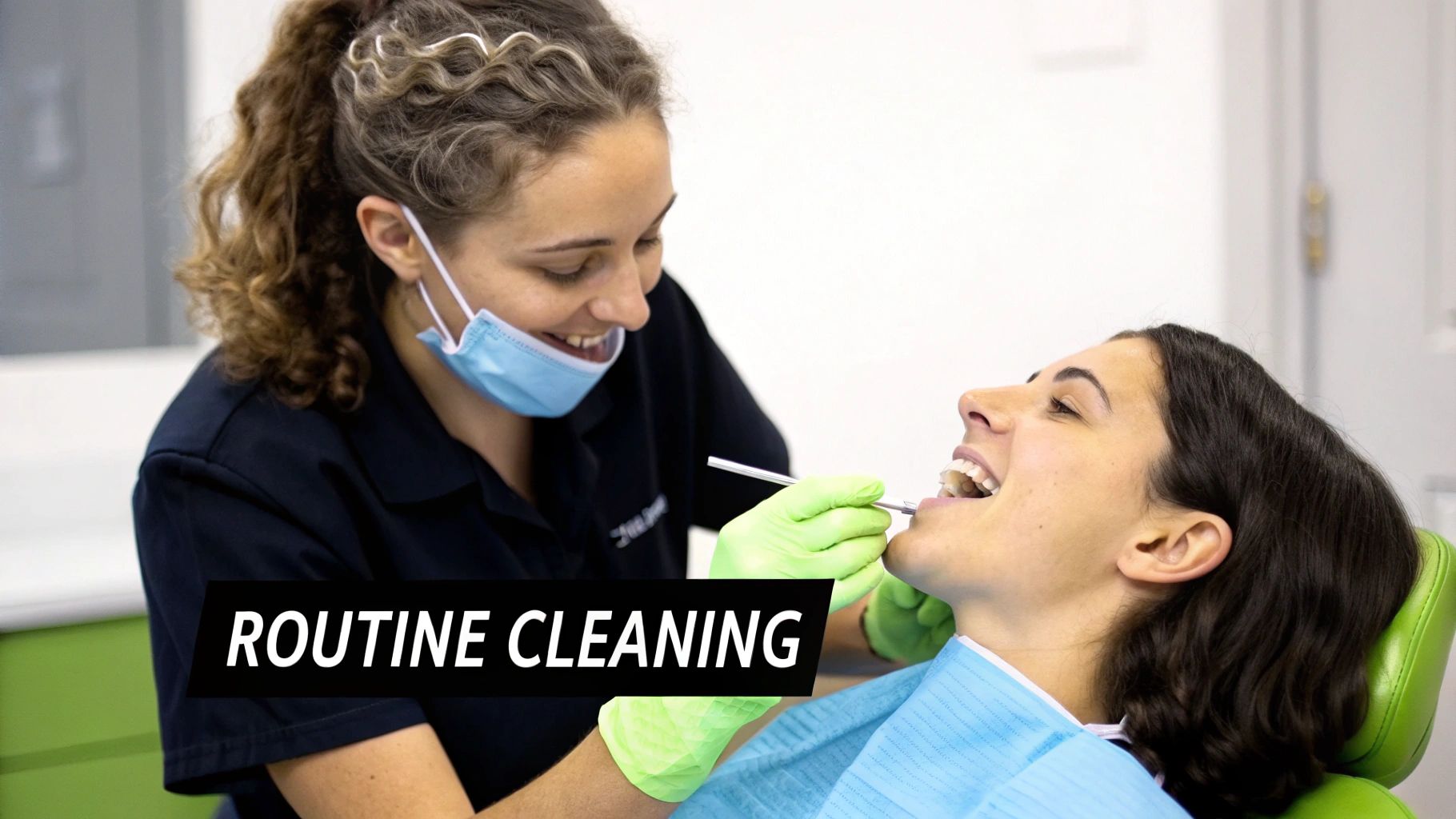
What to Expect During Your Visit
Knowing exactly what happens during your appointment can take the edge off any dental anxiety and show you the value in each step. Here’s what a routine cleaning looks like at our Vienna, VA office:
- Initial Examination: It all starts with a gentle look. Our skilled hygienist will perform a visual inspection of your mouth and may do a quick check of your gum health. This is just to confirm that a routine cleaning is the right path for you.
- Plaque and Tartar Removal: Using specialized instruments, we carefully remove the buildup of plaque—that soft, sticky film of bacteria—and tartar, which is what we call hardened plaque or calculus. Even if you're a brushing and flossing superstar, some spots are just too tough to reach at home.
- Gritty Toothpaste Polishing: Next, we bring out a high-powered electric brush and a special gritty toothpaste. This isn't just for shine; it buffs away any leftover surface stains and smoothes the tooth surfaces, which makes it harder for new plaque to get a foothold.
- Expert Flossing and Rinsing: We’ll then floss between every single tooth, getting deep to clear out any remaining plaque or polishing paste. A quick rinse washes away all the debris.
- Final Check: To wrap things up, your dentist will often come in for a final look. This ensures your teeth are perfectly clean and gives you a chance to discuss any findings from your visit.
The Goal of Prophylaxis
The main goal here is simple: prevention. By getting rid of the irritants that cause gum inflammation (gingivitis) and cavities, we help you maintain a healthy mouth. Think of regular prophylaxis as your best defense against needing more intensive treatments later on.
This procedure isn't just about getting that fresh, clean feeling—it's a critical part of your overall health. Consistently removing plaque and tartar dramatically lowers your risk of developing periodontal disease, an issue that affects nearly half of American adults over 30.
At Vienna Dental Implant & Family Dentistry, we believe in making preventive care a comfortable and accessible experience for everyone. These twice-a-year appointments are a simple investment in the long-term health of your smile. You can learn more about our approach on our dental cleanings page.
Understanding Scaling and Root Planing
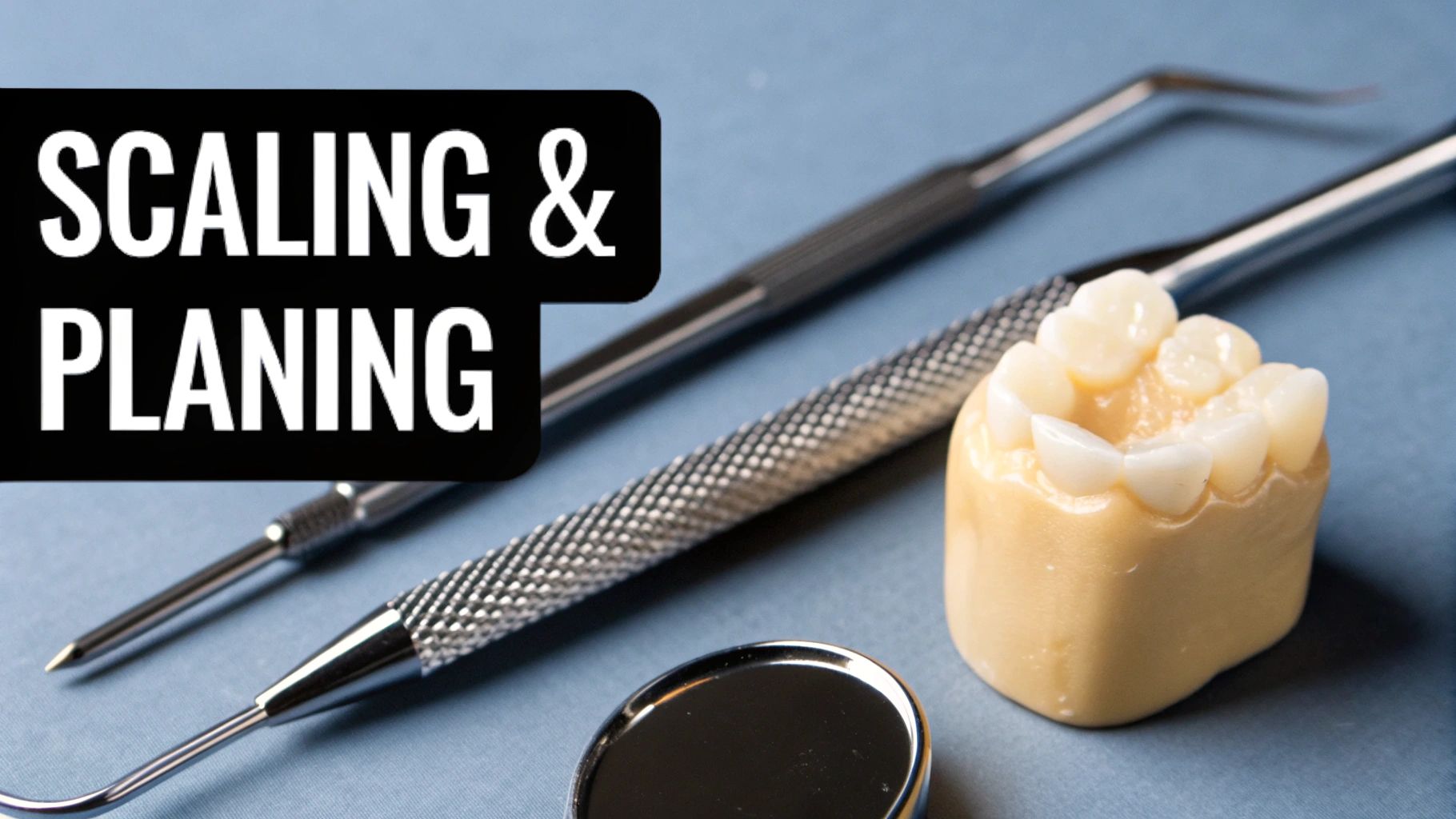
When your gums are showing signs of active disease, a standard cleaning just won't cut it—it can't reach the real source of the problem. This is where a deep cleaning, known clinically as scaling and root planing, becomes an essential medical treatment. Think of it less as an "upgraded" cleaning and more as a specific therapeutic procedure designed to stop periodontal disease in its tracks and give your gums a chance to heal.
A deep cleaning targets the area that routine care can't touch: the space below your gumline. When bacteria build up here, they form hardened deposits called calculus (or tartar) on the roots of your teeth. This buildup is a constant irritant, causing your gums to pull away from the teeth. This creates deep pockets where even more bacteria can hide, leading to infection, bone loss, and eventually, tooth loss.
The Two-Part Therapeutic Process
The name "scaling and root planing" perfectly describes the two distinct steps we take. Each one plays a critical role in clearing out the infection and creating a healthy environment for your gums to reattach to your teeth.
- Scaling: This is the first, most critical step. Using specialized instruments, our team at Vienna Dental Implant & Family Dentistry carefully removes all the plaque and hardened calculus from your tooth surfaces and, most importantly, from those deep pockets that have formed below the gumline. This process eliminates the primary source of the gum infection.
- Root Planing: After we've removed all that harmful buildup, the root surfaces are often left a bit rough. Root planing involves meticulously smoothing these surfaces down. A smooth root is much harder for new bacteria to cling to, giving your gums a clean slate to begin healing.
This one-two punch is what makes the difference between a routine teeth cleaning vs a deep cleaning so significant. It’s a targeted attack on the root cause of gum disease.
Ensuring Your Comfort Throughout the Procedure
We understand that the idea of a "deep" cleaning can sound intimidating. At Vienna Dental Implant & Family Dentistry, your comfort is our absolute priority. Because scaling and root planing involves working below the sensitive gumline, we always use a local anesthetic to completely numb the area before we even begin.
This means you should not feel any pain during the procedure itself. Our goal is to make this vital treatment as manageable and stress-free as possible, so you can get the care you need without anxiety.
For our Vienna patients who deal with higher levels of dental fear, we also offer sedation dentistry options. These solutions can help you feel deeply relaxed and calm throughout your appointment, ensuring nothing stands in the way of restoring your gum health.
Why This Treatment Is So Important
Ignoring the need for a deep cleaning allows periodontal disease to advance unchecked. The bacteria causing the infection don't just stay in your mouth; they can enter your bloodstream and have been linked to other serious health issues. Scaling and root planing is the definitive first-line defense to stop this process.
By removing the infection and smoothing the roots, we give your gums the best possible chance to heal, tighten back up around your teeth, and shrink those pocket depths. This not only saves your teeth but also protects your overall well-being. Modern tools, like the ultrasonic scaler, help make this process more efficient and comfortable than ever. It's a foundational therapy that protects the very foundation of your smile.
When Is a Deep Cleaning Medically Necessary?
If our team at Vienna Dental Implant & Family Dentistry recommends a deep cleaning, it's never just a suggestion—it's a medical necessity based on clear clinical signs. It means you have an active infection in your gums, and this specific treatment, also known as scaling and root planing, is the essential first step to stop it from causing permanent damage. We want you to understand exactly why this procedure might be the right call for your health.
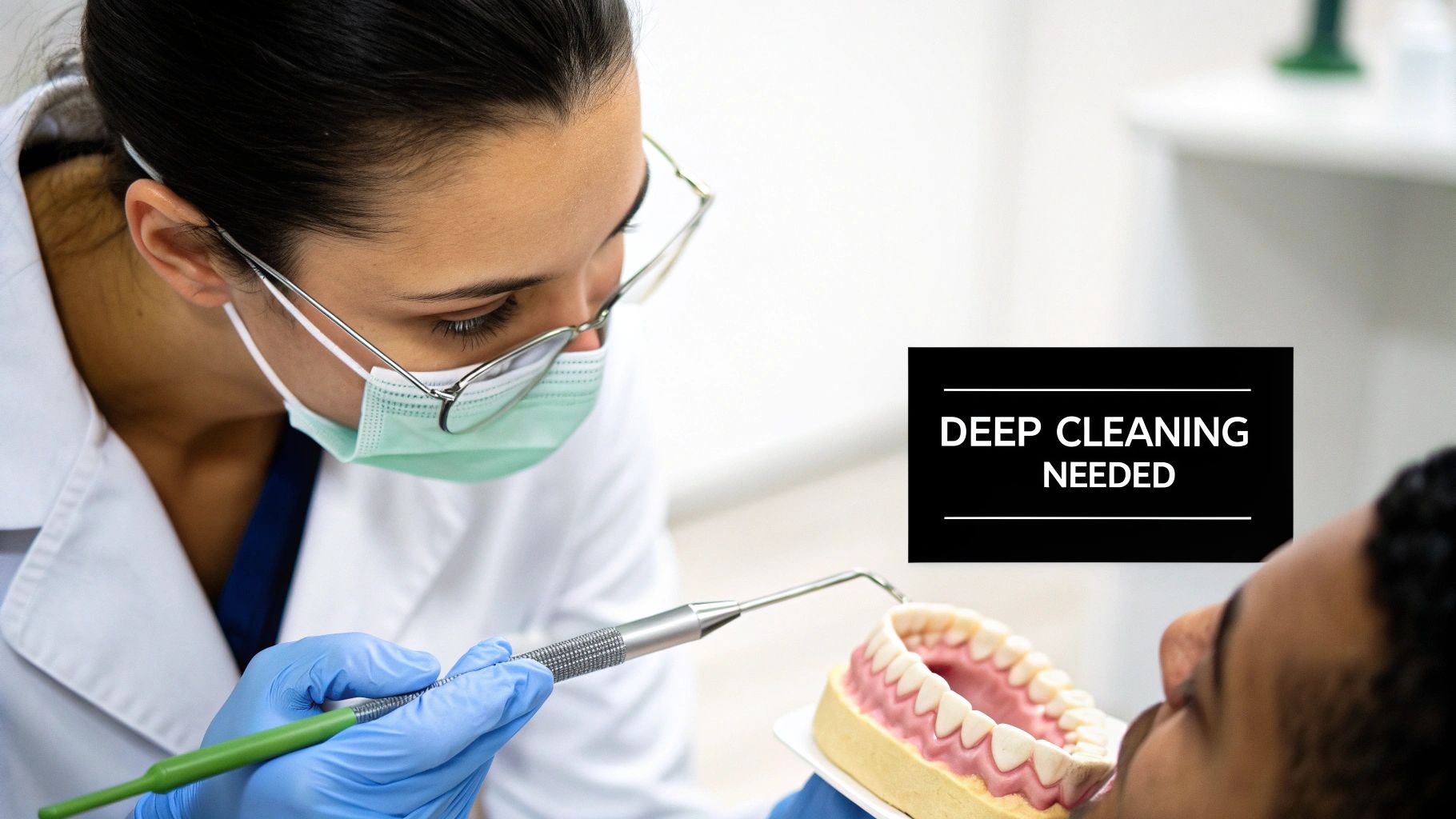
The diagnosis starts with a careful, gentle examination of your gums. This isn't just a quick glance; it's a detailed process where your dentist or one of our hygienists uses a tiny measuring tool called a periodontal probe. We use it to measure the small spaces between your teeth and gums, which are known as gingival pockets.
Interpreting the Numbers: The Pocket Depth Test
Those measurements from the periodontal probe tell a story about what’s happening below your gum line, in places you can't see.
- Healthy Gums (1-3 millimeters): Pockets that measure between 1mm and 3mm without any bleeding are considered healthy. These shallow spaces are manageable with a regular cleaning because your toothbrush and floss can still reach in and do their job.
- A Sign of Infection (4 millimeters or more): When pocket depths hit 4mm or deeper, it’s a red flag. At this depth, your toothbrush bristles simply can't reach the bottom to clear out bacteria. Plaque and tartar start to build up, sparking an active infection called periodontitis.
The jump from healthy 1-3 millimeter pockets to the 4-5 millimeter depths that signal disease is surprisingly common. Gum disease affects a huge portion of the adult population, making this distinction critical for your long-term health. If left alone, the bacteria hiding in these deeper pockets will multiply, release toxins, and eventually lead to bone and tooth loss.
Recognizing the Symptoms Yourself
While a professional diagnosis is the only way to be sure, you can often spot the warning signs of gum disease at home. If you notice any of these symptoms, it’s time to schedule a visit at our Vienna, VA office right away:
- Persistent Bleeding Gums: Healthy gums don't bleed when you brush or floss. If yours do, it's a sign of inflammation.
- Chronic Bad Breath (Halitosis): A bad taste or smell that just won't go away, even after brushing, could be a sign of infection hiding in your gum pockets.
- Red, Swollen, or Tender Gums: Healthy gums are typically firm and light pink. If your gums are puffy, dark red, or sore, they're inflamed and likely infected.
- Gum Recession: Do your teeth look like they’re getting longer? This is often because your gums are pulling away from the teeth, exposing the roots.
- Shifting or Loose Teeth: This is a more advanced sign of periodontitis. It means the infection has already started to destroy the bone that holds your teeth in place.
A deep cleaning is prescribed therapy, much like a doctor writes a prescription for an antibiotic to treat a bacterial infection. The goal is to get rid of the source of the infection, stop the gum disease in its tracks, and give your gums a clean environment so they can heal and reattach to your teeth.
Ignoring these signs allows the disease to get worse, putting you at risk for much more complex and expensive problems down the road, such as the need for dental implants or other restorative dentistry. For our Vienna and Northern Virginia patients, understanding these signs makes it clear that a deep cleaning isn't just a cleaning—it's a necessary step to protect your smile and your overall health. If you're worried about any of these symptoms, you can learn more about our dedicated gum treatment options.
Talking Dollars and Cents: The Cost of Your Cleaning
Understanding the financial side of things is a huge part of feeling comfortable with any dental treatment. Here at Vienna Dental Implant & Family Dentistry, we believe in being completely upfront about costs. We want everyone in Vienna, VA, and our neighboring communities to know exactly what to expect when they invest in their oral health.
The core difference in price between a routine cleaning and a deep cleaning boils down to what each procedure is designed to do. A routine cleaning is a preventive maintenance service, while a deep cleaning is a medical treatment for an active disease. That distinction is what drives the cost and how insurance companies look at it.
Breaking Down the Costs
A deep cleaning, or scaling and root planing, is a much more involved procedure than a standard cleaning. It requires more of our time, is often split into two appointments to ensure thoroughness, and usually involves local anesthetic to keep you completely comfortable. Naturally, these factors mean it costs more than a routine visit.
The price gap between the two is pretty significant, and it directly reflects the complexity involved. A routine cleaning might average between $100 to $200. A deep cleaning, on the other hand, is priced per quadrant of your mouth and can range from $150 to $300 per quadrant. That could bring the total to between $600 and $1,200 for your whole mouth.
While most insurance plans will cover a good chunk of a medically necessary deep cleaning, they often cover routine cleanings at nearly 100% because they fall under preventive care. For more on this, Sugarhill Corners Dentistry offers a great financial breakdown.
It’s helpful to reframe this from a "cost" to an "investment." Tackling gum disease with a deep cleaning today is far less expensive than dealing with the consequences down the road, which could involve gum surgery or replacing lost teeth with dental implants.
How Your Dental Insurance Sees It
Insurance providers categorize these two cleanings very differently, and that directly affects your out-of-pocket expenses. Getting a handle on this distinction will help you plan ahead.
- Regular Teeth Cleaning (Prophylaxis): Insurers almost always classify this as preventive care. Because they want to encourage you to prevent problems, most plans cover routine cleanings at a high rate, often 80% to 100%. This means little to no cost for you.
- Deep Cleaning (Scaling and Root Planing): This is filed as a periodontal or therapeutic procedure. Since it's a treatment for a diagnosed health problem (gum disease), coverage is usually less generous. Most plans will cover a portion, typically around 50% to 80%, but only after you’ve met your annual deductible.
Our team at Vienna Dental Implant & Family Dentistry is fantastic at navigating insurance plans. We'll help you maximize your benefits and give you a clear, easy-to-understand estimate before we begin any work.
Making Top-Notch Care Accessible in Vienna
We are deeply committed to making sure that finances never stand in the way of you getting the essential dental care you need. For our Northern Virginia neighbors without dental insurance or for those whose plans don't offer enough coverage, we proudly offer our in-house Smile Savings Plan.
This is our own membership plan, not insurance. It’s a simple, straightforward way to get significant discounts on a whole range of services, from preventive check-ups to restorative treatments. It’s designed to make your family’s dental care more predictable and affordable, so you can focus on your health without the financial stress.
Your Partner for Gum Health in Vienna, VA
Choosing the right dental team is one of the most important decisions you can make for your long-term health. When it comes down to the teeth cleaning vs. deep cleaning debate, the core takeaway is simple: regular cleanings are all about preventing disease, while deep cleanings are prescribed to treat it. Here at Vienna Dental Implant & Family Dentistry, our mission is to make sure you get exactly the care you need—nothing more, nothing less.
We’re committed to providing personalized, judgment-free dentistry. Whether you're here for routine preventive care or need a therapeutic deep cleaning to get your gum health back on track, you can expect a compassionate and understanding approach from our entire team.
A Commitment to Comfortable and Effective Care
We know that dental visits can be a source of real anxiety for many people. That’s why we’ve built our Vienna, VA practice around patient comfort and confidence. We use advanced diagnostic tools to get a precise picture of your gum health, ensuring our recommendations are always based on solid clinical evidence. This allows us to act decisively to protect your smile.
For patients who feel nervous about dental procedures, we offer safe and effective sedation options. Our goal is to remove any barrier that stands between you and a healthy mouth, ensuring your experience is as relaxed and comfortable as possible.
This patient-first philosophy is at the heart of everything we do, from a simple family check-up to more involved restorative work like cosmetic dentistry or dental implants. We believe that when you feel safe and heard, you’re empowered to take control of your oral health for a lifetime.
Your Invitation to a Healthier Smile
Maintaining healthy gums is a team effort, and we are honored to be a trusted partner for families throughout Vienna and the surrounding Northern Virginia communities. It doesn’t matter if it’s been six months or six years since your last dental visit—we are here to help you get back on track without pressure or judgment.
Let us help you achieve and maintain the healthy gums that form the foundation of a confident smile. We warmly invite you to schedule a consultation with our dedicated team. Together, we can create a plan that protects your smile and supports your overall well-being for years to come.
Common Questions We Hear About Dental Cleanings
Even after we've walked through the key differences, it's totally normal to have a few more questions pop up. We get it. At Vienna Dental Implant & Family Dentistry, we believe the best decisions are informed ones, so we’ve pulled together the most common questions we hear from our patients right here in Vienna, VA.
Our only goal is to make sure you feel confident and clear about your care, whether you're coming in for a simple check-up or a more involved treatment.
Does a Deep Cleaning Hurt?
This is usually the first thing people ask, and we have good news: a deep cleaning shouldn't be painful. Your comfort is our absolute priority. Before we begin a deep cleaning, we use a local anesthetic to completely numb the area we're working on. You shouldn't feel any pain during the procedure itself.
It's common to have some mild tenderness or sensitivity in your gums for a few days afterward as things start to heal, but this is easily managed with over-the-counter solutions. For anyone with significant dental anxiety, we also offer sedation options to ensure the entire experience is stress-free and comfortable from start to finish.
How Often Will I Need a Deep Cleaning?
This is a great question because it highlights a key difference. A deep cleaning isn't a routine, recurring appointment like a standard cleaning. Think of it more as a specific therapy designed to treat active gum disease and get your oral health back to a stable, healthy baseline. It’s a one-time treatment series, not something you'll do every six months.
Once your initial scaling and root planing is done, we'll move you to a periodontal maintenance schedule. This just means you'll come in for follow-up visits more frequently, usually every three to four months. These appointments are absolutely crucial for preventing the infection from coming back and making sure your gums are healing properly. The end goal is always to get your gums healthy enough to return to a standard six-month cleaning schedule.
Can I Just Get a Regular Cleaning Instead?
Trying to substitute a regular cleaning when a deep cleaning is what’s medically needed is something we strongly advise against—it can actually be harmful. A standard cleaning only addresses the plaque and tartar above the gumline. It simply cannot reach the infection that’s hiding down in those deep gum pockets.
Choosing a regular cleaning in this situation would be like washing the outside of a house while ignoring a fire in the basement. It leaves the underlying disease untreated, allowing it to progress and potentially lead to severe consequences like bone destruction and tooth loss.
Following the prescribed treatment is the only way to stop the infection in its tracks and protect your oral and overall health. At Vienna Dental Implant & Family Dentistry, our commitment is to provide the right care at the right time. We’re always here to answer your questions and help you navigate your path to optimal gum health with total confidence.