When a tooth is too damaged for a simple filling but not so far gone that it needs a full crown, there’s a perfect solution that fits right in the middle: dental inlays and onlays. At Vienna Dental Implant & Family Dentistry, we help our patients understand these smart, conservative treatments that can restore a smile's health and confidence.
Think of them as custom-made puzzle pieces, meticulously crafted to fit precisely into or onto a damaged tooth. They don’t just patch the problem; they restore the tooth’s original shape, strength, and function. For our community in Vienna, VA, this approach means preserving your natural smile for years to come.
Your Trusted Local Source for Inlays and Onlays
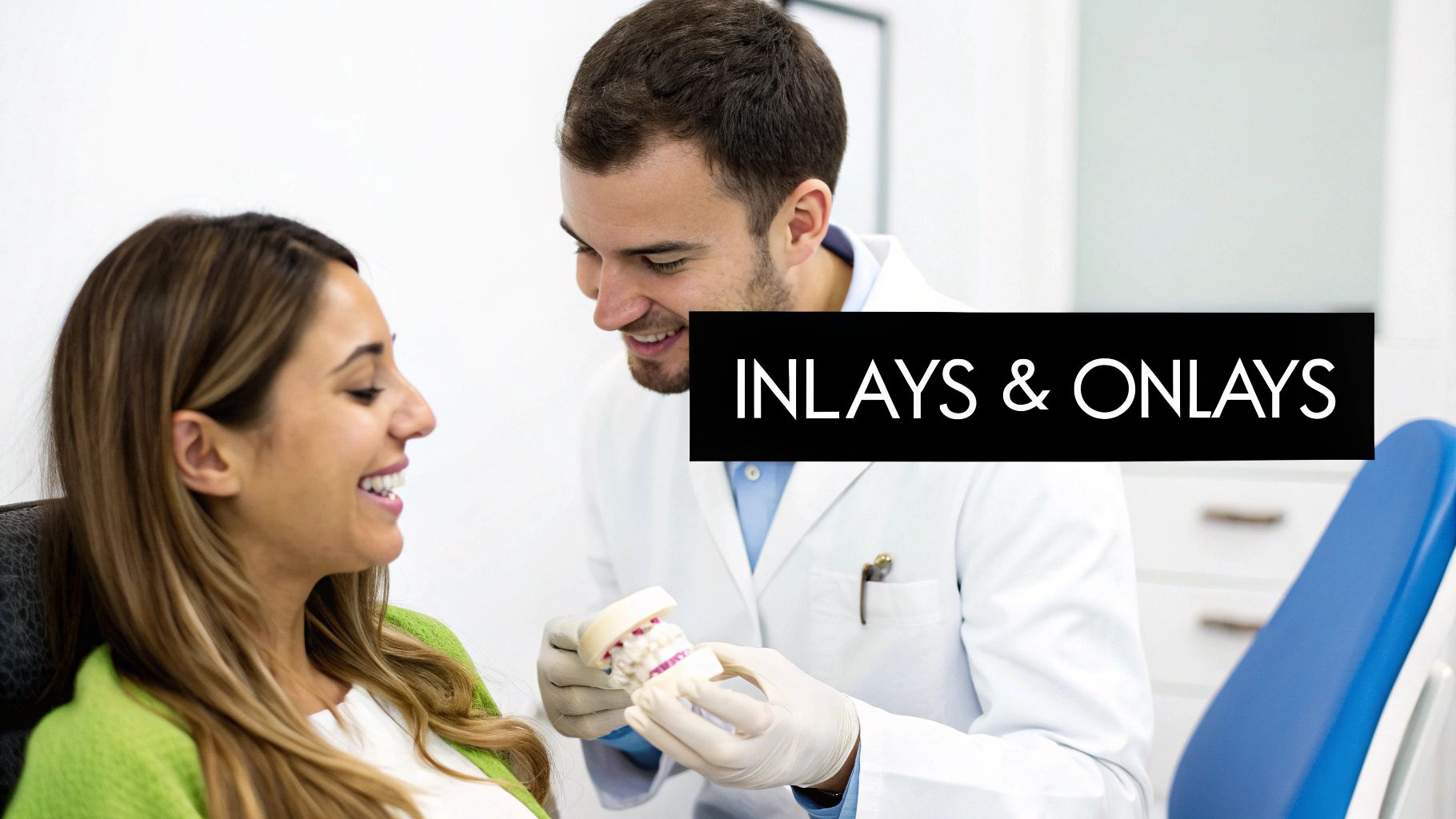
So, what exactly are inlays and onlays in dentistry? It’s a common question we hear from our patients in Vienna. You can think of them as "indirect fillings." Unlike a traditional filling that’s molded directly in your mouth during your appointment, an inlay or onlay is fabricated as a single, solid piece in a dental lab or with our advanced in-office technology. Only then is it bonded securely to your tooth.
This two-step process results in superior strength and a much more precise fit, effectively sealing the tooth against future decay. Here at Vienna Dental Implant & Family Dentistry, Dr. Vikram Chauhan often recommends these restorations as part of a conservative treatment philosophy—the goal is always to preserve as much of your healthy, natural tooth structure as possible. We are proud to offer this advanced restorative dentistry to our neighbors in Vienna and surrounding Northern Virginia communities.
The "Goldilocks" Solution for Tooth Repair
Inlays and onlays are the ideal middle-ground treatment for moderate decay or damage. They truly bridge the gap between smaller fillings and more extensive crowns, giving you a durable fix that can last for decades.
Here’s where they fit in the spectrum of dental care:
- Fillings: Best for small, contained areas of decay.
- Inlays/Onlays: Ideal for moderate damage that hasn’t compromised the entire tooth structure.
- Crowns: Necessary when a tooth is severely weakened or broken and needs complete coverage and protection.
To help you visualize where inlays and onlays fit into the broader picture of tooth repair, here’s a quick comparison of the most common restorative treatments.
Dental Restorations at a Glance
This table provides a quick comparison of common dental restorations to help you understand where inlays and onlays fit into your care at our Vienna, VA practice.
| Restoration Type | Area of Tooth Covered | Primary Use Case | Tooth Preparation Level |
|---|---|---|---|
| Filling | Small to medium cavity within the tooth cusps | Treating minor to moderate decay | Minimal: Only decayed area removed |
| Inlay | Fits within the cusps of the tooth’s chewing surface | Moderate decay or damage, too large for a filling | Conservative: More than a filling, less than a crown |
| Onlay | Covers one or more of the tooth's cusps | Extensive decay affecting the chewing surface points (cusps) | Moderate: Covers a larger surface area than an inlay |
| Crown | Covers the entire tooth above the gum line | Severe decay, cracks, or after a root canal | Extensive: Significant tooth reshaping required |
This targeted approach ensures your tooth gets exactly the level of protection it needs without the unnecessary removal of healthy enamel. Understanding your options is the first step toward making a confident decision about your oral health.
You can learn more about our approach to restorative dentistry in Vienna, VA to see how we prioritize your smile's long-term health and beauty. We're committed to helping our patients in Vienna and the surrounding Northern Virginia communities achieve strong, healthy smiles that last a lifetime.
Inlays, Onlays, and Crowns: What's the Difference?
Understanding your options is the first step toward feeling confident in your treatment plan. When it comes to restoring a tooth, it helps to think of the solutions on a spectrum—from the most conservative fix to the most comprehensive coverage.
An inlay is the most conservative of the three. It’s designed to fit perfectly within the cusps, which are the small, raised points on your tooth's chewing surface. Think of it as a custom-made puzzle piece for the very center of your tooth.
An onlay is the next step up. We turn to an onlay when the damage is more extensive and covers one or more of those cusps. Because it rebuilds part of the chewing surface, it's often called a "partial crown."
Finally, a full crown comes into play when the entire tooth structure is compromised. It’s a protective cap that covers the whole tooth, restoring its strength and shape when nothing less will do.
Preserving Your Natural Tooth
The biggest advantage of choosing an inlay or onlay over a full crown is simple: we get to keep more of your healthy, natural tooth. With these more conservative options, we only remove the damaged or decayed portion, leaving all the strong, healthy structure completely intact. This is the heart of modern, minimally invasive cosmetic dentistry.
At Vienna Dental Implant & Family Dentistry, Dr. Chauhan prioritizes these conservative approaches whenever possible. Our goal is to ensure you receive the most appropriate and least invasive treatment to support your lasting oral health.
This approach doesn't just strengthen the remaining tooth; it also reduces the need for more extensive dental work down the road. By saving as much of your natural tooth as possible, we support its long-term integrity and function.
A Modern Way to Restore Teeth
Inlays and onlays are a cornerstone of modern restorative dentistry. They offer a far more durable and beautiful alternative to traditional fillings, especially when dealing with moderate tooth damage. An inlay sits inside the tooth's cusps, while an onlay extends over one or more of them. Both are custom-milled to restore function and appearance without the significant tooth reduction a full crown requires. In fact, there's a growing preference for these advanced restorations for this very reason.
While a filling is a great solution for smaller cavities, it sometimes lacks the strength needed for larger areas of decay. In contrast, an inlay or onlay is fabricated from a single, solid block of high-strength porcelain or another durable material. This makes them incredibly strong and resilient, easily standing up to the chewing forces on your back teeth. If you're wondering when a filling is the better choice, check out our guide on dental fillings in Vienna, VA.
The Step-by-Step Inlay and Onlay Procedure at Our Vienna Practice
Knowing what to expect during a dental procedure makes all the difference, and our goal at Vienna Dental Implant & Family Dentistry is to make you feel comfortable and informed every step of the way. We’ve found that when patients understand the process, any anxiety they might have simply melts away.
Thanks to incredible advancements in dental technology, what used to be a multi-appointment process can now often be completed in a single, convenient visit. We're proud to offer this streamlined experience right here in our Vienna, VA office, walking you through each part of the journey—from your initial exam to the moment you leave with your final, perfectly fitted restoration.
Your Journey to a Restored Smile
The entire procedure is straightforward and designed with your comfort as the top priority. Dr. Chauhan and our team are here to ensure you feel relaxed and in control from start to finish. For patients who feel a bit of dental anxiety, we also offer gentle sedation dentistry to create a completely stress-free and positive experience.
Here’s a look at what the process typically involves at our Vienna practice:
- Consultation and Tooth Preparation: It all starts with a thorough exam to make sure an inlay or onlay is the ideal fix for your tooth. Once we've confirmed the plan, we'll gently numb the area and remove any decay or old filling material, carefully shaping the tooth so it's ready to receive its new, custom restoration.
- Digital Impressions: Forget those messy, goopy impression trays from the past. We use a high-tech digital scanner to capture an incredibly precise 3D model of your prepared tooth in seconds. This digital blueprint is the key to creating a flawless, seamless fit.
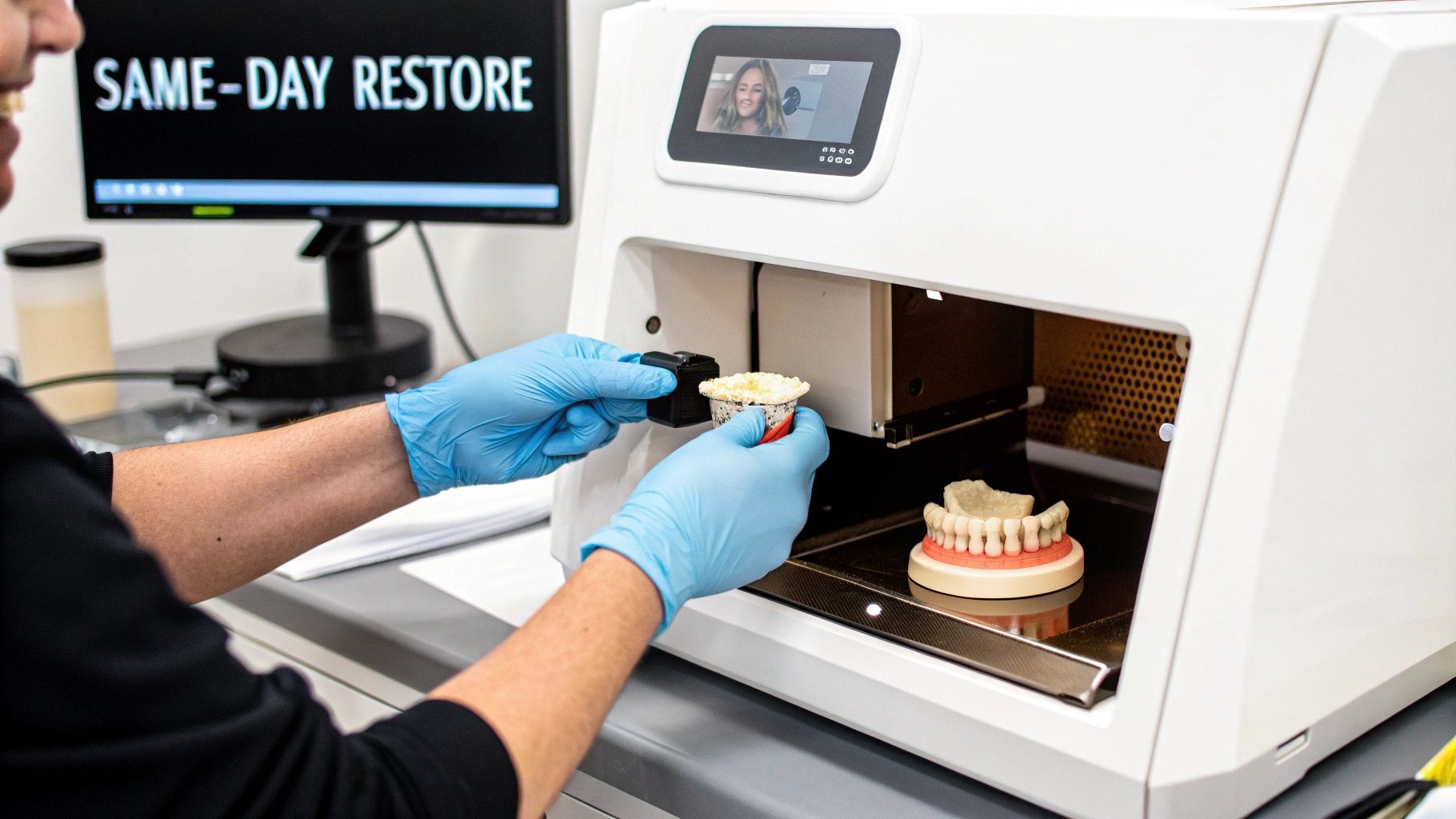
- In-Office Custom Milling: This is where the magic happens. Your 3D model is sent wirelessly to our on-site CEREC milling machine. While you relax in the chair, the machine meticulously crafts your custom inlay or onlay from a single block of high-quality, tooth-colored ceramic.
- Final Bonding and Polishing: Once your restoration is ready—usually in under an hour—Dr. Chauhan will check its fit, shape, and color to ensure it blends in perfectly. He then securely bonds the finished piece to your tooth and polishes it until it's so smooth and natural-looking that it's virtually undetectable.
The Power of Same-Day Dentistry
Our investment in CEREC (Chairside Economical Restoration of Esthetic Ceramics) technology is a direct commitment to our patients' time and comfort. This amazing system completely eliminates the need for temporary restorations and annoying follow-up visits, delivering a durable, beautiful result in just one appointment.
The precision of digital design and milling means your new inlay or onlay will have an exceptionally snug fit, which is crucial for sealing out bacteria, preventing future decay, and strengthening the entire tooth.
This technology allows us to provide permanent, high-quality restorations without the wait. Patients walk out of our Vienna, VA office with their final smile, skipping the inconvenience of a temporary crown and a second appointment.
Having the ability to complete the entire process in-house gives us total control over the quality and aesthetics of your restoration, ensuring it meets our exacting standards. You can learn more about how we use this technology for other treatments by reading our guide on same-day crowns in Vienna, VA. It’s just one of the ways we provide advanced, patient-focused care to our community.
Choosing the Right Materials for Your Restoration
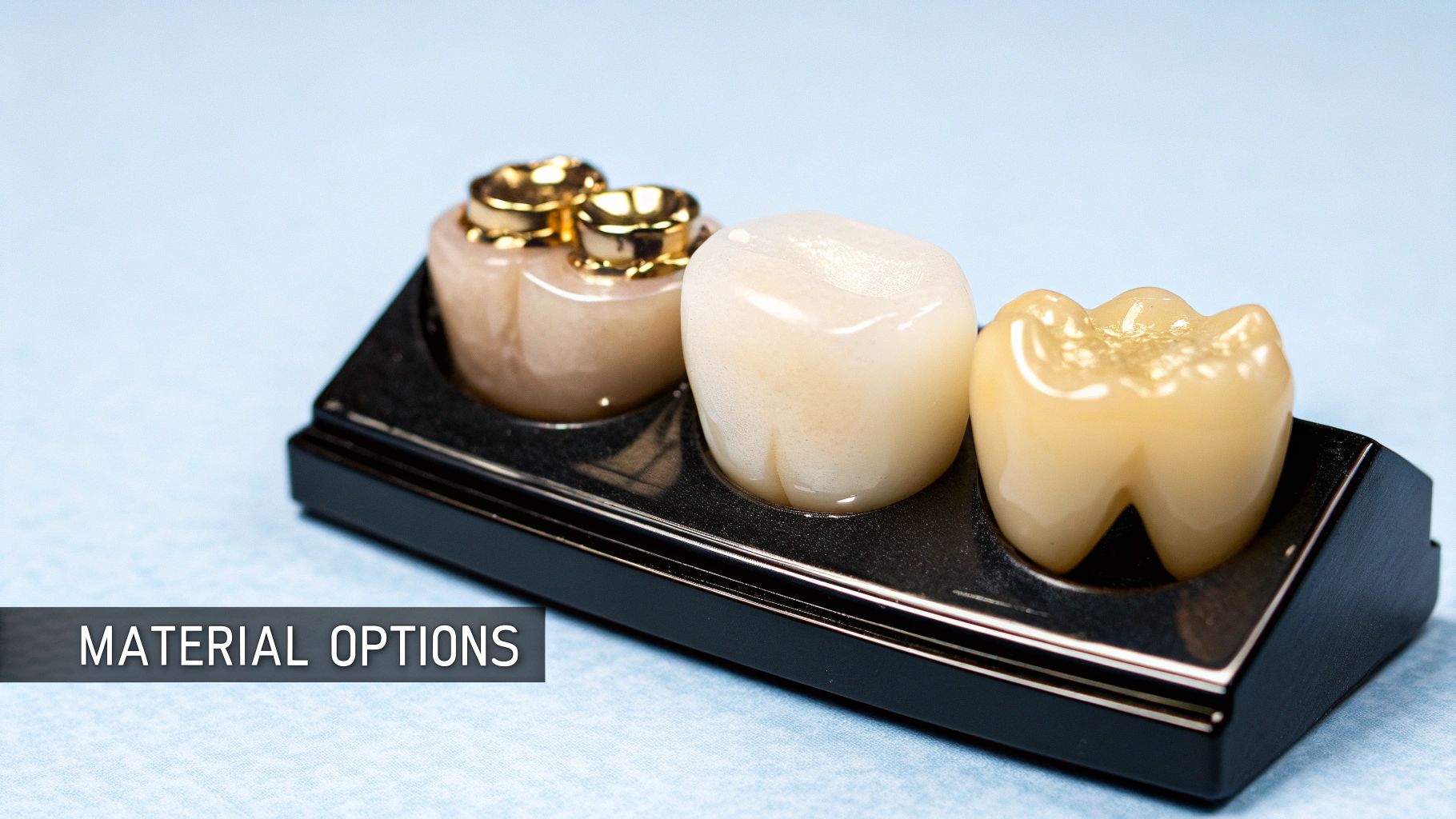
The material used for your inlay or onlay makes a huge difference in its final look, its strength, and how long it will last. Here at Vienna Dental Implant & Family Dentistry, we want you to feel confident in your choice, so we're committed to giving you clear, straightforward information about your options.
During your consultation, Dr. Chauhan will walk you through the pros and cons of each material. The goal is to find the perfect match for both your functional needs and your cosmetic goals, making sure you understand every aspect of the decision.
Porcelain and Ceramic Restorations
Porcelain, which you might also hear called ceramic, is the top choice for our patients in Vienna, VA, especially when we're working on teeth you can see when you smile. Its popularity is no surprise—it has an incredible ability to mimic the exact shade and translucency of a natural tooth.
This quality makes it a fantastic solution for cosmetic dentistry because the final restoration just blends right in. On top of that, modern ceramics are remarkably strong and stain-resistant, giving you a beautiful result that is built to last for years to come.
The demand for aesthetic dental work that looks completely natural is on the rise. In fact, recent surveys show over 70% of millennials are prioritizing cosmetic dental procedures. You can explore more insights on these market trends to see why options like tooth-colored onlays have become so popular.
Composite Resin Options
Composite resin is another great tooth-colored option. It's similar to the material we use for modern dental fillings and strikes a nice balance between looking good and being affordable.
We can precisely match the color to your natural teeth, creating a very pleasing and seamless result. While it's generally not quite as durable as porcelain or gold for handling the heavy chewing forces on your back teeth, composite is a reliable choice for smaller restorations or for anyone looking for a more budget-friendly solution.
Gold for Maximum Durability
For those back molars that take the brunt of all that chewing, gold is still the gold standard for a reason. Its strength and durability are simply unmatched.
Another unique benefit is that gold wears down at a rate very similar to natural tooth enamel, which actually helps protect the opposing teeth from excessive wear. While it's not a cosmetic choice for visible teeth, gold's legendary longevity makes it an exceptional option for out-of-sight molars. Dr. Chauhan will help you decide if its superior strength is the right trade-off for your specific situation.
The Real Benefits of Choosing Inlays and Onlays
When a tooth needs more than a filling but doesn't quite require a full crown, inlays and onlays offer a fantastic "sweet spot" solution. Think of them as custom-crafted, high-strength puzzle pieces designed to perfectly restore the damaged part of your tooth, blending strength and subtlety in a way other restorations can't match.
One of the biggest advantages is their incredible durability. While a large filling might last you 5-7 years, a well-cared-for inlay or onlay can easily last for decades.
- They are custom-milled for a perfect, snug fit that seals out bacteria.
- The stronger restoration significantly lowers the risk of future tooth fractures.
- We preserve far more of your natural tooth structure compared to a crown.
- Modern, tooth-colored materials make them virtually invisible.
In fact, clinical studies have shown up to a 50% reduction in recurrent decay when patients choose inlays and onlays over traditional large fillings.
Reduced Risk of Future Decay
The secret to their protective power lies in the fit. Because each inlay or onlay is milled from a digital scan of your tooth, the edges (or margins) are incredibly precise. This creates a rock-solid seal against the tooth that is far superior to a hand-packed filling.
Key Insight: Bacteria can't get into spaces that don't exist. The ultra-tight, bacteria-resistant seal of an inlay or onlay is crucial for protecting the tooth long-term.
This precision fit makes it much harder for plaque to build up along the edges, dramatically cutting down the risk of new cavities forming underneath the restoration.
Exceptional Durability and Fit
This isn't a one-size-fits-all fix. Each inlay and onlay is custom-designed for your tooth. This precision eliminates the tiny gaps often found in large fillings where bacteria can hide and cause trouble.
- Crafted from high-strength ceramics or gold that won't wear down.
- Easily withstand the powerful chewing forces on your back molars.
- Securely bonded to the tooth for unshakable long-term stability.
“These restorations gave me a smile I can rely on for years,” says one of our Vienna patients.
Conservation of Your Natural Tooth Structure
This is a huge one. To place a crown, a dentist has to grind away a significant amount of healthy enamel from the entire tooth. Inlays and onlays, on the other hand, are a much more conservative approach—we only remove the damaged or decayed portion.
Keeping more of your healthy tooth intact is always the goal. It maintains the tooth's inherent strength and reduces the risk of sensitivity down the road.
| Restoration | Enamel Removed | Longevity |
|---|---|---|
| Filling | 5–10% | 5–7 years |
| Inlay/Onlay | 20–30% | 15–30 years |
| Crown | 60–70% | 10–15 years |
A Seamless, Natural Look
Modern materials allow us to create restorations that blend flawlessly with your smile. No one will ever know you’ve had dental work done.
- Porcelain is the top choice, perfectly mimicking the color and translucency of natural enamel.
- Composite resin offers a solid, budget-friendly color match.
- For back molars where strength is everything, gold remains an option for unmatched durability.
A Smart Long-Term Investment
While the initial cost of an inlay or onlay is higher than a filling, their incredible lifespan often makes them more cost-effective over time. Because they last so much longer, you avoid the cost and hassle of having to replace a failing filling every few years.
With our in-house CEREC technology, we can often create and place your permanent inlay or onlay in a single visit. That means no goopy impressions, no temporary restoration, and no second appointment. You walk out with a strong, beautiful, and permanent fix the very same day.
So, Are Inlays and Onlays Right for You?
This is one of the most effective treatments in our toolkit, but is it the perfect choice for your smile? Figuring that out is a key part of the conversation we'll have during your consultation at Vienna Dental Implant & Family Dentistry.
You might be an excellent candidate if you have a tooth with damage that’s just too widespread for a simple filling, but not quite serious enough to justify a full dental crown. Inlays and onlays are the heroes of this middle-ground scenario, offering a durable, conservative fix that saves as much of your natural tooth as possible.
Ideal Scenarios for Inlays and Onlays
We often turn to this treatment in specific situations where preserving your healthy tooth structure is the number one goal. See if any of these sound familiar:
- Replacing Large, Failing Fillings: Those old silver amalgam fillings can cause big problems over time. As they expand and contract with temperature changes, they can eventually crack the tooth around them. An inlay or onlay is the perfect upgrade, replacing the old filling with a modern, bonded restoration.
- Repairing Minor Tooth Fractures: If one of the points (we call them cusps) on a molar has chipped or fractured but the rest of the tooth is in good shape, an onlay can rebuild just the damaged area. This avoids the need to grind down the whole tooth for a crown.
- Addressing Moderate Decay: For cavities that have grown too large for a filling to provide stable, long-term support, an inlay delivers far superior strength and protection against future problems.
Of course, sometimes a different solution is the better call. If a tooth is severely fractured, has deep cracks, or is structurally weak, a full dental crown will likely offer more robust, long-term protection. The same goes for patients with a history of heavy teeth grinding, or bruxism. The only way to know for sure what’s best for your unique situation is to come in for a professional evaluation.
Here in our Vienna, VA practice, we’re all about using technology to make your treatment as convenient as it is effective. We know life is busy, and market data backs this up, showing that single-visit "direct" restorations are projected to see the fastest growth—over a 12.0% compound annual growth rate through 2030. You can discover more insights about these dental market trends to see how patient demand is shaping the future of dentistry.
We invite our neighbors in Vienna and across Northern Virginia to schedule a consultation with Dr. Chauhan. Let's sit down, take a look, and figure out the best path forward for your smile.
Answering Your Questions About Inlays and Onlays
When considering a new dental treatment, it's natural to have questions. We hear a lot of the same great questions from our patients in Vienna, so we've gathered them here to give you the clear, straightforward answers you need. Think of this as a quick chat to clear up any lingering uncertainties you might have.
How Long Do Inlays and Onlays Typically Last?
This is where inlays and onlays really shine. With good oral hygiene and your regular dental check-ups, a high-quality inlay or onlay can last for an incredibly long time. Restorations made from durable materials like ceramic or gold can easily last for 15 to 30 years, and sometimes even longer.
Their impressive longevity is one of the biggest advantages they have over large traditional fillings, which often need to be replaced every 5-7 years due to wear and tear.
Is the Inlay or Onlay Procedure Painful?
Absolutely not. The entire procedure is designed around your comfort. Before we begin any work, Dr. Chauhan will make sure the tooth and surrounding gums are completely numb using a local anesthetic. You won't feel a thing.
We know that dental visits can be a source of anxiety for some. Your comfort is our top priority, which is why we offer gentle sedation dentistry options right here in our Vienna, VA office. This ensures you can relax through the entire appointment, making the experience completely stress-free while we restore your smile.
What Is the Aftercare Like for an Inlay or Onlay?
The aftercare is refreshingly simple. There are no special instructions or complicated routines. You can treat your restored tooth just like all your other natural teeth.
- Brush twice a day with a fluoride toothpaste.
- Floss daily to clean between your teeth and gently around the new restoration.
- Keep up with your regular dental cleanings and exams here at Vienna Dental Implant & Family Dentistry.
It’s also wise to avoid chewing on extremely hard things like ice or hard candy—a good rule of thumb for protecting all your teeth, not just the restored one.
Are Inlays and Onlays Covered by Dental Insurance?
In many cases, yes. Most dental insurance plans provide at least partial coverage for inlays and onlays because they are recognized as a necessary restorative procedure to repair significant tooth damage.
However, the level of coverage can vary quite a bit from one plan to another. We always recommend checking with your specific provider to get a clear picture of your benefits. Our team is also here to help you navigate your insurance and understand your coverage. At Vienna Dental Implant & Family Dentistry, we are committed to making your care accessible and affordable. Call us today to schedule your consultation and take the first step toward a healthier, more confident smile.