When a tooth gets knocked out, the clock starts ticking immediately. Your absolute best chance of saving it is to get to an emergency dentist in Vienna, VA, within 30 minutes. A dental emergency can be alarming, but knowing the right steps can make all the difference, preserving your oral health and smile.
At Vienna Dental Implant & Family Dentistry, we understand the urgency and anxiety that come with a dental injury. This guide is designed to empower our community in Vienna, VA, and the surrounding Northern Virginia areas with clear, simple instructions. Before you do anything else, remember this: handle the tooth only by the crown (the white chewing part), gently rinse it with milk if it's dirty, and keep it moist. Storing it in a small container of milk on the way to our office can save your tooth.
Your Immediate Action Plan for a Knocked Out Tooth in Vienna
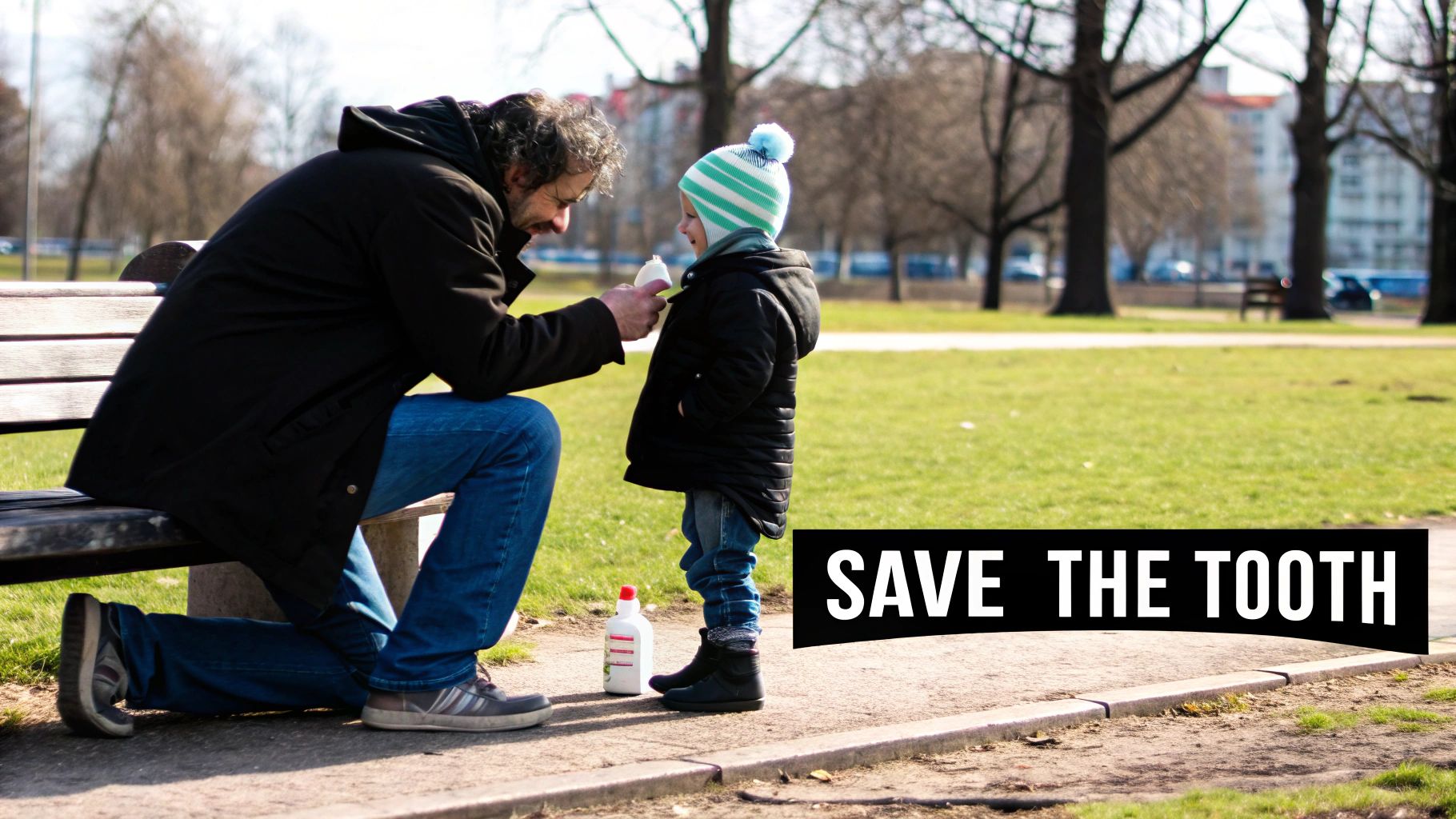
Picture a perfect afternoon at a local Vienna park that suddenly turns sideways. A child takes a tumble on the playground, or an errant ball finds its mark during a friendly game, and suddenly you're staring at a knocked-out tooth. It's a shocking moment for anyone.
But what you do in the next few minutes can literally be the difference between saving and losing that tooth. Panic is a totally normal reaction, but a calm, quick response is your most powerful tool. Knowing exactly what to do can turn a potential disaster into a manageable situation. For families here in Vienna and across Northern Virginia, Vienna Dental Implant & Family Dentistry is here to help.
First, Stay Calm and Act Fast
The single most critical factor in saving a knocked-out tooth is time. The delicate cells on the tooth’s root, called the periodontal ligament, start to die almost as soon as they're exposed to air. The whole goal is to protect these cells to give the tooth the best possible chance of being successfully reimplanted.
This is why your first move should be calling an emergency dentist. At Vienna Dental Implant & Family Dentistry, we treat these situations with the urgency they deserve, offering same-day emergency appointments because we know every second counts.
Handle the Tooth with Extreme Care
Once you've found the tooth, how you handle it is everything. Follow these essential steps to prevent doing more harm than good:
- Pick it up by the crown. Never, ever touch the root (the pointy, yellowish part). The root is covered in sensitive cells that are essential for reattachment. Handling it by the crown—the smooth, white part you normally see—is the only safe way to protect these tissues.
- Gently rinse it if necessary. If the tooth is dirty, give it a quick, gentle rinse (no more than 10 seconds) with milk or a saline solution. Do not use tap water—its chemical makeup can damage the root cells. Absolutely no scrubbing, wiping, or using any kind of soap.
- Try to put it back in the socket. If you can, gently guide the tooth back into place. Have the person bite down on a clean cloth or gauze to hold it steady. If it doesn't slide back in easily, don't force it. This is a crucial step if it's an adult tooth!
To help you remember these critical steps under pressure, we've put together a quick reference table.
Immediate First Aid for a Knocked Out Tooth
| Action Step | What to Do (The Right Way) | What to Avoid (Common Mistakes) |
|---|---|---|
| Locate the Tooth | Find the tooth and stay calm. | Panicking and wasting precious time. |
| Handling | Pick it up only by the crown (the white part). | Touching the sensitive root. |
| Cleaning | Gently rinse for 10 seconds with milk or saline solution. | Rinsing with tap water, scrubbing, or using soap. |
| Reinsertion (Adult Tooth) | Gently try to place it back in the socket. | Forcing the tooth if it doesn't go in easily. |
| Storage | Store it in a small container of milk or the person's own saliva. | Letting it dry out or wrapping it in a tissue. |
| Emergency Care | Call Vienna Dental Implant & Family Dentistry immediately and get here within 30-60 minutes. | Waiting to see if it's a serious problem. |
Following these guidelines dramatically increases the odds of a successful outcome.
Traumatic dental injuries are far more common than you might think. More than five million teeth are knocked out every year in the U.S. alone. But getting to a dentist within 30 minutes can lead to a reimplantation success rate of up to 90% when the tooth is handled correctly. You can read more about the statistics on dental trauma and see just how vital immediate care is.
How to Properly Preserve and Transport the Tooth
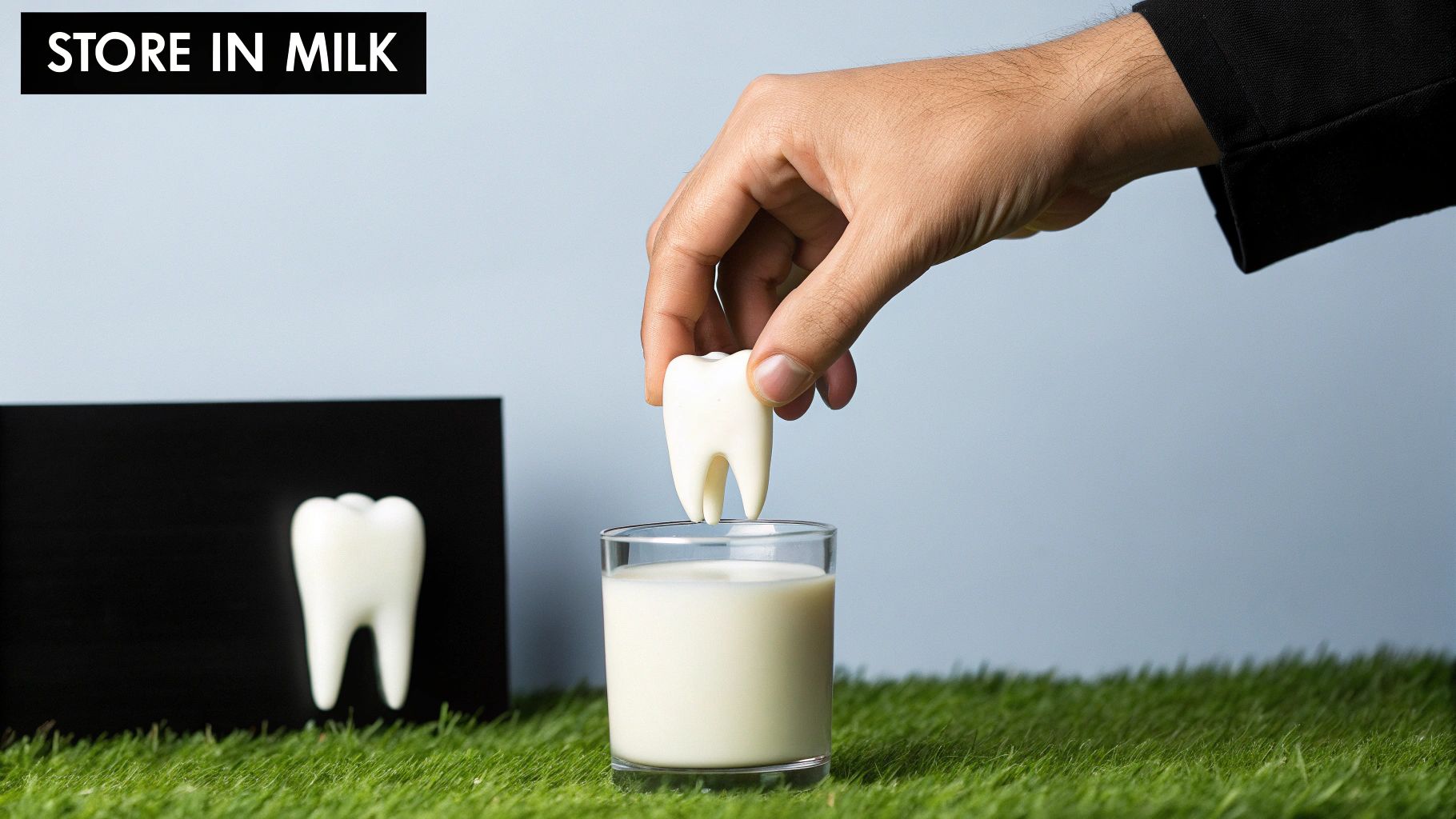
The journey from the scene of the accident to our Vienna dental office is, without a doubt, the most critical period for a knocked-out tooth. What you do in these crucial minutes directly impacts our ability to save it.
The science behind this is actually quite simple. The tooth's root is covered in living cells that make up the periodontal ligament, and these cells are absolutely essential for reattachment. Our entire goal, from the moment the tooth comes out, is to keep these delicate cells alive.
When those cells dry out, they die very quickly, and the chances of a successful reimplantation plummet. This is why you must keep the tooth moist at all costs. The right environment can preserve these tissues, giving our team at Vienna Dental Implant & Family Dentistry the best possible shot at successfully reinserting and stabilizing the tooth once you arrive.
Choosing the Best Storage Solution
Not all liquids are created equal when it comes to preserving a tooth. Believe it or not, your choice of storage medium can make a massive difference in the outcome.
- Milk is your best option. Its unique chemical composition is ideal for keeping the root cells viable, as it helps maintain their normal fluid balance. If you can, place the tooth in a small, clean container filled with milk.
- Your own saliva works well. If milk isn't available, the next best thing is to hold the tooth inside your cheek. You just have to be extremely careful not to swallow it.
- Saline solution is a good alternative. If you happen to have a first-aid kit with saline, it can also be used effectively to keep the tooth moist.
Crucial Tip: Never, ever use tap water. The properties of tap water are incredibly harmful to the root's surface cells. It causes them to swell and burst, which makes reattachment completely impossible. It is truly the worst option for transporting a tooth.
The Critical "Golden Hour"
In emergency dentistry, we talk a lot about the "golden hour." This refers to the first 60 minutes after a tooth is knocked out. Your best chances of saving the tooth are within this timeframe, especially if you can get to our Vienna office within the first 30 minutes.
After 60 minutes, those periodontal ligament cells begin to die off at a rapid rate, and the likelihood of successful reimplantation decreases significantly with each passing moment.
Every minute truly counts. Your quick thinking and proper handling of the tooth are just as important as the professional care you'll receive from us. By following these steps, you're not just a bystander—you are actively participating in saving your own smile.
What to Expect at Vienna Dental Implant & Family Dentistry
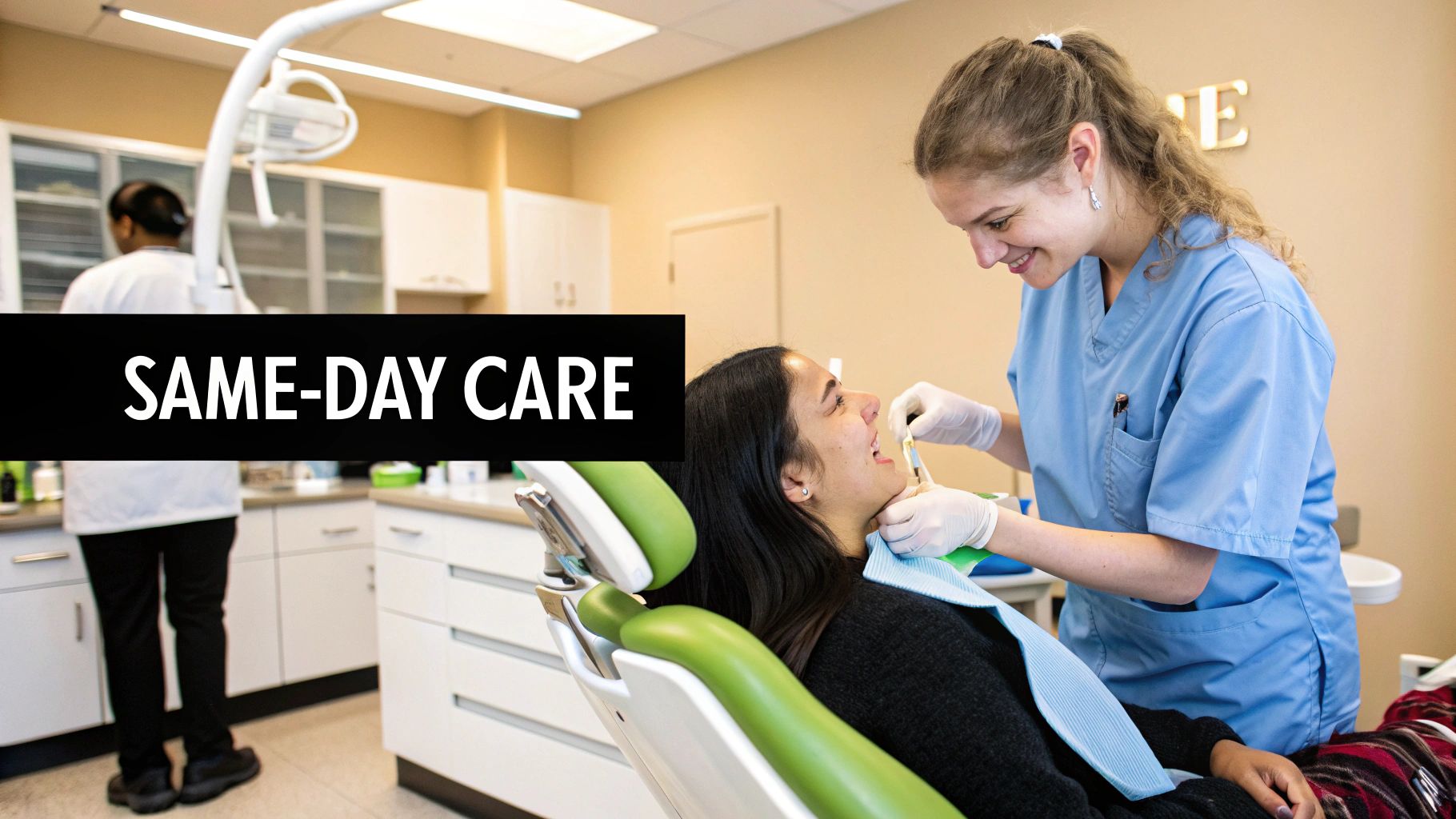
Walking into any dental office for an emergency is stressful, but our team at Vienna Dental Implant & Family Dentistry is here to make the experience as calm and reassuring as possible. The moment you arrive, our priority is to get you comfortable, address any pain, and create a clear plan to save your tooth.
Our team will start with a gentle but thorough examination. This involves carefully looking at both the knocked-out tooth and the empty socket. We’re checking for any hidden fractures in the tooth or damage to the surrounding gum tissue and bone to get a complete picture of the injury before we do anything else.
The Reimplantation and Stabilization Process
If the tooth is in good shape and the socket is viable, the next step is reimplantation. We will gently rinse the socket to clear out any debris and then carefully reinsert the tooth. Most patients are surprised by how quick and comfortable this part of the process is.
Once the tooth is back in its proper spot, it needs support to heal correctly. We do this by splinting the tooth to its neighbors. A splint is like a small, temporary brace that uses a thin wire and dental composite to hold the tooth securely in place. This stabilization is absolutely critical because it allows the delicate periodontal ligament fibers to reattach to the jawbone.
The splint doesn't just hold the tooth in place; it gives the tissues the peaceful environment they need to heal. Think of it like a cast for a broken bone—it immobilizes the area so the body can repair the connection, which is essential for long-term success.
Ensuring Your Comfort Throughout the Visit
We know a dental emergency is a difficult experience. For our patients in Vienna who feel particularly anxious, we want to ensure a completely stress-free visit. Your comfort and well-being are just as important to us as saving your smile.
From the moment you call us, we’ll guide you through every step. You can learn more about how we handle urgent situations by reading about our approach to emergency exams. Our goal is to provide immediate, expert care that turns a scary event into a story with a positive ending. We're here to restore both your tooth and your peace of mind.
Your Recovery and Aftercare Plan

Getting your tooth reimplanted is a huge win, but the journey isn't over yet. The next phase—your aftercare—is just as critical for giving the tooth its best shot at reattaching to the bone and staying healthy for the long haul. How diligent you are in the days and weeks after your emergency visit to our Vienna office will directly impact the final outcome.
Think of the splint as a cast for your tooth. Just like a broken bone, it needs time and a gentle environment to heal properly. The goal now is to minimize stress on the tooth, keep discomfort at a minimum, and prevent any chance of infection so those delicate tissues can repair themselves.
Managing Discomfort and Swelling
It's completely normal to feel some soreness and see a bit of swelling around the area for a few days. That’s just your body's natural response to the trauma. Thankfully, getting that discomfort under control is usually pretty straightforward.
An over-the-counter anti-inflammatory like ibuprofen can work wonders. To help with the swelling, try applying a cold compress to your cheek for 15-20 minutes at a time. This can also help numb the area and provide some extra relief.
Remember to be patient with your body. The goal isn't just for the tooth to stay in place, but for the periodontal ligament to fully heal and re-establish a strong connection with your jawbone. This delicate process requires a calm and stable environment.
Dietary Guidelines for Optimal Healing
What you eat after the procedure is more important than you might think. Chewing anything hard, crunchy, or sticky can put way too much pressure on the splinted tooth. This could easily disrupt the healing process or, in a worst-case scenario, cause the tooth to loosen up again. For at least the first week or two, you'll need to embrace a soft-food diet.
Here are some safe and easy food choices:
- Nutritious Soups and Broths: Easy to eat and packed with the nutrients your body needs to heal.
- Yogurt and Smoothies: Perfect for getting protein and vitamins without any chewing required.
- Mashed Potatoes and Scrambled Eggs: Classic soft foods that are gentle on your teeth.
- Pasta and Soft-Cooked Vegetables: Just make sure they are cooked until they’re very tender.
Definitely steer clear of things like nuts, hard candies, crusty bread, and chewy caramels until our team gives you the all-clear. This simple dietary tweak is one of the best things you can do to protect your healing tooth.
Oral Hygiene and Follow-Up Care
Keeping your mouth clean is absolutely crucial. An infection could seriously jeopardize the tooth's survival. You can, and should, keep brushing and flossing your other teeth normally, but you’ll need to be extra careful around the injured area.
Gently brush the splinted tooth and the surrounding gums with a soft-bristled toothbrush. We might also prescribe a special antimicrobial mouth rinse to help keep harmful bacteria under control. Post-treatment care is vital, and you can learn more about similar recovery processes in our guide on what to expect after a root canal.
Finally, your follow-up appointments at our Vienna, VA office are non-negotiable. We'll need to see you to monitor the healing, check on the tooth’s stability, and determine when the splint can come off. These check-ins allow us to catch any potential issues early and make sure your smile is on the right track for a full recovery.
What If My Tooth Can't Be Saved? Restorative Dentistry in Vienna, VA
Sometimes, even with the fastest response and the best dental care, a knocked-out tooth just can't be saved. The damage to the root might be too severe, or maybe too much time passed before you could get to our Vienna office. Hearing this news can feel incredibly disheartening, but it’s definitely not the end of your healthy, complete smile.
Think of it this way: this isn't a setback. It's an opportunity to rebuild with a modern, permanent solution that looks, feels, and functions just like your original tooth. Modern restorative dentistry has some truly remarkable ways to fill that space and get you back to normal.
Why Dental Implants Are the Gold Standard
When it comes to replacing a single missing tooth, a dental implant is almost always the best path forward. As a leading implant dentist in Vienna, VA, we know it's the closest you can get to growing a new tooth.
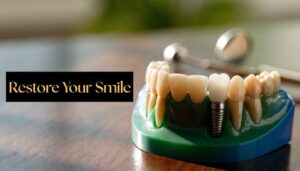
The process involves a small titanium post that acts as a new tooth root, which we surgically place into your jawbone. Over the next few months, your bone naturally fuses to this post—a process called osseointegration—creating an incredibly strong and stable foundation.
Once that fusion is complete, we attach a custom-made dental crown on top. This crown is meticulously designed to match the color, shape, and size of your other teeth, so it blends in absolutely seamlessly. The final result is a replacement that is virtually indistinguishable from a natural tooth.
The biggest advantage of a dental implant is that it's a standalone fix. Unlike other options, it doesn't rely on or put any stress on the healthy teeth next to it. This helps preserve your overall oral health for decades to come.
Other Great Ways to Restore Your Smile
While dental implants are often the ideal choice, they aren’t the only one. A dental bridge is another fantastic, time-tested option. A bridge does exactly what its name suggests: it "bridges" the gap left by the missing tooth. It’s made of a prosthetic tooth (called a pontic) that is anchored in place by crowns attached to the healthy teeth on either side. Our cosmetic dentistry services ensure that any restoration, whether an implant, veneers, or a bridge, looks completely natural.
Bridges are a reliable and beautiful way to restore your smile and your ability to chew properly. When you come in for a consultation here in Vienna, VA, we will walk you through the pros and cons of each approach. We'll help you make an informed decision based on your specific situation, your overall oral health, and what you want for your smile long-term. To get a head start, you can dive into a detailed comparison of dental implants and other restorations in our guide.
Losing a tooth is stressful, but the solutions available today mean you never have to live with a gap. Through expert restorative care, we can bring back not just your tooth, but your confidence, too.
Need an Emergency Dentist in Vienna? We’re Here for You.
When a dental emergency like a knocked-out tooth happens, knowing the first-aid steps is critical. But just as important is knowing exactly who to call. For families in Vienna, VA, and across Northern Virginia, Vienna Dental Implant & Family Dentistry is that call. We’re here to provide immediate, expert care with the compassion you need in a stressful moment.
The most important things to remember are simple but powerful: act fast, handle the tooth only by the crown, keep it moist, and call a dentist immediately. Every single minute counts, which is why we always prioritize dental emergencies. We keep slots open for same-day appointments to give you the urgent care needed to save your tooth. Our team is ready to manage your situation with skill, calmness, and reassurance.
The Best Time to Prepare for an Emergency Is Now
No one ever plans for a dental emergency. They’re sudden, chaotic, and often painful. That’s why the best time to get ready for one is right now, before it ever happens. We urge all our local families to take one simple, proactive step today.
Save our number in your phone. Right now. When an accident strikes and your stress is through the roof, the last thing you want to do is waste precious seconds frantically searching for a dentist you can trust. You’ll already know who to call.
Vienna Dental Implant & Family Dentistry
(703) 991-9870
112 Pleasant St. NW, Suite H, Vienna, VA 22180
Being prepared can turn a moment of sheer panic into a clear, manageable plan of action. Let our team be your first call. We're here to provide the expert care that restores not just your smile, but your peace of mind too. Schedule your consultation today.
Common Questions About Knocked-Out Teeth
When you’re in the middle of a dental emergency, your mind is probably racing with questions. We get it. Here in Vienna, we want our patients to have clear, quick answers when every second counts. Let’s tackle some of the most common concerns we hear about knocked-out teeth.
What If My Child Knocks Out a Baby Tooth?
Seeing your child with a gap in their smile from an accident is jarring, but if it’s a baby tooth, take a deep breath. Your first instinct might be to put it back in, but you absolutely shouldn't. Trying to reinsert a baby tooth can seriously damage the permanent adult tooth growing quietly beneath the gums.
Instead, your job is to be the calm in the storm. Use a clean cloth to manage any bleeding, comfort your child, and then give our Vienna office a call. As a trusted family dentistry provider, we’ll want to get them in to make sure there isn't any other damage to their gums or the neighboring teeth.
Should I Go to the ER or the Dentist?
For a knocked-out tooth, your dentist is always the best choice. Emergency rooms are incredible for major medical trauma, but they simply aren’t set up with the specialized tools or dental expertise needed to properly handle and reimplant a tooth. The clock is ticking, and a dentist’s office is where you’ll get the fastest, most effective care.
Of course, if the injury involves a possible concussion, loss of consciousness, or bleeding that you can't get under control, head to the ER first. Once you're cleared medically, follow up with us for the dental side of things.
Untreated dental issues are a bigger deal than many people realize—they affect nearly half the world’s population, leading to lost time at work and school. By choosing a dental office like ours for tooth-specific trauma, you’re not only getting the right care but also helping the healthcare system run more efficiently. You can discover more insights on the impact of oral health from the CDC.
How Long Will the Splint Need to Stay On?
If we're able to successfully reimplant your tooth, we’ll secure it with a small splint bonded to the neighboring teeth. Think of it like a cast for your tooth.
Typically, this splint will stay in place for about one to two weeks. The exact timeline really depends on how severe the injury was and how quickly your body heals. Our team will keep a close eye on your progress during follow-up visits and will know the perfect time to remove it, letting your tooth stand on its own again.