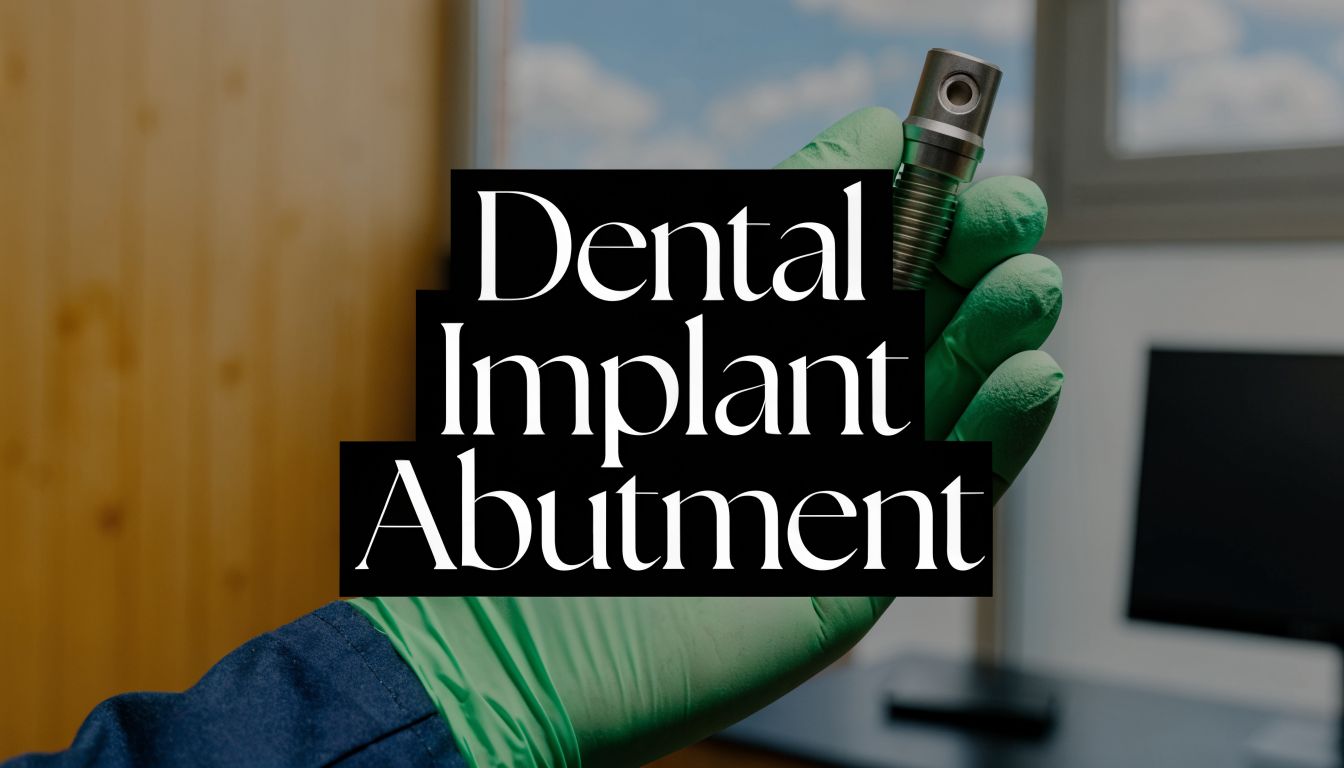
If you're reading this with a missing tooth, a loose temporary, or a treatment plan in your hand, you're probably trying to make sense of a lot of unfamiliar words. One of the most confusing is abutment. Patients in Vienna often understand the implant and the crown, but they aren't sure what sits between them or why that small piece matters so much.
That confusion is normal. The abutment is small, but it plays a big role in how your implant looks, feels, and lasts. If you want to understand what is a dental implant abutment, the simplest answer is this: it's the connector that allows the implant in your jaw to support the visible tooth above it.
Your Journey to a Complete Smile with Dental Implants in Vienna VA
A missing tooth changes more than your smile. You may find yourself chewing on one side, covering your mouth when you laugh, or putting off photos because your eye goes straight to the gap. Some people feel embarrassed. Others are just tired of thinking about it every day.
You are not alone in that. In the United States, approximately 120 million Americans are missing at least one tooth, and more than 36 million have no teeth at all, according to Grand View Research's dental implants and abutment systems market report. Missing teeth are common, but they still feel personal when it's your mouth, your comfort, and your confidence.
What patients are often worried about
For many people in Vienna, VA and nearby Northern Virginia communities, the questions sound familiar:
- Will an implant look natural? Especially if the missing tooth is near the front.
- Will the process hurt? This is often the first concern for anxious patients.
- How many parts are involved? Patients hear words like implant post, healing cap, abutment, and crown and feel overwhelmed.
- Will it last? Patients generally seek a result that feels worth the time and investment.
Those are good questions. They deserve straight answers.
A well-planned implant isn't just about replacing a tooth. It's about rebuilding support from the jawbone up, so the final result feels stable and looks natural.
Dr. Chauhan approaches implant care the way many nervous patients need it explained. Slowly, clearly, and without jargon when simple words will do. If you've been searching for dental implants near me in Vienna, VA, it helps to know that each part of the process has a purpose. Once you understand the abutment, the whole treatment plan starts to make more sense.
Why this small part matters so much
People rarely notice the abutment because it usually sits under the crown. But dentists pay close attention to it because it affects fit, gum shape, bite support, and long-term stability. A strong implant with the wrong connector can still create problems.
That’s why learning this one term can lower a lot of anxiety. When you understand the parts, the process stops feeling mysterious and starts feeling manageable.
The 3-Part System The Role of a Dental Implant Abutment
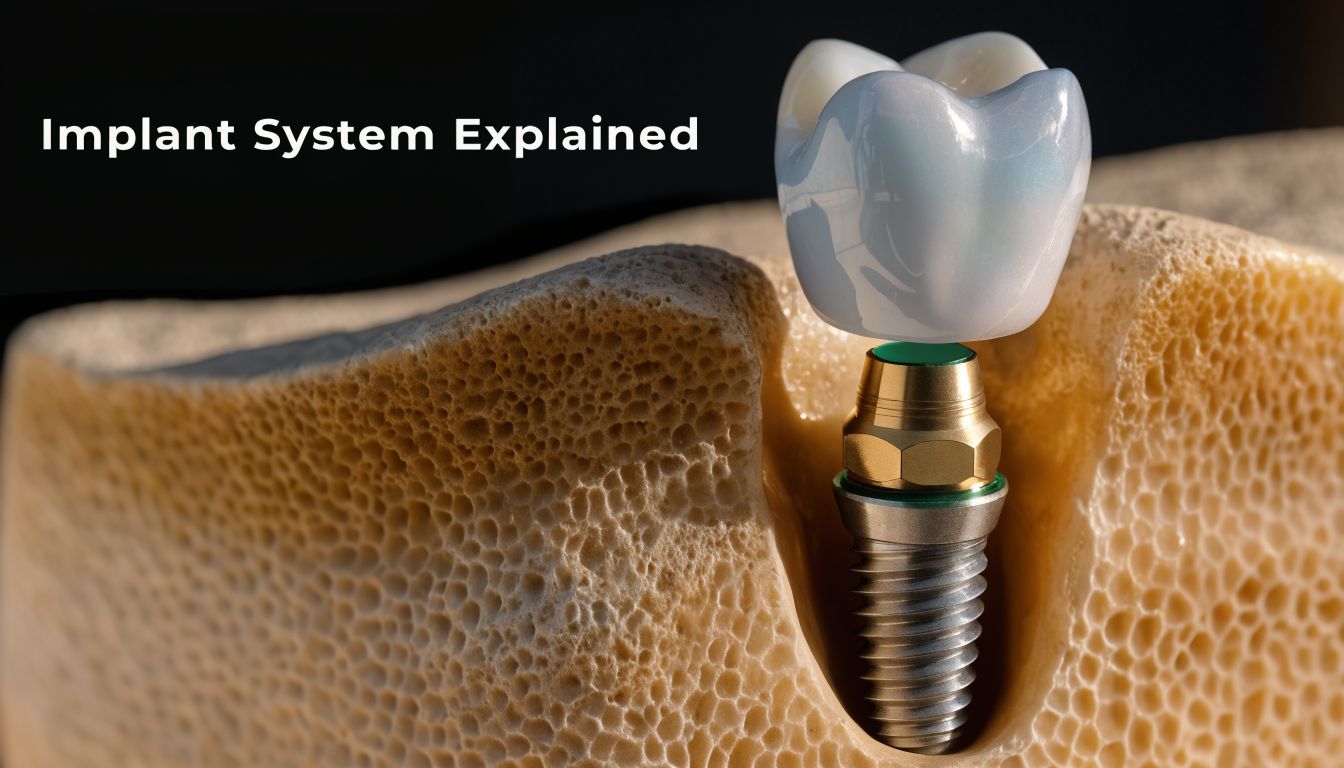
A dental implant works like a three-part system. When one part is missing, the final tooth can't function the way it should.
The three parts in plain English
Think of an implant like a lamp with three connected pieces. The base anchors it. The middle piece connects everything. The top is the part you see.
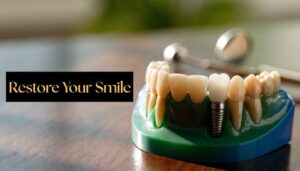
- The implant fixture goes into the jawbone. This is the artificial root.
- The abutment connects the implant fixture to the restoration.
- The crown is the visible tooth-shaped part on top.
The part most patients ask about least is the part that joins the system together. A dental implant abutment is the connecting device that joins the crown to the implant fixture, as described by GM Insights in its abutment implants market analysis.
What the abutment actually does
The abutment has a practical job. It creates the platform that lets your new tooth attach securely to the implant below. Without it, the crown would have nothing stable to sit on.
It also helps shape how the crown emerges through the gums. That matters for appearance, especially in the smile zone, but it also matters for hygiene. If the contour is awkward, food and plaque are harder to clean away.
Practical rule: The abutment may be hidden, but its design influences how your implant handles daily biting forces and how your gum tissue settles around the final tooth.
A well-chosen abutment supports comfort in ordinary moments. Biting into a sandwich. Speaking clearly. Smiling without worrying that the tooth looks bulky or unnatural.
Why dentists care about abutment height
The specific details become important. The same GM Insights source notes that a minimum prosthodontic abutment height of 2 mm is necessary to minimize bone loss and support long-term success. That doesn't mean every patient gets the same design. It means the dimensions of this small connector are not arbitrary.
If an abutment is poorly selected, the restoration may still go in, but the long-term result may be harder to maintain. Good implant dentistry isn't only about placing the implant in the bone. It's also about building the connection above it correctly.
For patients, that means one simple takeaway. The abutment isn't an extra add-on. It's one of the reasons your implant can feel secure and look like a real tooth.
Choosing Your Abutment Stock vs Custom and Titanium vs Zirconia
When patients hear that there are different kinds of abutments, the next question is usually, "Which one do I need?" The answer depends on where the implant is located, how much of your smile shows, how your gums heal, and what kind of final result you're looking for.
Some choices are mainly about fit. Others are about appearance. Sometimes the smartest option balances both.
Stock and custom are not the same thing
A stock abutment is prefabricated. It comes in standard shapes and sizes. In the right situation, it can work well and keep treatment more affordable.
A custom abutment is made for your specific implant position and gum shape. That extra tailoring often helps when the tooth is highly visible or when the implant angle isn't perfectly straightforward.
According to this overview of implant abutment options from SoCal Oral Surgery, stock abutments are often in the $200 to $500 range, while custom-milled zirconia abutments are often in the $800 to $1,500 range. That difference helps explain why treatment plans can vary.
The trade-off patients usually care about
A stock option may lower cost, but a custom option can create a more natural emergence from the gums. In plain terms, the tooth can look like it belongs there rather than like it's sitting on top of the gums.
That matters most in situations like these:
- Front tooth replacement where the gumline is visible when you smile
- Thin gum tissue where underlying material may show through
- Full-mouth reconstruction where multiple teeth must line up in a balanced way
- Unusual implant angles where a standard shape may not support the crown ideally
If your highest priority is "I don't want this to look fake," custom design often becomes part of the conversation.
Titanium vs zirconia
Material choice is another place where patients benefit from a simple side-by-side comparison. Titanium has been used very widely because it's strong and dependable. Zirconia is tooth-colored, so it can be more attractive in esthetic areas.
The same SoCal Oral Surgery source states that titanium is used in 85% of procedures, but it can create a grayish gum line in 15 to 20% of aesthetic cases, which is one reason many dentists consider zirconia when appearance is especially important.
Abutment Material Comparison Titanium vs. Zirconia
| Feature | Titanium Abutment | Zirconia Abutment |
|---|---|---|
| Appearance | Metal-colored, may show through thin gums | Tooth-colored, often preferred in visible areas |
| Common use | Used in 85% of procedures | Chosen more often when esthetics are the priority |
| Gumline effect | Can cause a grayish gum line in 15-20% of aesthetic cases | Helps avoid the dark show-through seen with metal |
| Strength profile | Known for robust strength | Often selected to improve appearance |
| Cost direction | Usually aligns more often with lower-cost stock choices | Often associated with higher-cost custom-milled options |
How the decision usually gets made
There isn't one "best" abutment for every patient. There is a best fit for your situation.
A back molar that handles heavy chewing may favor strength and function first. A front tooth may need much more attention to color, contour, and gum display. Someone with dental anxiety may also prefer the option that reduces surprises and creates a cleaner final esthetic result, especially if they want to complete treatment with as few changes as possible.
At the consultation, this decision often becomes easier once you answer three questions:
- Where is the implant located?
- How visible is that area when you smile or speak?
- Are you prioritizing lower upfront cost, the most natural appearance, or a balance of both?
The good news is that this isn't a guessing game. Abutment selection is one of the places where thoughtful planning can make the final tooth feel much more natural.
The Abutment Placement Process From Healing to Final Restoration
Many patients expect the crown to go directly onto the implant. Usually, there’s an intermediate step. Your gums and the implant site need to be prepared so the final restoration has the right support.
First the area heals
After the implant fixture is placed in the jawbone, the site needs time to heal and integrate. You may hear the word osseointegration. It means the bone is bonding with the implant so it can act like a stable root.
During this phase, some patients will have a temporary abutment or a healing component that helps protect the area and guide the gums into a healthy shape. That shaping matters because the final crown should emerge through the tissue in a way that looks natural and is easy to clean.
Then the final connection is made
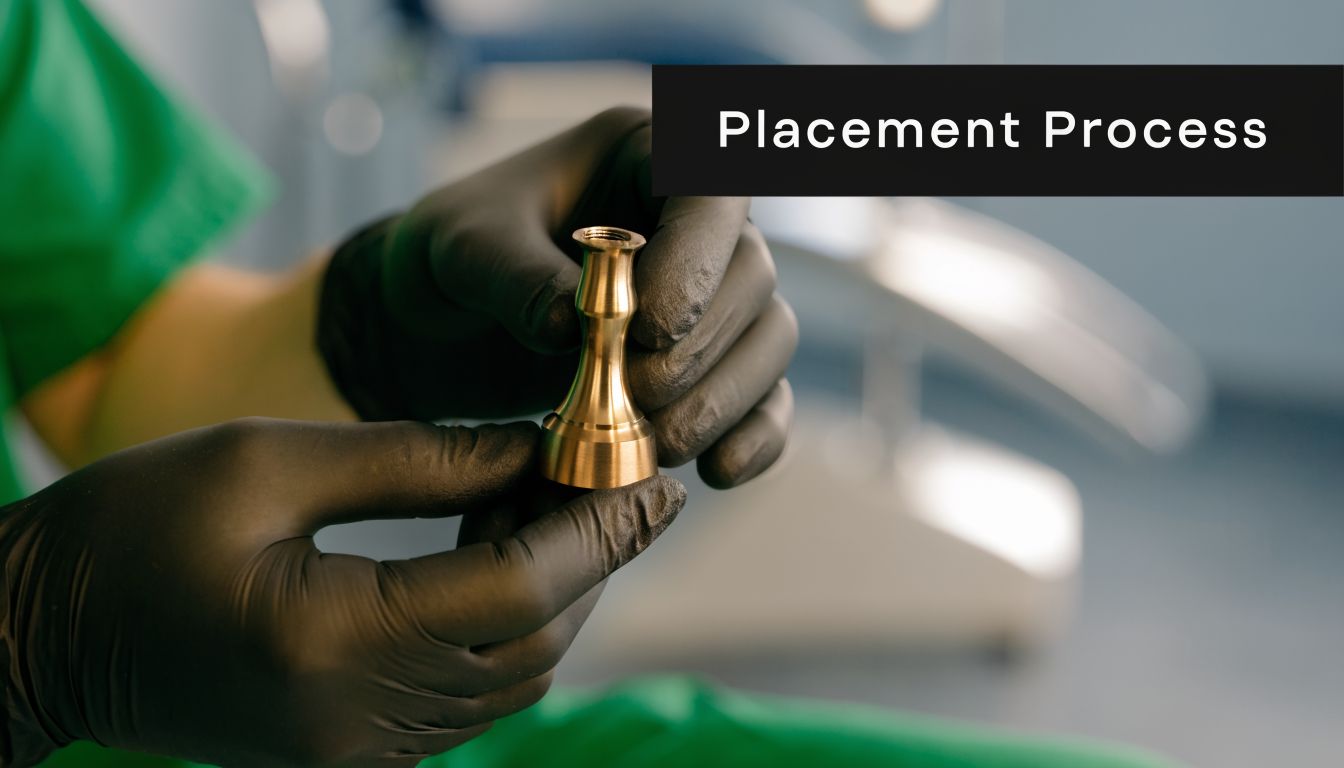
Once healing is where it needs to be, the final abutment is placed. This is the part that will support the permanent crown.
Precision matters here. At Vienna Implant and Family Dentistry, clinicians follow strict placement values, including around 15 Ncm for temporary abutments and up to 35 Ncm for final abutments, based on FDA-cleared implant system torque guidance. In practical terms, proper torque helps keep the connection stable and reduces the chance of future loosening.
A good implant restoration doesn't depend on guesswork. Small details, including how tightly the abutment is secured, affect long-term stability.
What this feels like as a patient
The appointment for abutment placement is often much less intimidating than patients expect. Patients are relieved to learn it isn't the same as the original implant surgery. By this point, much of the foundational work is already done.
A typical sequence looks like this:
- The implant site is checked to confirm healing is on track.
- The gum tissue is shaped or refined if needed for the final contour.
- The abutment is attached with the planned torque.
- A scan or impression is taken so the crown matches the new connection.
- The final crown is delivered once everything is ready.
If you'd like to see how these steps fit into the bigger picture, our dental implant timeline guide walks through the sequence from consultation to final restoration.
Where same-day dentistry can fit in
In selected cases, same-day CEREC planning may simplify the restorative phase. That doesn't mean every implant gets a same-day final crown. It means digital workflows can help move treatment along efficiently when the situation allows it.
For anxious patients, that kind of planning can be reassuring. Fewer unknowns. Fewer surprises. A clearer sense of what happens next.
Ensuring Long-Term Success Abutment Maintenance and Risk Factors
Once the crown is in place, many patients assume the hard part is over. In one sense, that’s true. In another, long-term success depends on maintenance just as much as placement.
Most implant problems don't begin with a dramatic event. They usually start with small issues such as inflammation around the gumline, buildup that’s hard to reach, or a connection that begins to loosen and goes unnoticed for too long.
What can go wrong
Long-term success rates are high, but problems can still happen. According to Crestwood Dental's discussion of implant abutment function and maintenance, abutment or implant failure occurs in 5% to 10% of cases over 10 years, often due to preventable issues like screw loosening or bone loss.
That statistic isn't meant to scare you. It should do the opposite. It tells you that monitoring matters, and many problems are easier to fix when caught early.
Warning signs patients shouldn't ignore
Call your dentist if you notice any of the following:
- Mobility. The implant restoration should not feel loose.
- Gum inflammation. Redness, puffiness, or tenderness around the implant needs attention.
- Pain when chewing. A stable implant shouldn't become suddenly uncomfortable.
- Changes in fit. If the bite feels off or the crown seems different, don't wait.
Small symptoms around an implant deserve quick attention. Waiting usually makes treatment more complicated, not simpler.
How daily care protects your investment
Good home care around an implant is not identical to caring for a natural tooth, but the goal is similar. Keep the area clean, protect the gums, and don't ignore changes.
For practical guidance, our tips on how to care for dental implants explain what patients should do at home between checkups.
A few habits matter most:
- Clean along the gumline every day, not just the biting surface
- Keep recall visits so your dentist can check the tissue and the connection
- Mention clenching or grinding if you do it, because excess bite force can create problems over time
- Speak up early if anything feels different
The goal isn't perfection. The goal is catching small issues before they become expensive or uncomfortable ones.
Understanding Abutment Costs Insurance and Investing in Your Smile
Patients understandably ask whether the abutment is included in the implant cost or billed separately. The answer depends on the treatment plan, the type of abutment used, and whether the case calls for a stock or custom design.
What matters most is understanding what you're paying for. The abutment isn't just a small metal part. It's a precision component that influences how the crown fits, how the gums respond, and how the implant holds up over time.

Why quality can matter financially
Cheaper isn't always less expensive in the long run. Better design can support healthier tissue and more stable bone around the implant.
That’s one reason dentists pay attention to advanced options such as platform-switched abutments. According to Pocket Dentistry's review of prosthetic abutment characteristics and maintenance, these designs, where the abutment is narrower than the implant, can reduce marginal bone loss by up to 62% at one year.
What patients should ask about cost
At a consultation, ask questions like these:
- Is the abutment stock or custom?
- What material is being used?
- Is the cost bundled with the implant and crown, or separate?
- If esthetics are important to me, what option supports that goal?
- Will my plan include follow-up visits and maintenance guidance?
Those questions give you a better picture than a single number alone.
Paying for implant treatment is really paying for planning, precision, materials, and follow-through. The visible crown is only part of the value.
If you're comparing options, our guide to how much dental implants cost can help you understand the bigger financial picture, including what may affect the final total.
Insurance coverage varies, and every plan is different. Some patients also look at treatment through a longer lens. Better chewing, a more natural smile, and fewer future compromises can make a thoughtfully designed restoration feel like a health decision, not just a cosmetic one.
Schedule Your Implant Consultation in Vienna VA
If you've been searching for answers because a treatment plan feels confusing, that's a good reason to come in. An implant consultation should feel calm and specific to you, not rushed or sales-driven.
Dr. Chauhan uses that visit to look at the missing tooth area, discuss your goals, and explain whether an implant is the right fit. If it is, you'll learn how the parts work together, including the abutment, and which options make sense for your smile, bite, and comfort level.
Patients with dental anxiety often feel better once they hear the process explained in plain language. That matters whether you're replacing one tooth or thinking about full-mouth reconstruction. Sedation options can also be part of the conversation for people who know they've been avoiding care because of fear.
Vienna Implant and Family Dentistry provides general, restorative, cosmetic, and implant care under one roof in Vienna, VA, which can make planning simpler for patients who want continuity throughout treatment.
If you're ready for clear answers, a no-pressure plan, and a closer look at what your smile needs, take the next step and schedule a consultation with Dr. Chauhan. Patients from Vienna and surrounding Northern Virginia communities can contact the office through the Vienna Implant and Family Dentistry website to request an appointment and learn more.