Losing a tooth can be a frustrating experience, impacting everything from your confidence to your ability to enjoy your favorite foods. At Vienna Dental Implant & Family Dentistry, we understand these concerns and are dedicated to helping our neighbors in Vienna, VA, and the surrounding Northern Virginia communities restore their smiles. Taking care of your new dental implants is much like caring for natural teeth, but a few key details will ensure they last a lifetime. The secret to a smile that holds up for decades is a straightforward, consistent routine: gentle brushing, specialized flossing, and regular professional check-ups. This commitment protects your investment and keeps your whole mouth healthy.
Your New Smile: A Lifetime Commitment to Care in Vienna, VA

Investing in dental implants at Vienna Implant and Family Dentistry is a huge first step toward reclaiming your confidence and oral health. You’ve chosen a durable, long-term solution that looks and feels completely natural. But the real secret to making that new smile last a lifetime is committing to simple, consistent care. A dental implant is a key part of our restorative dentistry services, designed to bring back full function and beauty to your smile.
Many of our patients in Vienna, VA, are surprised to learn that dental implant maintenance isn't complicated. In fact, it blends right into your existing daily habits with just a couple of mindful adjustments. This guide will walk you through everything you need to know, from the critical first 48 hours to the daily routine that will protect your implants for decades.
Why Implant Care is Different
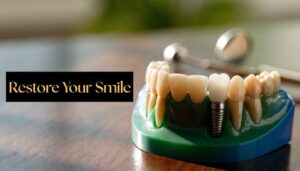
Unlike a natural tooth, a dental implant is made of three parts: the titanium post that fuses to your jawbone, the abutment connecting the post and crown, and the visible crown itself. The good news is the implant and crown are immune to cavities. The challenge? The gum tissue surrounding them is not immune to infection.
That little area where the implant crown meets the gum line is a crucial zone. If plaque and bacteria build up here, it can lead to gum inflammation, a condition we call peri-mucositis. If that's left untreated, it can progress to something much more serious.
Peri-implantitis is a condition similar to gum disease that attacks the tissues and bone around an implant, potentially leading to bone loss and implant failure. Consistent, targeted cleaning is your absolute best defense against it.
This is precisely why your home care routine and regular visits to our Vienna, VA office are so important. It's not just about keeping the crown clean; it's about maintaining the health of the gums and bone that form the very foundation of your implant.
The Foundation of Long-Term Success
The journey to a successful, long-lasting implant is a partnership between you and your dental team. We provide the expertise in placing the implant perfectly, and you provide the daily diligence to maintain it. Your commitment is what transforms a successful surgical procedure into a permanent part of your smile.
At Vienna Dental Implant & Family Dentistry, our patient-focused approach is all about education and preventive care. We want every patient in Vienna and the surrounding Northern Virginia communities to feel empowered and knowledgeable. We’ll make sure you have the right tools, the right techniques, and all the support you need to protect your investment and keep you smiling with confidence for years to come.
Navigating the First 48 Hours After Implant Surgery
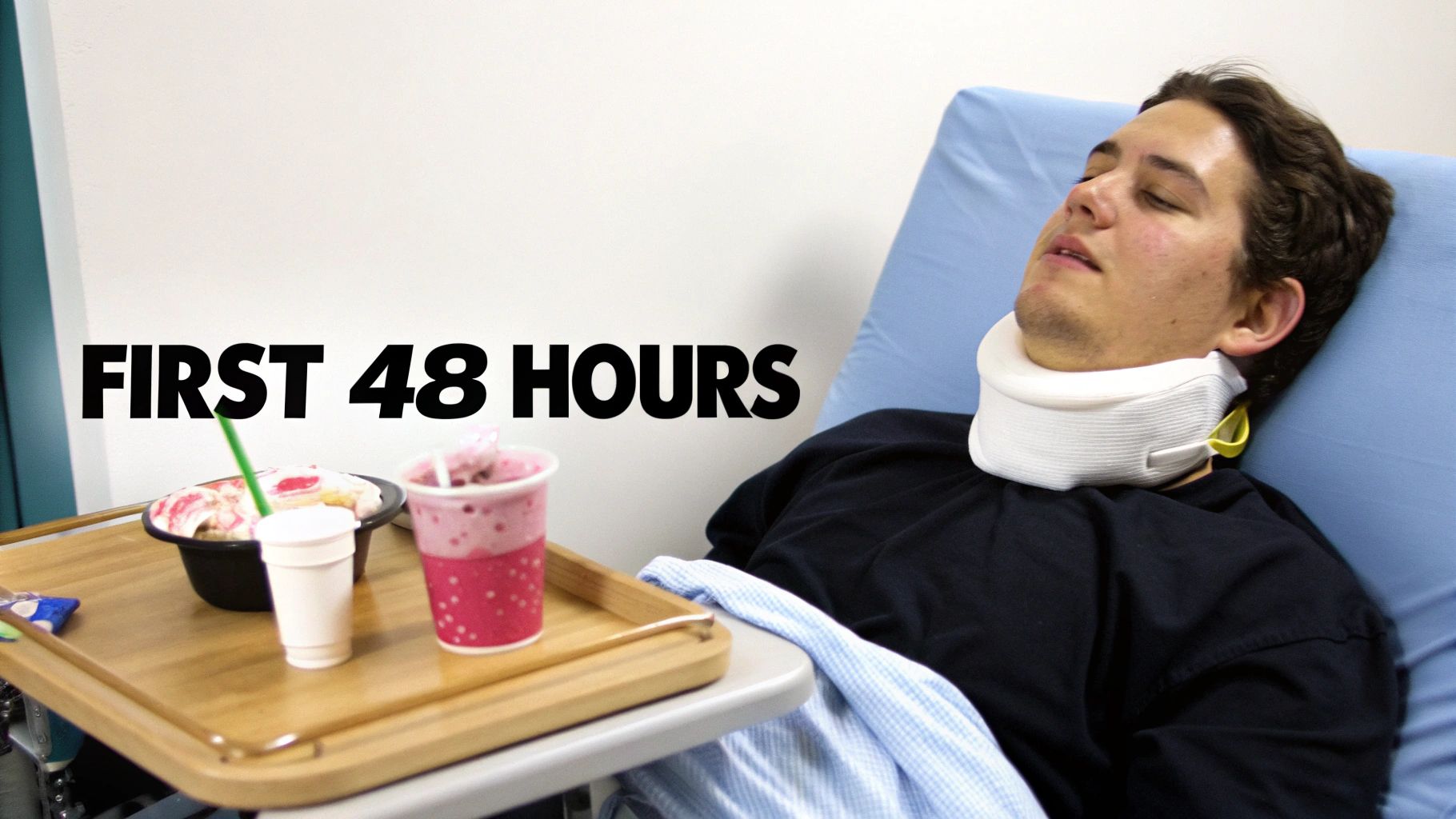
The two days right after your dental implant surgery are, without a doubt, the most important for a smooth recovery. Your body is just getting started on the healing process, and everything you do during this window has a direct impact on the final outcome. We give every patient at Vienna Dental Implant & Family Dentistry a detailed aftercare plan, but this guide will give you a clear idea of what to expect once you're back home in Vienna, VA.
Your entire focus for these initial 48 hours should be on three things: rest, keeping inflammation down, and leaving the surgical site alone. A bit of planning and listening to your body will set you up for a healing journey free of complications.
Managing Discomfort and Swelling
It's perfectly normal to feel some mild discomfort and see some swelling after your procedure. This isn't a bad sign; it's just your body's natural response kicking in to start the healing. The good news is, it's almost always very manageable.
The best way to control swelling is with a cold compress or ice pack applied to the outside of your cheek, right over the surgical area. The rhythm we recommend is 15 minutes on, then 15 minutes off for the first 24-48 hours. This simple routine helps constrict the blood vessels, which dramatically reduces inflammation and even helps numb the area a bit.
For any discomfort, we'll give you specific instructions for pain management. Often, over-the-counter anti-inflammatory medications like ibuprofen are very effective. It’s a good idea to take any prescribed medication exactly as we direct—even if you're feeling fine—to stay ahead of the pain. Our team makes your well-being a priority, and you can learn more about our approach to patient comfort during dental procedures on our website.
Your Post-Surgery Diet
What you eat (and what you don't) is a huge piece of the puzzle. For the first two days, your diet needs to be exclusively soft, cool foods that don't require much, if any, chewing. The idea is to give your body the fuel it needs without putting any stress on the new implant or aggravating the surgical site.
Here are a few great options for this initial period:
- Smoothies and Protein Shakes: Easy to get down and full of nutrients. Crucially, do not use a straw. The suction can dislodge the blood clot that needs to form over the site.
- Yogurt and Applesauce: Both are gentle, soothing, and require no chewing at all.
- Soups and Broths: Just make sure they're lukewarm or cool. Hot liquids can increase bleeding and irritation.
- Mashed Potatoes or Scrambled Eggs: These feel a bit more substantial while still being soft enough to eat without issue.
Key Takeaway: Stay far away from anything hot, spicy, crunchy, or chewy. Things like chips, nuts, crusty bread, or steak are off-limits until your dentist clears you, as they can easily damage the delicate healing tissues.
Keeping the Surgical Site Clean
Good oral hygiene is vital, but you have to be incredibly gentle. For the first 24 hours, do not rinse your mouth, spit, or brush anywhere near the surgical area. This gives that all-important blood clot—nature's bandage—the time it needs to form properly.
After that first day has passed, you can start very gentle saltwater rinses. Mix half a teaspoon of salt in a glass of warm water. Don't swish it around forcefully. Instead, just tilt your head to let the solution flow gently over the implant site, then let the water fall out of your mouth into the sink. You can do this 2-3 times a day, especially after eating, to keep the area clean.
You can brush your other teeth like you normally would, just be extremely careful to avoid the implant area. A clean mouth heals faster, which is a cornerstone of implant care from day one. If you notice bleeding that won't stop, severe pain, or swelling that gets worse after the third day, please call our Vienna, VA office immediately.
Building Your Daily and Weekly Implant Maintenance Routine
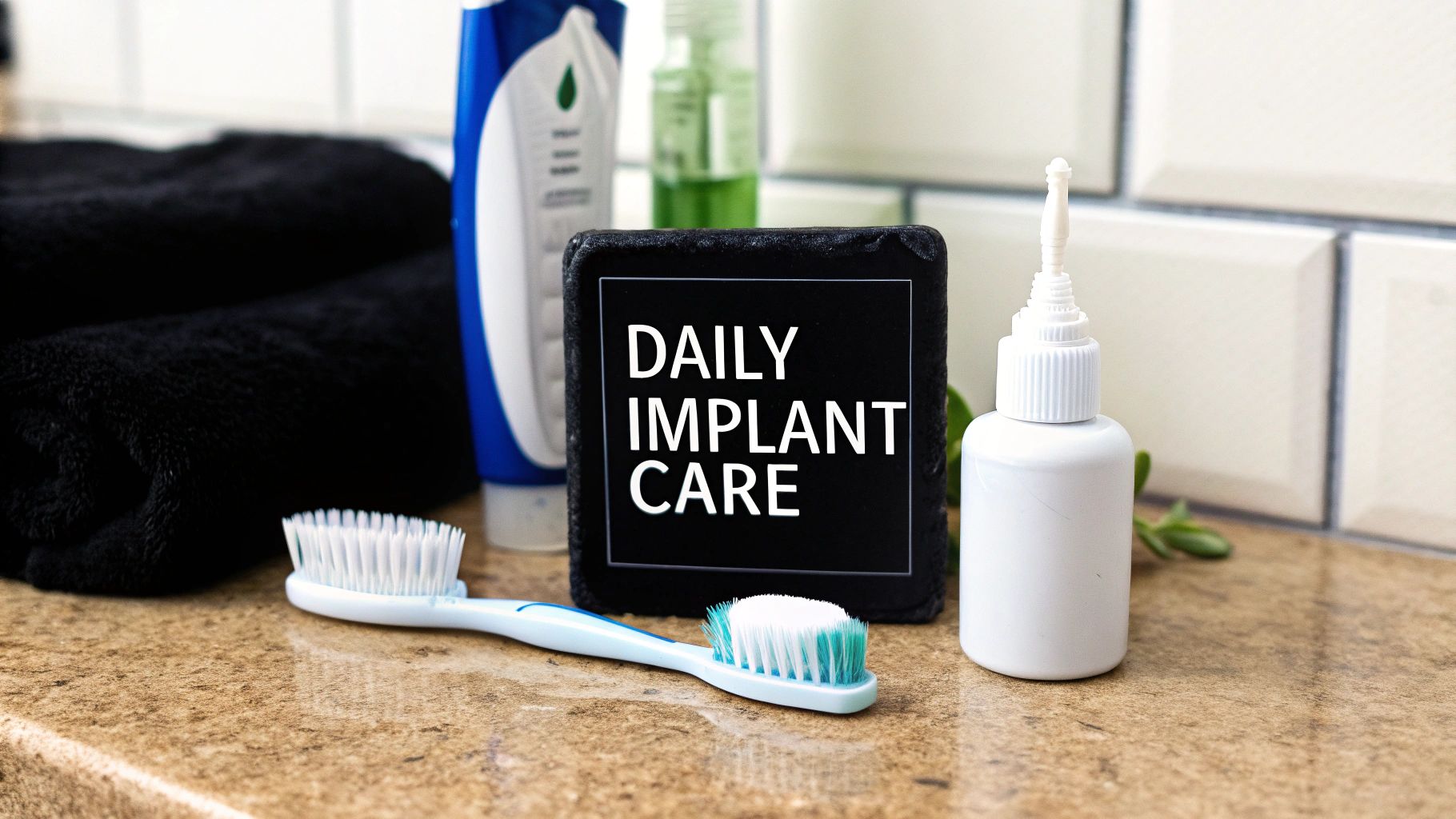
Once you’ve healed from the initial surgery, your focus shifts from short-term recovery to long-term success. Creating a solid daily and weekly routine is the single most important thing you can do to make sure your implant serves you well for decades to come.
Many of our patients at Vienna Dental Implant & Family Dentistry are relieved to learn this routine isn't complicated. It’s really just about being mindful and using the right tools to protect the gums and bone that hold your implant in place. While the implant crown itself can't get a cavity, the surrounding tissues are still vulnerable to plaque, making diligent cleaning a must.
Why Your Implant Requires Special Attention
The area around a dental implant is a bit different from a natural tooth. The seal where the implant crown meets your gum tissue is a critical spot that needs to be kept spotlessly clean. If plaque builds up here, it can lead to gum inflammation known as peri-mucositis, which is usually reversible with better hygiene.
If left unchecked, however, that inflammation can progress to a much more serious condition called peri-implantitis. This infection attacks and destroys the bone that supports your implant, which can ultimately lead to its failure. This is exactly why a proactive daily care habit is non-negotiable for keeping your implant healthy for the long haul.
The great news is that with the right routine, you can almost completely eliminate these risks. Modern implants boast a 95% average success rate over 10 years, but that number is directly tied to how well they're cared for. You can review the latest 2024 data on dental implant longevity to see just how much proper care influences success.
Your Essential Daily Cleaning Toolkit
To keep your implant in top shape, you'll want to assemble a few key tools. Your regular toothbrush is a great start, but adding a few specialized items will make cleaning far more effective and protect your investment.
| Tool | Purpose | Recommended Features |
|---|---|---|
| Soft-Bristled Toothbrush | Gently cleans the implant crown and surrounding gumline without causing irritation. | Soft or extra-soft bristles. An electric model can remove up to 21% more plaque. |
| Low-Abrasive Toothpaste | Cleans effectively without scratching or damaging the implant's surface. | Look for "tartar control" or "gentle" formulas. Avoid harsh whitening pastes. |
| Water Flosser | Flushes out plaque and debris from hard-to-reach areas around the implant. | Adjustable pressure settings are a must. Start on a low setting. |
| Interdental Brushes | Cleans the small spaces between the implant and your natural teeth. | Choose a size that fits snugly but gently. Don't force it. |
Having these items on your bathroom counter makes it easy to build a consistent, effective cleaning habit.
Crafting Your Daily and Weekly Routine
Consistency is far more important than intensity. A simple, repeatable routine performed twice a day will keep your implant—and the rest of your mouth—in fantastic health.
Your Morning and Evening Routine (Twice Daily)
- Brush Thoroughly: Spend at least two minutes brushing all your teeth, paying close attention to the implant area. Angle the bristles of your soft toothbrush toward the gum line and use gentle, circular motions.
- Clean Around the Implant: Grab your interdental brush and gently clean the sides of the implant abutment and crown. This little step is crucial for removing plaque that your toothbrush might miss.
- Use Your Water Flosser: Finish up by using your water flosser on a low-to-medium setting. Direct the stream of water around the base of the implant where it meets the gums to flush out any remaining debris.
Remember, the goal is to be thorough yet gentle. Aggressive brushing or flossing can damage the delicate gum seal around the implant. A mindful approach is always best.
Your Weekly Check-In
Once a week, take an extra minute to carefully inspect the area around your implant. Look for any signs of redness, swelling, or bleeding when you brush. Catching these early signs of inflammation allows you to step up your cleaning and stop more serious issues before they start.
If you notice any symptoms that don't go away after a couple of days, it's always best to give our Vienna, VA office a call. Regular professional check-ups are a cornerstone of long-term care; you can learn more about our expert dental cleanings for implant maintenance.
Partnering Up for a Lifetime Smile: Pro Care and Smart Habits
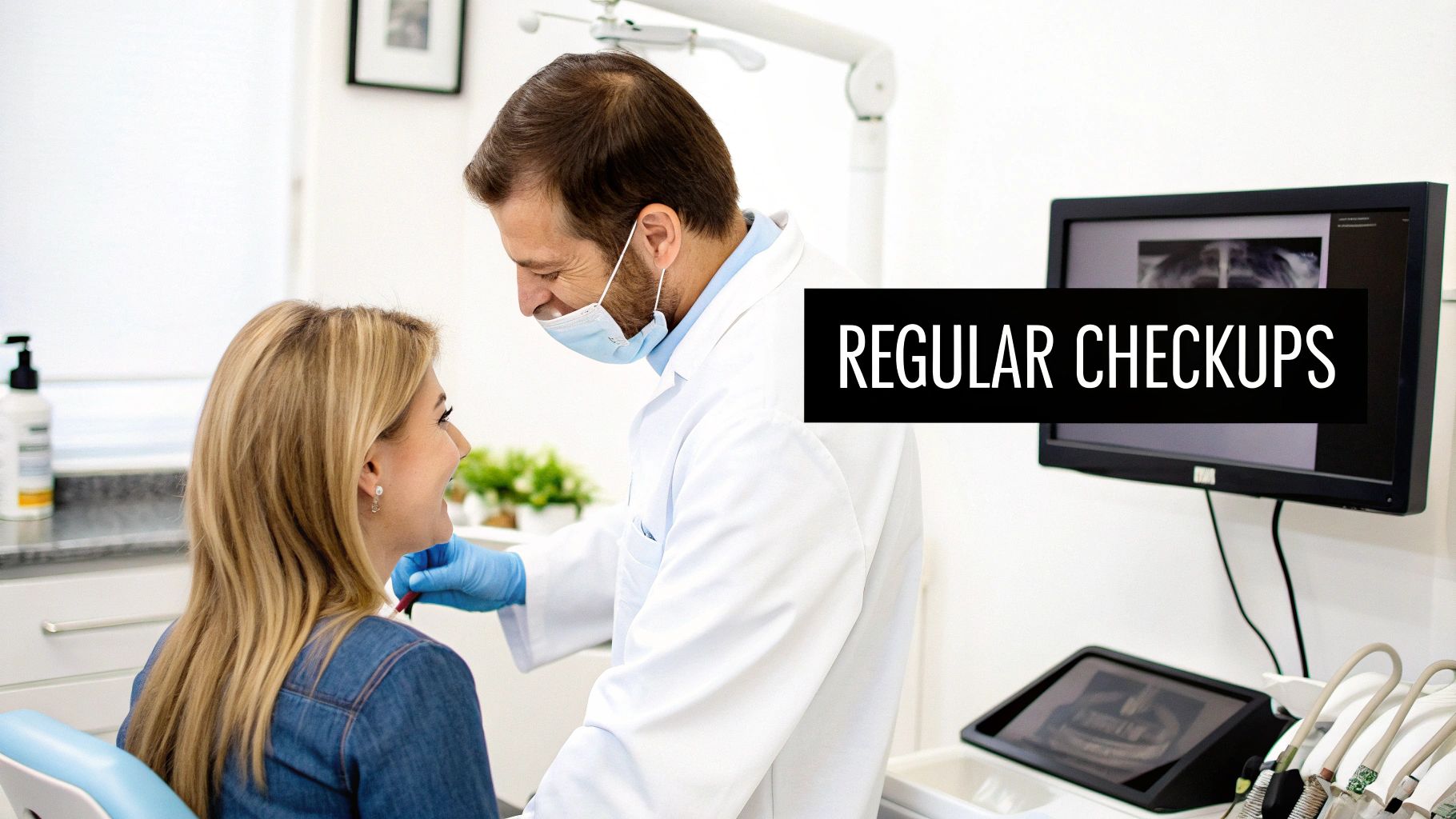
Your daily cleaning routine is the foundation of a healthy implant, but it's only half the story. To truly protect your investment for the long haul, you need a partnership: your hard work at home combined with our expert oversight at Vienna Dental Implant & Family Dentistry.
Think of it like this: your daily brushing and flossing keep the visible surfaces sparkling clean. Our job is to go deeper, making sure the underlying bone and gums—the very foundation of your implant—are solid and healthy.
On top of that, your lifestyle choices play a massive role. The same habits that affect your natural teeth can also make or break the success of your implant. It's this powerful combination of professional care and healthy living that turns a great implant procedure into a permanent part of your smile.
Why Professional Check-Ups Are Non-Negotiable
It’s easy to think, "My implant feels great, so why bother with a check-up?" But these appointments are your single best insurance policy against problems you can't see or feel. During these visits, we're doing far more than a quick polish; it's a detailed evaluation designed specifically for your implant.
These check-ups are all about catching trouble early. We can spot the subtle, early signs of inflammation or bone loss that are completely invisible to you in the bathroom mirror. Finding something like peri-mucositis in its beginning stage means we can treat it simply and non-invasively. Our team is specially trained in expert gum treatment and periodontal care to keep that foundation rock-solid.
Here’s what you can expect during your implant maintenance visit with us in Vienna, VA:
- Specialized Cleaning: We use specific tools made of materials that won’t scratch or damage your implant crown. This allows us to meticulously remove every speck of plaque and tartar from around the implant and gum line.
- X-Ray Monitoring: We’ll take periodic X-rays to check the bone level surrounding your implant. This is the only way to be 100% certain that the bone is healthy and tightly fused to the implant post.
- Component Check: We physically inspect the implant, the connecting abutment, and the final crown to make sure everything is tight, stable, and working exactly as it should.
The science is clear: regular professional visits are a cornerstone of implant longevity. Studies consistently show that when patients skip routine maintenance, their risk of complications skyrockets. Your commitment to these appointments is a direct investment in your oral health.
How Your Lifestyle Impacts Your Implant's Health
What you do every day has a direct, measurable effect on your dental implants. Making smart choices can dramatically increase the odds that you'll be enjoying that new smile for decades to come.
Imagine your implant feeling as good as new 20 years from now. That’s the reality for most people who commit to proper care. A major 20-year meta-analysis from 2024 revealed an 88% survival rate for dental implants, meaning approximately 4 out of 5 were still going strong after two decades. When implants do fail, it’s often due to preventable factors. You can dive into the full findings on long-term implant survival rates to see the data for yourself.
Habits That Protect Your Investment
- Avoid Smoking: This is non-negotiable. Tobacco use is one of the biggest risk factors for implant failure because it restricts blood flow to your gums. This slows down healing and cripples your body's ability to fight off infections around the implant.
- Manage Systemic Conditions: Health issues like diabetes can affect your body's healing processes and put you at a higher risk for gum disease. Working closely with your doctor to keep these conditions under control is just as important for your implant as it is for your overall health.
- Protect Against Grinding: Lots of people grind or clench their teeth at night without realizing it (this is called bruxism). The immense pressure can damage both your implant and your natural teeth. If we spot signs of grinding, we’ll likely recommend a custom-fitted nightguard to protect your entire smile while you sleep.
By blending a stellar home-care routine with regular professional check-ups and smart lifestyle choices, you create the perfect environment for your dental implant to last a lifetime. Here at Vienna Dental Implant & Family Dentistry, we're your partners on this journey, ready to provide the expert guidance and care you need every step of the way.
How to Spot and Handle Potential Complications
Dental implants have a stellar track record, but staying vigilant is the key to making that success last a lifetime. Knowing the early warning signs of an issue empowers you to act fast. And when it comes to your implant, quick action almost always means a simple fix.
Complications are rare, but your implant is now a part of you. Just like any other part of your body, it will send you signals if it needs attention.
Key Warning Signs to Keep on Your Radar
Most potential issues involve the gum and bone tissue hugging your implant. The two main conditions you should know by name are peri-mucositis and its more serious cousin, peri-implantitis.
Think of peri-mucositis as a reversible, early-stage warning—it's just inflammation in the gums around the implant, similar to gingivitis. Peri-implantitis is what happens if that inflammation is left unchecked and starts to cause bone loss around the implant post. Your daily cleaning routine is your number one defense, but you still need to know what to look for.
Keep an eye out for any of these signs:
- Red, Swollen, or Tender Gums: Healthy gums around an implant are firm, pale pink, and shouldn't feel sensitive.
- Bleeding When You Brush or Floss: This is never normal. Bleeding is the classic sign that bacteria are irritating your gums.
- A Persistent Dull Ache or Discomfort: Any ongoing pain is a definite red flag.
- Any Feeling of Looseness: Your implant should feel as solid as a rock—just like a healthy natural tooth.
- Trouble Chewing: If it suddenly becomes uncomfortable to chew on or near your implant, don't just switch to the other side and hope it goes away.
Your Immediate Action Plan
If you notice any of the symptoms above, the single most important thing you can do is call our Vienna, VA office immediately. Please don't fall into the "wait and see" trap. The sooner we can take a look, the easier the solution will be.
Crucial Takeaway: Never try to diagnose or treat a potential implant issue yourself. While stepping up your brushing might help with minor gum irritation, only a dental professional can figure out what’s really going on and prescribe the right treatment.
When you call Vienna Dental Implant & Family Dentistry, we'll get you in for an evaluation right away. We’ll perform a careful exam, check the gum tissues, and likely take an X-ray to get a clear picture of the bone supporting the implant. This lets us see exactly what's happening and how to fix it for good.
Proactive Care is Powerful Medicine
The great news? The vast majority of these problems are completely preventable. The data shows that well-maintained dental implants can easily outlast traditional bridgework, with some studies showing an incredible 95.6% survival rate over decades.
But that success is directly linked to how you care for them. While peri-implantitis can pop up in up to 20% of cases with poor maintenance, consistent professional check-ups can slash that complication rate by 50%. Even something as simple as flossing every night can prevent up to 80% of that initial gum inflammation.
You can dive deeper into the long-term success data for dental implants from this comprehensive study to see for yourself.
Your Questions About Dental Implant Care Answered
Even with the best care plan, it's totally normal to have questions as you get used to life with your new dental implant. Our patients here in Vienna often ask about the little details of long-term maintenance. We’ve pulled together some of the most common questions to give you clear, straightforward answers and help you feel completely confident in caring for your smile.
Can I Use My Regular Toothpaste and Mouthwash?
This is a fantastic question, and the answer is mostly yes—with a couple of key things to keep in mind. You definitely don’t need a prescription product, but making a smart choice at the drugstore can make a real difference.
We always suggest using a low-abrasive, tartar-control toothpaste. The idea is to steer clear of anything with harsh, gritty particles, which you often find in aggressive whitening toothpastes. Over time, those particles could potentially scratch the surface of your beautiful new crown.
When it comes to mouthwash, your best bet is an alcohol-free rinse. Mouthwashes with alcohol can lead to dry mouth, which slows down saliva production. That creates a much friendlier environment for bacteria to set up shop. While most standard mouthwashes are fine, choosing a gentle, alcohol-free option gives your implant and gums an extra layer of protection.
How Do I Know if My Dental Implant Is Failing?
Implant failure is rare, especially when you take good care of it, but knowing the warning signs is key for catching any issues early. Your implant should feel completely stable and comfortable, just like one of your natural teeth.
Here are the symptoms that mean you should call our Vienna, VA office right away:
- Any Movement: The implant post or the crown on top should feel rock-solid. If you can feel any wiggling or looseness, that's a major red flag.
- Persistent Pain or Aching: It's normal to have some soreness right after the procedure, but ongoing discomfort around the implant site is not.
- Swelling or Bleeding Gums: Healthy gums around an implant are pink and firm. If you see redness, puffiness, or bleeding when you brush, it's a sign of inflammation that needs to be checked.
- Visible Implant Threads: You should never be able to see the metal threads of the implant post peeking out above your gum line.
The most important thing is to never self-diagnose. If you notice any of these signs, contact Vienna Dental Implant & Family Dentistry immediately. Getting a professional evaluation quickly is the best way to resolve nearly any issue successfully.
Are Special Tools Really Needed to Clean Around Implants?
While you don't need a drawer full of complex gadgets, some tools are simply much better than traditional floss for cleaning around an implant. Think of them as simple upgrades to your routine that protect the important investment you've made in your smile.
A water flosser is a total game-changer. It uses a gentle, pulsating stream of water to flush out plaque and food particles from that tiny crevice where the implant crown meets your gums—a spot that’s notoriously tricky to clean otherwise.
Likewise, small interdental brushes (they look like tiny pipe cleaners) are perfect for cleaning the sides of the implant where it sits next to your natural teeth. These tools aren't "special" in a complicated way, but they are specially designed for the unique shape and needs of a dental implant.
How Often Should a Professional Check My Implants?
Once your initial follow-up appointments confirm that everything has healed perfectly, we'll simply fold your implant checks into your regular dental hygiene schedule. For most of our patients, this means coming to see us every three to six months.
These visits are much more than just a standard cleaning; they're a complete health check for your implant. Our hygienists use specialized instruments designed to clean around the implant without scratching it. We will carefully examine the implant, the crown, and all the surrounding gum tissue. We’ll also take periodic X-rays to keep an eye on the bone level, ensuring the implant’s foundation stays strong and healthy for a lifetime of confident smiles in Vienna, VA. Contact Vienna Dental Implant & Family Dentistry today to schedule your consultation and take the first step toward a complete, healthy smile.