If you were told you need a deep cleaning and heard the word “ultrasonic,” you may have pictured something sharp, loud, or uncomfortable. That reaction is common. Most patients are not worried about the cleaning itself as much as they are worried about what it will feel like, whether it can damage their teeth, and whether the side effects are normal.
The good news is that ultrasonic cleaning is a well-established tool in modern dentistry. It is effective, efficient, and, in many cases, gentler on enamel than heavy hand scraping. Still, “safe” does not mean “no side effects at all.” Like any dental procedure, it comes with a few temporary effects and a small number of less common risks that your dental team should understand before treatment starts.
This guide walks through ultrasonic dental cleaning side effects in plain language. I want you to know what the instrument does, what you might feel during and after treatment, and which questions matter most if you have veneers, fillings, cracked teeth, sensitive molars, or a pacemaker.
Your Guide to Comfortable Dental Cleanings in Vienna VA
You arrive for a cleaning in Vienna expecting a routine visit, then the hygienist brings over a tool that hums, sprays water, and vibrates. If you have a veneer on a front tooth, an older filling, or sensitive hearing, your first question is usually very practical. Is this going to bother anything that is already in my mouth?
That is exactly the right question to ask.
I’m Dr. Chauhan, and I want patients to understand that comfort during an ultrasonic cleaning is about more than whether the tooth feels sore for a day or two. It also includes how the sound affects you, whether existing dental work needs special handling, and whether the cleaning plan matches your mouth instead of using the same approach for everyone.
Ultrasonic cleaning helps remove hardened buildup efficiently, often with less scraping pressure than fully manual cleaning. The key is careful technique. A modern practice does not just turn on the scaler and proceed. We first look at what needs protection, such as veneers, bonded edges, older fillings, implant restorations, exposed root surfaces, and areas that already feel sensitive.
What patients in our office usually ask about
The concern is rarely just, “Will it hurt?”
More often, patients want to know:
- How it will feel: Will the vibration feel sharp, ticklish, or too intense near sensitive teeth?
- What it could affect: Could a loose filling, worn bonding, veneer margin, or chipped tooth react badly?
- How loud it will seem: Will the sound be uncomfortable if you are sensitive to high-pitched noises?
- How we decide what to use: Will the hygienist switch to hand instruments in delicate areas?
Those concerns are reasonable, especially if you have already invested in cosmetic or restorative dental work. Ultrasonic scalers are useful tools, but they are not meant to be used the same way on every surface. A porcelain veneer is not treated like natural enamel with heavy tartar. An older filling with a rough edge may need a gentler approach. A patient with sound sensitivity may do better with pauses, lower-intensity settings, or a different instrument in certain spots.
For anxious patients, clear explanations help before the appointment even starts. Our guide on how to overcome dental anxiety walks through simple ways to prepare and feel more in control.
What makes a cleaning feel safer and easier
Technique matters as much as technology.
In our Vienna, VA practice, we do not judge a cleaning by speed alone. We pay attention to the power setting, the type of tip, the angle against the tooth, the amount of water, and the surfaces that deserve extra caution. That patient-first approach matters if you have cosmetic dentistry, gum recession, tooth sensitivity, implants, or a strong reaction to sound.
A good comparison is washing a delicate glass next to a sturdy plate. Both need to be cleaned well, but they do not get the same pressure. Dental cleanings work the same way. The safest, most comfortable appointment comes from choosing the right method for each tooth and each restoration, not from forcing one tool to do everything.
That is why many patients feel better once we explain the plan before we begin. They know what the sound means, what sensations are normal, and where we will slow down or switch instruments to protect their teeth and dental work.
What Is an Ultrasonic Dental Cleaning
You sit back in the chair, hear a soft buzzing sound, and feel cool water around a tooth that has collected tartar near an older filling. That is ultrasonic cleaning. It is a modern way to break up hardened buildup with gentle, high-frequency movement and a controlled stream of water, instead of relying only on firm hand scraping.
How it works in simple terms
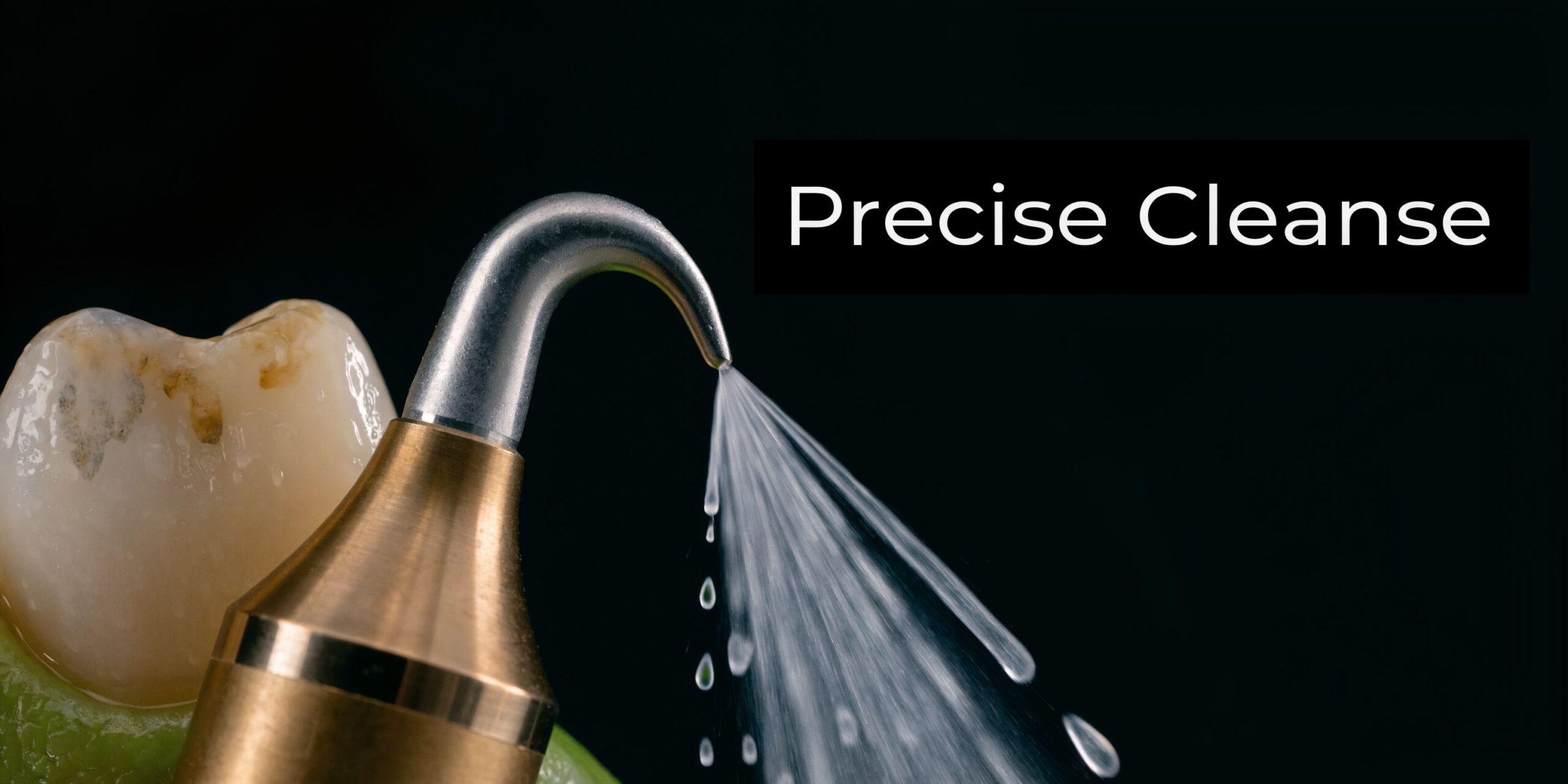
The tip of the scaler moves very quickly over the tooth surface. That motion helps loosen tartar, while water rinses away debris and keeps the area cool. For many patients, the sensation feels more like vibration and water pressure than the hard scraping they expect from a traditional cleaning.
The detail that matters is control.
A good ultrasonic cleaning is not just about removing buildup fast. It is about matching the power setting, tip shape, and water flow to the tooth in front of us. At our Vienna, VA office, that matters even more if you have veneers, tooth-colored fillings, crowns, bonding, or implants. Those surfaces can need a lighter touch or a switch to hand instruments in specific areas, especially near edges where dental work meets natural tooth structure.
If you want a closer look at the technology itself, our page on the ultrasonic scaler used in preventive dental care explains the equipment in more detail.
Why dentists often choose it
Ultrasonic cleaning is especially useful when tartar has built up along the gumline or behind the lower front teeth, where deposits can become hard and stubborn. The instrument can clear those areas efficiently and often with less pushing pressure against the tooth.
That lower-pressure approach can be more comfortable for many patients. It also helps us work carefully around spots that deserve extra attention, such as a chipped filling margin, a porcelain veneer, or exposed root surfaces. Patients do not always realize this is part of the plan, but it should be. A modern cleaning is not one-size-fits-all. We adjust the method tooth by tooth.
Sound is another part of the experience that deserves an honest explanation. Ultrasonic scalers create a distinct high-pitched noise and vibration. Some patients barely notice it. Others, especially those with sound sensitivity, tinnitus concerns, or dental anxiety, find it more stressful than the cleaning itself. In our practice, we address that before we start with short pauses, lower settings when appropriate, suction positioning, and clear communication so the noise never feels mysterious or out of control.
Ultrasonic vs manual scaling
Here is the simplest comparison:
| Method | Main action | Common patient experience |
|---|---|---|
| Ultrasonic scaling | Vibrations plus water loosen deposits | Buzzing sensation, cool water, less scraping pressure |
| Manual scaling | Hand instruments scrape deposits directly | More pressure and scraping feel, especially with heavy tartar |
Many appointments use both methods together. Ultrasonic scaling can remove the heavier buildup first, then hand instruments can refine delicate areas around cosmetic work, tight contacts, or sensitive spots.
Key takeaway: The safest cleaning is the one suited for your teeth, gums, existing dental work, and comfort level.
Common and Temporary Ultrasonic Cleaning Side Effects
Most side effects after ultrasonic cleaning are temporary. They are usually annoying, not dangerous. Patients often do better when they know what is normal before they leave the office.
Sensitivity after tartar removal
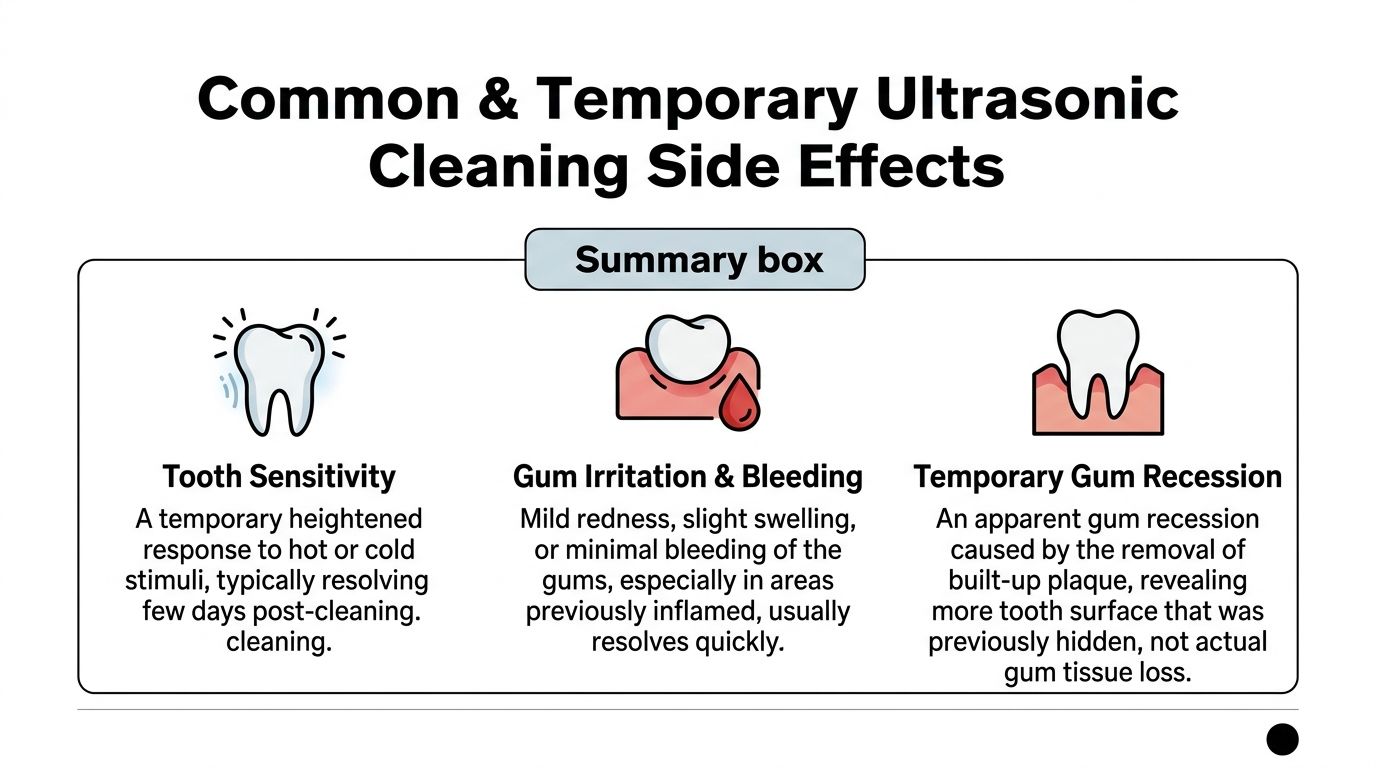
The most common complaint is tooth sensitivity. A tooth that felt fine before treatment may suddenly notice cold water, air, or sweet foods.
That happens because tartar can act like a rough covering over areas that are already inflamed or exposed. Once it is removed, the tooth surface is cleaner but also more noticeable to your nerves for a short time.
Some patients need more than reassurance. In a study of chronic periodontitis patients, 100% reported some discomfort during or after ultrasonic instrumentation, with most feeling mild to moderate discomfort (Dimensions of Dental Hygiene on patient discomfort during ultrasonic instrumentation).
Gum tenderness and light bleeding
Your gums may feel tender after the cleaning, especially if they were already irritated by plaque and tartar. A small amount of bleeding can happen when inflamed tissue is cleaned thoroughly.
This often worries patients because they assume bleeding means something went wrong. In many cases, it means the tissue was already inflamed and is now starting to recover in a cleaner environment.
Why teeth can look longer afterward
Sometimes patients say, “My gums look lower,” or “My teeth suddenly look bigger.” That can happen after heavy buildup is removed near the gumline.
What changed is often the deposit, not the gum itself. Tartar that sat along the tooth made the shape look different. Once it is gone, more of the natural tooth surface is visible.
What you may notice for a short time
A few effects tend to settle on their own:
- Cold sensitivity: Common after the cleaning, especially near the gumline.
- Mild soreness: More likely if the gums were inflamed before treatment.
- A little bleeding when brushing: Often brief if you brush gently and keep the area clean.
- A “clean but strange” feeling: Teeth can feel smoother than you are used to.
If you are trying to understand whether you need a routine cleaning or something more involved, this guide on teeth cleaning vs deep cleaning can help clarify the difference.
Tip: Temporary sensitivity usually feels sharper than dangerous pain. If the feeling is fading day by day, that is generally reassuring. If it is intensifying, your dentist should know.
Understanding Less Common but Serious Complications
Serious complications from ultrasonic cleaning are not the norm, but they are the reason a careful pre-treatment exam matters. During this exam, details like cracked enamel, old fillings, veneers, medical history, and the exact teeth being treated become important.
Aerosols and infection concerns
Ultrasonic scalers create aerosols because water meets biofilm and debris during treatment. Verified clinical reporting notes that these aerosols contain bacteria and viruses from the treatment site, and a 2016 study identified high concentrations of Staphylococcus and Streptococcus species in aerosols produced during ultrasonic scaling sessions. That concern also shaped the ADA’s 2020 recommendation to favor hand scaling over ultrasonic methods during the COVID-19 pandemic to reduce viral spread in dental settings (Made by Radius on ultrasonic teeth cleaning safety).
For most healthy patients, this is a risk the dental team manages with proper protocols. It is still important because it explains why suction, waterline maintenance, and room setup matter much.
Existing cracks, early decay, and resin restorations
This is one of the least discussed parts of ultrasonic dental cleaning side effects. Teeth are not all starting from the same baseline.
A tooth with a hairline crack, early caries, or a resin restoration may react differently than a sound tooth. A 2018 study found significantly deeper enamel damage in teeth with pre-existing cracks or resin restorations compared to sound enamel, which is exactly why a careful exam should happen before the scaler is turned on (PubMed study on enamel damage in compromised teeth during ultrasonic scaling).
That matters for patients who have:
- Veneers or cosmetic bonding
- White fillings near the gumline
- Chipped enamel
- Early decay
- Older esthetic restorations
A skilled clinician may lower the power, adjust the angle, use the side of the tip rather than the point, shorten contact time, or switch to hand instruments in those areas.
Pacemakers and vibration-related concerns
Some patients need a different approach for medical reasons. Verified data notes that electromagnetic interference can interrupt pacemaker function, a hazard documented in foundational research from 1988. Patients with pacemakers should discuss this history before treatment so the office can decide whether ultrasonic use is appropriate.
There is also a less familiar issue involving vibration transmission. Some ultrasonic vibrations can travel through the tooth and conduct through the skull, particularly in posterior teeth. I discuss the patient-facing meaning of that in the final section because it often surprises people.
Why judgment matters more than the tool
The uncommon complications are not a reason to fear every cleaning. They are a reason to choose a dental team that checks for weak spots before starting.
The instrument is capable of excellent, conservative care. It still has to be used with judgment. That means identifying fragile enamel, reading radiographs when needed, and treating your veneers, fillings, and natural teeth as different surfaces with different risks.
How We Ensure Your Safety and Comfort in Vienna VA
You sit down for a cleaning and mention two things that many patients assume are unrelated. One front tooth has a veneer, and the sound of dental tools bothers your ears. Those details matter before we start, because a good cleaning plan is built around your mouth, your medical history, and your comfort level.
At our Vienna office, safety starts with a short risk check that guides the whole visit. We look for existing dental work, sensitive root surfaces, older fillings, crowns, bonding, hearing concerns, jaw tension, and anxiety triggers. An ultrasonic cleaner is useful, but it is not used the same way on every surface in every patient.
We adjust the method to protect natural teeth and dental work
Ultrasonic cleaning is very effective on tartar, but veneers, tooth-colored fillings, and bonded edges need a gentler strategy in selected spots. A cleaning tip works a bit like a precision kitchen tool. In the right hands, it removes what does not belong. On a delicate surface, the angle, pressure, and contact time matter.
That is why we slow down and customize. For one patient, that may mean lower power around cosmetic bonding. For another, it may mean avoiding prolonged contact near a worn filling margin or switching to hand instruments around a porcelain veneer. The goal is simple. Remove buildup without roughening, chipping, or stressing the work that is already helping your smile function and look its best.
We pay attention to sound and vibration, not just your teeth
Some patients are more bothered by the noise and vibration than by the cleaning itself. Posterior teeth can conduct vibration in a way that feels louder inside your head than you expected. It can seem strange the first time you notice it.
We prepare you for that sensation before it happens. We also use technique changes that can make the appointment easier, such as brief working intervals, lower settings where appropriate, and pause checks so you can tell us what you are feeling in real time. If sound sensitivity is part of your history, we treat that as a clinical concern, not a personality trait.

We reduce spray and keep the field controlled
Cleanings should feel clean in every sense of the word. Our team uses high-volume suction close to the working area, along with standard infection-control steps such as instrument sterilization, treated water systems, and careful operatory setup. As noted earlier, modern suction and isolation methods help reduce the fine spray produced during ultrasonic scaling.
Patients often notice the practical result. Less pooling, less mist, and a more controlled appointment.
Comfort is planned, not improvised
Clear communication lowers stress quickly. Before we begin, we explain what you are likely to feel, where we may switch techniques, and when to raise a hand if you want a pause.
We also build in options for patients who need a little more support:
- Short breaks for jaw fatigue or anxiety
- Position changes if lying back feels uncomfortable
- Lower-intensity settings on sensitive areas
- Hand scaling in spots where precision matters more than speed
- Sedation options for patients with significant dental fear
That approach matters in a family practice. A teenager with braces, a parent with veneers, and a grandparent with older crowns may all be scheduled on the same day, but they should not receive the same cleaning plan. Patient-first care means noticing the details that change risk, then adjusting the appointment before discomfort starts.
Your Aftercare Plan for a Smooth Recovery
Even a gentle cleaning can leave your mouth feeling different for a short time. A few simple habits usually make recovery much easier.
What to do the rest of the day
Focus on reducing irritation, not testing your teeth.
- Choose lukewarm foods and drinks: Very hot and very cold items can trigger fresh sensitivity.
- Eat softer foods if needed: This helps if your gums feel tender.
- Brush gently: Use a soft-bristled brush and light pressure.
- Keep flossing unless told otherwise: Clean tissue heals better than neglected tissue.
If your teeth feel sensitive
You do not need to panic if cold water suddenly feels sharper than usual. That can happen after tartar is removed.
Helpful steps include:
- Use toothpaste for sensitive teeth
- Avoid acidic or icy foods for a short time
- Give it a little time
- Call if the discomfort is getting stronger instead of better
Tip: “Tender but improving” is the pattern you want. “More painful each day” is the pattern that deserves a phone call.
When to contact your dentist
Reach out if you notice symptoms that feel out of proportion or do not settle down, such as persistent bleeding, worsening pain, or a restoration that suddenly feels rough, loose, or different when you bite.
That last point matters. If you have veneers, bonding, or tooth-colored fillings, your bite should still feel normal after the appointment. If it does not, ask to have it checked.
Schedule Your Gentle Cleaning at Vienna Implant and Family Dentistry
Ultrasonic cleaning is a modern, effective way to remove tartar and support healthy gums. In many cases, it is easier on enamel than heavy manual scraping. At the same time, patients deserve honest answers about ultrasonic dental cleaning side effects, especially when they have sensitive teeth, veneers, fillings, cracked enamel, or medical concerns.
One lesser-known example is hearing-related sensation. Verified clinical reporting notes that ultrasonic scalers transmit vibrations through the tooth, which can be conducted to the inner ear via skull bones, particularly when scaling molars, making tinnitus a potential concern and technique especially important in those areas (Shanti Dentals on ultrasonic scaling side effects and auditory transmission).
That does not mean patients should avoid needed care. It means your cleaning should be planned and performed thoughtfully.
At Vienna Implant and Family Dentistry, every visit is built around comfort, communication, and precision. Dr. Vikram Chauhan and the team provide personalized care for patients in Vienna, VA and nearby Northern Virginia communities, whether you need preventive care, help managing dental anxiety, cosmetic work, implants, or same-day emergency treatment.
If you have been putting off a cleaning because you are worried about sensitivity, noise, aerosols, or damage to existing dental work, we are here to talk it through. You can schedule online through https://viennadentalexperts.com, visit the office at 112 Pleasant St. NW, Suite H, Vienna, VA 22180, or contact the practice to arrange a visit that fits your needs. New patients are welcome, and same-day emergency appointments are available when urgent dental problems come up.