You've just invested in a brighter, more confident smile with cosmetic dentistry, and the last thing you want to do is undermine those brilliant results. So, what’s the first step in post-whitening care? You might be surprised to learn it’s a little bit of patience. At Vienna Dental Implant & Family Dentistry, we help our patients in Vienna, VA, protect their beautiful new smiles with clear, simple guidance.
The big question on everyone's mind is: should I brush my teeth after whitening? The short answer is no, not right away. We strongly recommend you wait at least 30 minutes to an hour before reaching for that toothbrush. This short pause is absolutely crucial for protecting your new smile and keeping your teeth comfortable.
Why Waiting to Brush After Whitening Is So Important
After a professional teeth whitening treatment, your smile looks incredible, but your teeth are in a temporarily vulnerable state. Understanding what’s happening on a microscopic level makes it clear why a little patience goes such a long way. At Vienna Dental Implant & Family Dentistry, we believe an informed patient is a happy patient, so let’s break down the simple science behind this vital aftercare step.
The whitening agents used in professional cosmetic dentistry work by opening up millions of tiny pores, or tubules, in your tooth enamel. This is how the gel gets deep inside the tooth to lift away years of stains from things like coffee, tea, and red wine.
For a short time after your treatment, however, these pores are still open. Think of it like a freshly cleaned sponge—it’s extra absorbent until it has a chance to settle. During this critical window, your enamel is more porous and a bit dehydrated, which leads to two main concerns:
- Increased Sensitivity: Those open tubules expose the delicate nerve endings within your teeth, making them much more reactive to temperature changes and touch.
- Higher Stain Risk: Just as the whitening agent got in, staining pigments from dark foods and drinks can now get in more easily, too.
The Science Behind the Wait
Brushing too soon can cause a couple of problems. The bristles of your toothbrush, especially when combined with abrasive ingredients in some toothpastes, can really irritate those exposed nerve endings and even scuff the temporarily softened enamel.
Studies show that sensitivity affects up to 78% of patients temporarily after in-office whitening procedures. This is a completely normal reaction as the peroxide-based agents open up the enamel’s pores. Waiting at least 30-60 minutes allows your enamel to remineralize and rehydrate with help from your saliva. Discover more insights about these dental findings on ncbi.nlm.nih.gov
By giving your teeth this brief recovery period, you’re allowing your saliva to work its natural magic. It remineralizes the enamel, effectively closing those pores and restoring the tooth's protective barrier. This simple act of waiting is one of the easiest and most effective ways to protect your investment, ensuring your cosmetic dentistry results are both stunning and long-lasting. Here in Vienna, VA, our team is dedicated to guiding you through every step of your smile journey.
Understanding Why Your Teeth Need Time to Recover
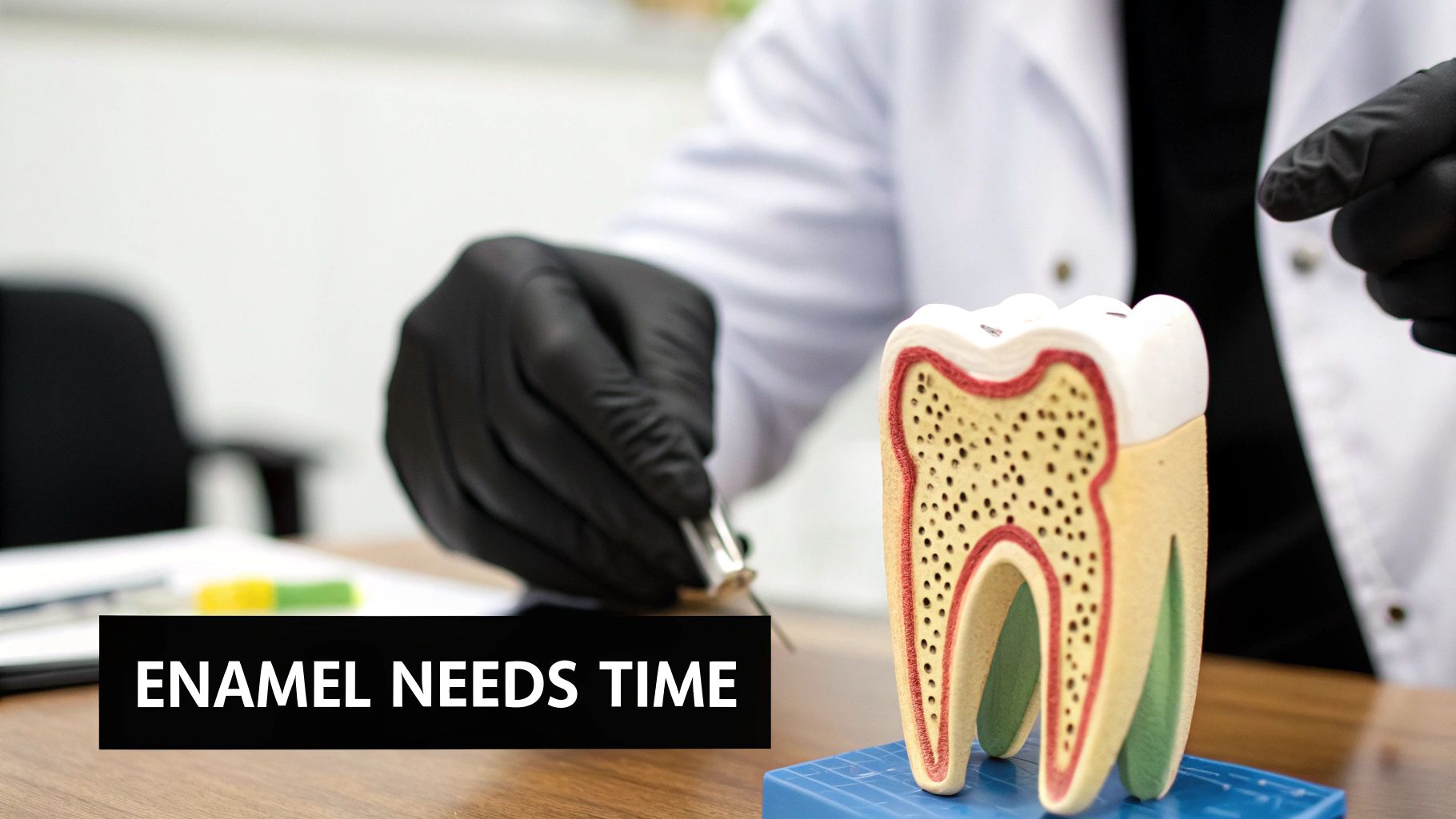
To really get why waiting to brush is so important, it helps to understand what’s actually happening to your teeth during the whitening process. Think of it this way: if you’ve just painted a wall, you wouldn’t immediately start scrubbing it while the paint is still tacky, right? Your teeth need a similar grace period after a professional whitening treatment at our Vienna, VA office.
The professional-grade whitening agents we use at Vienna Dental Implant & Family Dentistry are incredibly effective for a reason. They work by opening up microscopic pores in your tooth enamel, known as dentinal tubules. This is how the active ingredients get deep inside the tooth's surface to break down those stubborn, years-old stains.
For a little while after your appointment, these tiny pores stay open. This leaves your enamel temporarily dehydrated and much more porous than usual. It’s a completely normal part of the process, but it creates a critical window where your teeth are more vulnerable to two main things: sensitivity and new stains.
The Role of Enamel Porosity
Your tooth enamel is the hardest substance in your body, but the whitening process temporarily makes it more permeable. While these pores are open, the layer just beneath the enamel, called the dentin, is more exposed. This is important because the dentin is connected to your tooth’s nerve, which is exactly why you might feel a sudden zing of sensitivity to hot or cold drinks.
Brushing right away, especially with an abrasive toothpaste, can create a perfect storm for discomfort. The friction from the bristles can easily irritate those exposed nerve endings, leading to sensitivity or even pain. It can also physically wear down the temporarily softened enamel, which is the last thing you want after investing in your oral health.
By waiting, you allow your saliva—your body’s best natural defense for your teeth—to start the remineralization process. Saliva rehydrates the enamel and deposits essential minerals like calcium and phosphate back onto the tooth, effectively sealing up those microscopic pores.
Protecting Your Cosmetic Dentistry Investment
This waiting period isn't just about avoiding a toothache; it's about protecting the beautiful results you just invested in. Just as the whitening gel got into those open pores to lift stains, new pigments from dark foods or drinks can get in just as easily.
- Scrubbing Too Soon: Brushing with a standard toothpaste can be too aggressive for your enamel in this delicate state, potentially dulling your bright new smile before you even get to show it off.
- Sealing in Stains: If you have a coffee and then immediately brush, you could inadvertently scrub those new coffee pigments deeper into the open tubules before they have a chance to close.
At Vienna Dental Implant & Family Dentistry, our goal is to make sure your cosmetic dentistry journey is a complete success, starting from the moment you leave our chair. Understanding the "why" behind our aftercare advice helps you play an active and informed role in achieving that brilliant, long-lasting smile.
Your Post-Whitening Oral Care Playbook
Knowing exactly what to do—and when—is the key to a comfortable recovery and brilliantly white results. To help our patients in Vienna, VA, feel confident after their cosmetic dentistry treatment, we’ve created a simple, step-by-step playbook for post-whitening oral care. Following this timeline will protect your investment and keep your new smile feeling great.
Immediately After Your Appointment
The first moments after leaving our Vienna office are all about gentle care. Your primary goal is to remove any residual whitening gel without irritating your temporarily sensitive teeth.
- Rinse with Lukewarm Water: Swish gently with lukewarm water. Avoid anything too hot or cold, as your teeth will be extra sensitive to temperature extremes. This simple rinse is all you need to clean your mouth initially.
- Avoid Brushing Immediately: This is the most important part. Hold off on brushing for now. Remember, your enamel is in a porous state, and it needs time to recover before you bring in a toothbrush.
The First 24 to 48 Hours
This window is absolutely critical for protecting your results from new stains. During this time, your enamel is still highly susceptible to pigments from foods and drinks.
Adhere to the "White Diet"
This means sticking to light-colored foods and beverages that won't stain your teeth. Think of it as a temporary dietary detour to safeguard your smile.
- Foods to Enjoy: Chicken, turkey, white fish, rice, pasta, potatoes, and cauliflower.
- Foods to Avoid: Coffee, tea, red wine, dark sodas, tomato sauce, berries, and chocolate.
During this period, enamel porosity peaks, which can increase stain absorption from pigmented foods by up to five times while the tooth’s pores remain open. Brushing twice daily is crucial for long-term maintenance, but in these first couple of days, it's best to use a non-abrasive, sensitivity-formulated toothpaste. Studies have shown that 72.2% of patients who stuck to a twice-daily brushing routine after treatment experienced minimal recoloring. You can learn more about how aftercare affects whitening results on discoverdentalrocklin.com.
Pro Tip: If you do happen to consume something with color, rinse your mouth with water right away. This can help minimize the contact time and reduce the potential for staining.
Reintroducing Your Brushing Routine
After waiting at least a few hours post-treatment, you can gently reintroduce brushing. The key here is to be gentle and use the right products to support your enamel as it continues to remineralize.
Choose Your Tools Wisely:
- Use a Soft-Bristled Toothbrush: A soft brush is essential to avoid abrading your enamel. Use gentle, circular motions rather than aggressive back-and-forth scrubbing.
- Select a Desensitizing Toothpaste: A toothpaste formulated for sensitive teeth will become your best friend. Ingredients like potassium nitrate can help soothe the nerve endings in your teeth, making your recovery much more comfortable.
- Brush Gently: Let the brush do the work. There's absolutely no need for heavy pressure. The goal is simply to clean away plaque and food particles without causing any irritation.
By following this simple playbook, you empower yourself to take control of your aftercare. This proactive approach ensures your beautiful results from Vienna Dental Implant & Family Dentistry last as long as possible.
Protecting Your Investment from Stains
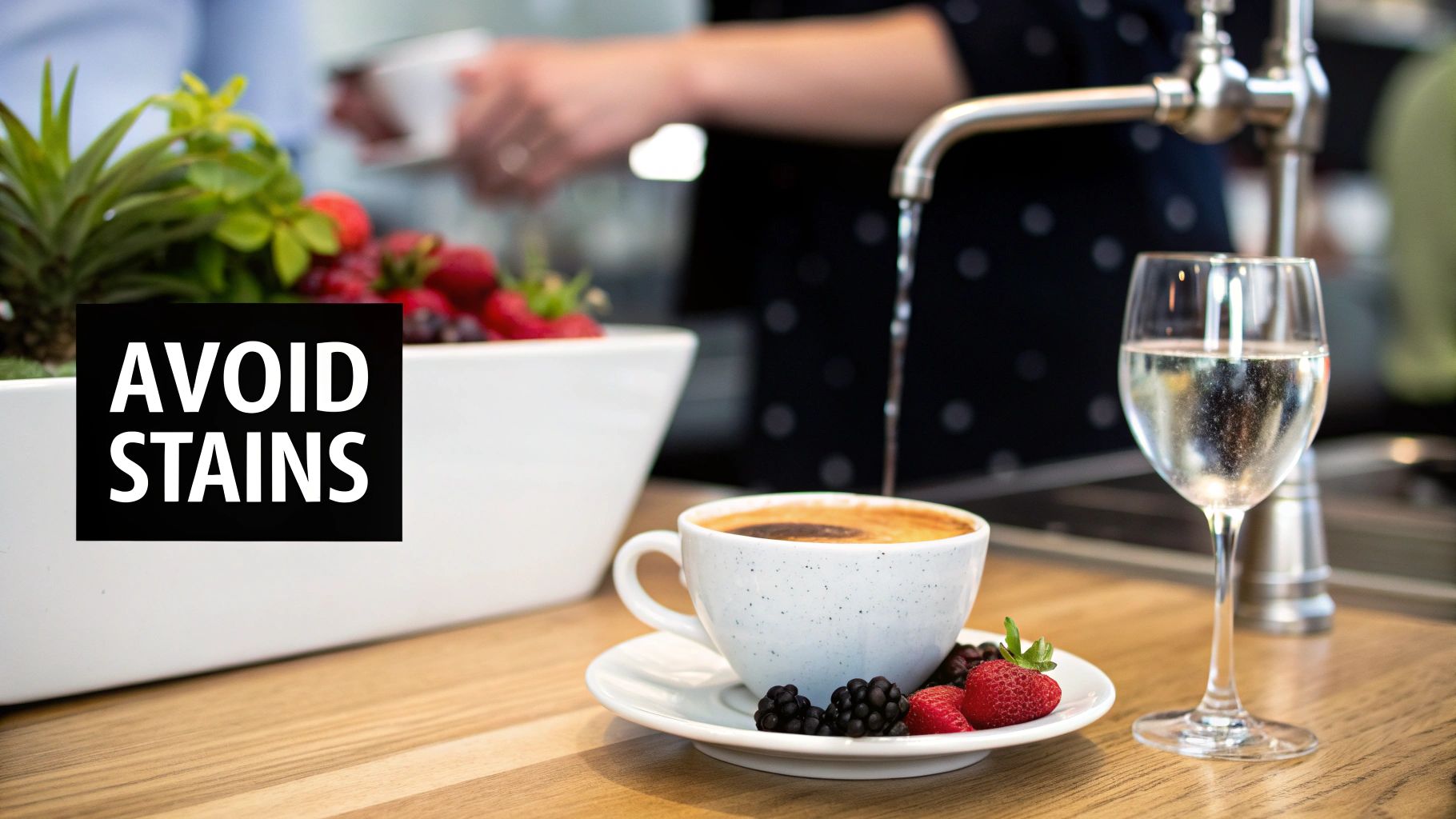
You’ve made a wonderful investment in your confidence and your smile, and the key to making it last is protecting it. For the first 48 hours after whitening, your teeth are like a blank canvas—beautifully white but also incredibly susceptible to new stains.
This happens because the whitening process temporarily makes your enamel more porous, almost like a sponge ready to soak up any color it comes into contact with. Think of this brief period not as a restriction, but as a crucial step in safeguarding your brilliant results. At Vienna Dental Implant & Family Dentistry, we help our patients in Vienna, VA, understand how a few small adjustments can lead to a long-lasting, radiant smile.
The Most Common Culprits of Staining
Certain foods and drinks are notorious for their powerful pigments, which can quickly dull a freshly whitened smile. During this initial 48-hour window, a great rule of thumb is to avoid anything that could stain a white t-shirt.
Top Offenders to Avoid:
- Dark Beverages: This is the big one. Coffee, black tea, red wine, and dark colas are packed with staining compounds.
- Colorful Sauces: Tomato sauce, soy sauce, and curry are rich in pigments that can easily latch onto that porous enamel.
- Vibrant Fruits and Vegetables: Think dark berries (blueberries, blackberries), beets, and even dark leafy greens like spinach.
- Sugary and Acidic Drinks: Sports drinks and fruit juices not only contain color but their high acidity can weaken enamel, making it even more prone to staining.
Avoiding these items is a fundamental part of post-whitening care. It’s a practice that protects your cosmetic results and your overall dental health. In fact, understanding how diet impacts your teeth is a cornerstone of good oral hygiene—you can learn more about how to prevent tooth decay naturally on our blog.
To make it easier, here's a quick reference guide to help you navigate your meals for the first couple of days.
Smile-Friendly Foods vs Potential Stainers
| Category | Avoid These (First 48 Hours) | Enjoy These Instead |
|---|---|---|
| Beverages | Coffee, Black Tea, Red Wine, Dark Sodas, Fruit Juice | Water, Milk, Clear Sodas, White Wine |
| Fruits | Blueberries, Blackberries, Raspberries, Cherries | Bananas, Apples (peeled), Pears |
| Vegetables | Beets, Carrots, Spinach, Dark Leafy Greens | Cauliflower, Potatoes, Mushrooms, Onions (white) |
| Proteins | Red Meat, Meats with Colorful Sauces | Chicken (no skin), White Fish, Tofu, White Beans |
| Grains & Starches | Whole Wheat Bread, Brown Rice, Dark Crackers | White Rice, White Bread, Pasta (with white sauce), Oatmeal |
| Condiments | Ketchup, Mustard, Soy Sauce, Balsamic Vinaigrette | Mayonnaise, White Gravy, Light Vinaigrettes |
Stick to the "Enjoy These" column for the first two days, and you'll be giving your newly brightened smile the best possible start.
Smart Strategies for Long-Term Protection
After the initial 48 hours, you can start reintroducing your favorite foods and drinks, but with a few smart habits. You don’t have to give up your morning coffee forever! The goal is simply to minimize contact between the staining agent and your teeth.
Easy Tips for a Lasting White Smile:
- Use a Straw: When drinking coffee, tea, or soda, a straw is your best friend. It helps the liquid bypass your front teeth, dramatically reducing direct contact and staining potential.
- Rinse Immediately: After having a staining food or drink, swish your mouth with plain water. This simple rinse washes away many of the pigments before they have a chance to set.
- Don't Let It Linger: Try not to sip on that dark beverage for hours on end. Enjoy your drink, and then follow it up with some water.
These small, practical steps make a huge difference in maintaining the bright, beautiful smile you achieved at our Vienna, VA dental practice.
How Aftercare Varies for Professional vs. At-Home Treatments
Not all teeth whitening is created equal, and neither is the aftercare. Whether you go for a powerful, in-office procedure at Vienna Dental Implant & Family Dentistry or grab an over-the-counter kit from the drugstore, your post-treatment plan will look a little different. Knowing the distinction is key to getting the best—and safest—results.
The biggest difference comes down to the strength of the whitening agent. Professional treatments use a much higher concentration of active ingredients to get those dramatic, right-away results. That potency is exactly why the initial aftercare period is so critical.
Professional In-Office Whitening Aftercare
When you get a professional whitening treatment from our Vienna team, your teeth are exposed to a powerful, fast-acting gel. This process makes your enamel significantly more porous for the first 24-48 hours.
Because the professional-grade agents work so deeply and quickly, following the "white diet" and avoiding immediate brushing is non-negotiable. Adherence to these guidelines directly impacts the longevity and brilliance of your final result, protecting your investment in your smile.
Proper aftercare is your best defense against sensitivity and the key to locking in that stunning brightness. Dr. Chauhan will give you a personalized plan, but the main idea is always the same: be extra gentle and vigilant for those first two days.
At-Home Whitening Kit Aftercare
Over-the-counter kits, like whitening strips or trays you'd find at a pharmacy, use a much lower concentration of peroxide. The whitening process is more gradual, happening over several days or even weeks. While the aftercare for any single session isn't as intense, the core rules still apply.
- Wait Before Brushing: Even with at-home kits, it's a good idea to wait at least 30 minutes after taking off the strips or trays before you brush.
- Rinse Gently: After you're done with a session, a simple rinse with water will help remove any leftover gel residue.
- Mind Your Diet: You probably don't need to be as strict as you would with a professional treatment, but it’s still smart to steer clear of major stain culprits like coffee or red wine right after a session.
The main takeaway here is that even though at-home kits are less potent, your enamel is still temporarily vulnerable after each use. You can explore a detailed comparison of the best teeth whitening options in our guide to see what really fits your lifestyle. Ultimately, getting professional guidance from our Vienna, VA practice ensures your treatment is not just effective, but perfectly suited to your unique oral health needs.
Your Partner for a Lifetime of Healthy Smiles
Getting a brighter, more confident smile is a team effort, and we're here to be your partners every step of the way. The stunning results you see right after a whitening treatment are just the beginning; it's the care you take at home that truly makes them last. As you leave our Vienna, VA office, keep these key takeaways in mind to protect your new smile.
First and foremost, be patient. Giving your enamel a little time to recover before you brush is your best first defense against sensitivity. Think of it as protecting your investment. Next, be selective about your tools—a soft-bristled brush and a gentle, desensitizing toothpaste will be your best friends in the days following your treatment.
Finally, what you eat and drink matters, especially in that initial 48-hour window. Sticking to the “white diet” is a simple but powerful way to prevent new stains from setting in and dimming your brilliant results.
A Different Kind of Dentistry in Vienna
At Vienna Dental Implant & Family Dentistry, we believe that an informed patient is a healthy patient. Our entire approach is built on providing personalized, gentle care in a comfortable, judgment-free space for families across Vienna and Northern Virginia. We make it a point to slow down, answer every one of your questions, and ensure you feel confident and in control of your dental health journey.
Our commitment is to help you achieve a smile that isn’t just beautiful, but is fundamentally healthy for years to come. We do this by blending advanced cosmetic techniques with a genuine focus on your individual needs and goals.
If you’re ready to see what's possible for your smile, you can learn more about our professional teeth whitening services in Vienna, VA right on our website. We invite you to connect with our team and discover how our family and cosmetic dentistry can help you achieve the bright, confident smile you truly deserve.
Common Questions About Post-Whitening Care
Even with the best game plan, it's completely normal to have a few more questions pop up after your teeth whitening treatment. At Vienna Dental Implant & Family Dentistry, our goal is for every patient here in Vienna, VA, to feel totally confident in their aftercare. So, let’s dive into a few of the most common questions we hear.
What Kind of Toothpaste Is Best After Whitening?
For the first few days, your best friend is going to be a toothpaste made for sensitive teeth. These formulas are designed with ingredients like potassium nitrate that help calm down the nerves inside your teeth, which can get a little over-excited after a whitening session.
Always grab a non-abrasive formula to be extra gentle on your freshly whitened enamel. After about a week, you can usually go back to your regular fluoride toothpaste or even switch to a low-abrasion whitening maintenance toothpaste to help keep that bright smile going strong. We can always suggest the perfect product for you.
Can I Use Mouthwash Right After My Treatment?
You bet, but you’ll want to be a bit picky. Be sure to avoid any colored mouthwash—think blue, green, or red—for at least 48 hours. The dyes in these can soak right into your enamel while it's more porous and cause new stains, which is the last thing you want.
A clear, alcohol-free, anti-cavity fluoride rinse is the perfect choice. This kind of mouthwash can help dial down sensitivity and speed up the rehydration of your enamel without putting your beautiful new smile at risk.
How Long Will My Teeth Feel Sensitive?
Sensitivity is a super common but temporary side effect of teeth whitening. For most people, it hangs around for anywhere between 24 and 72 hours. The feeling can range from a little zing to more noticeable sensitivity, but most find it’s totally manageable.
Following the aftercare guidance from Dr. Chauhan—like steering clear of super hot or icy cold foods and using a desensitizing toothpaste—will make a huge difference in your comfort. If your sensitivity sticks around for more than a few days, please give our Vienna office a call so we can help you out.