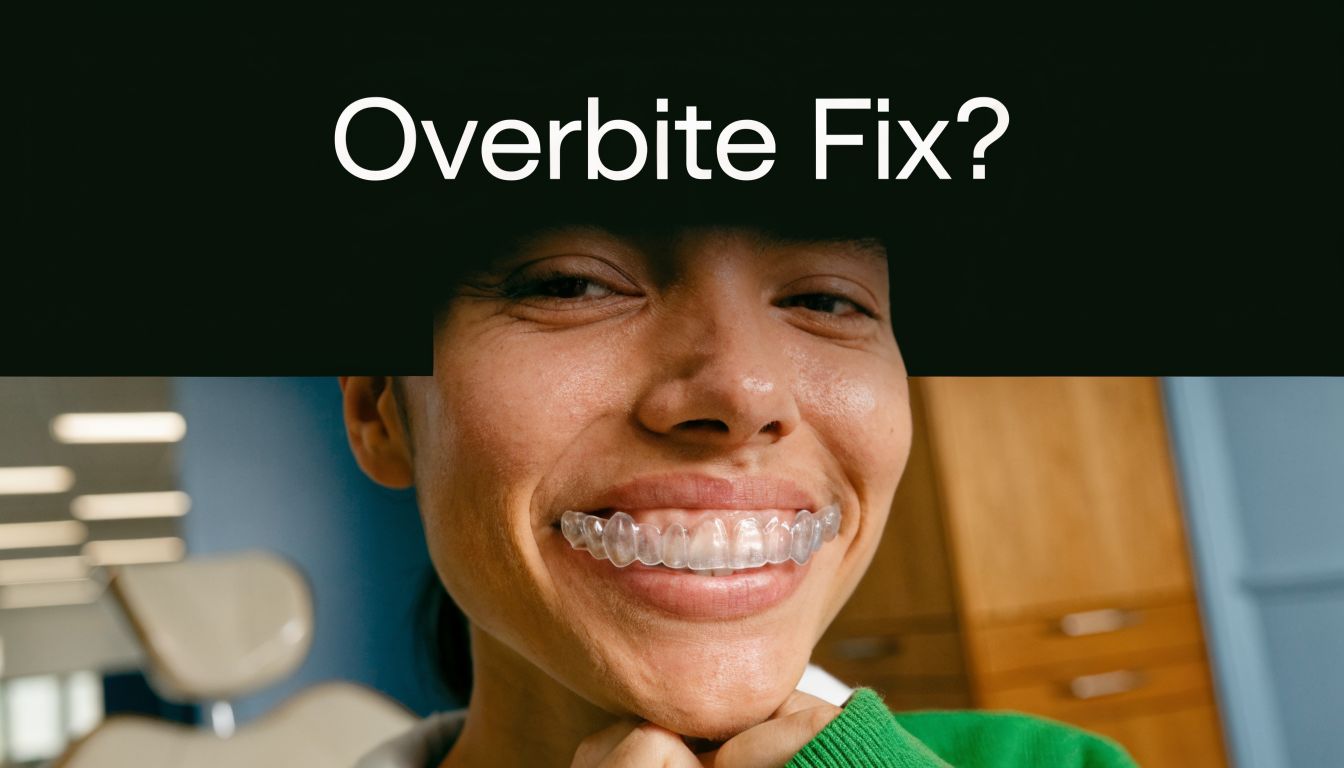
If you're looking in the mirror and noticing that your upper teeth seem to cover too much of your lower teeth, you're not alone. Many people in Vienna, VA ask the same question for the same reason. They want a smile that looks more balanced, but they also want to know whether an overbite could be affecting comfort, chewing, or long-term tooth wear.
For many patients, the next question is simple. Can Invisalign help overbite problems without metal braces? In many cases, yes, it can. The more complete answer depends on what kind of overbite you have, how severe it is, and whether the issue is coming mostly from tooth position or jaw structure.
Clear aligners can be a strong option for the right patient. A 2024 clinical report on Invisalign bite correction noted a 90% success rate for bite correction with Invisalign, with significant improvements in overbite measurements. That should feel encouraging, but it shouldn't replace a careful exam. The best results happen when the case is selected well and the aligners are worn as directed.
People often get confused because "overbite" gets used as a catch-all term. In reality, two patients can both say they have an overbite and need very different treatment plans. One may be an excellent Invisalign candidate. Another may need braces, a hybrid approach, or a plan designed around jaw growth.
Your Guide to a Confident Smile in Vienna VA
An overbite can bother you in quiet ways.
Maybe you notice it in photos. Maybe your upper front teeth seem too dominant when you smile. Maybe you bite into a sandwich and feel like your teeth don't meet the way they should. Some people also notice chipping, uneven wear, or jaw tension and don't realize their bite may be part of the problem.
That uncertainty is what makes online searching frustrating. You'll find one page saying Invisalign works great, another saying braces are better, and a third using technical words that don't make daily sense. Many patients don't need more hype. They need a calm explanation.
Here's the key point. Invisalign can help many overbite cases, but not every overbite is the same. That's why a useful answer starts with diagnosis, not marketing.
What most people want to know first
When patients ask about Invisalign for overbite correction, they're usually trying to answer a few practical questions:
- Will it work for me? The answer depends on whether your overbite is mostly dental, skeletal, mild, moderate, or more complex.
- Will it look discreet? Many adults and teens prefer clear aligners because they don't want brackets and wires in everyday life.
- Will treatment take forever? Every case is different, but aligners can be efficient when the problem fits the tool.
- Will it be uncomfortable? Individuals often feel pressure when switching trays, not the kind of irritation many associate with metal braces.
A good overbite plan doesn't start with the appliance. It starts with understanding why your bite looks the way it does.
That distinction matters because a person with teeth that need to be repositioned is different from a person whose upper and lower jaws relate to each other in a more significant way. Both can say, "I have an overbite." Only one may be ideal for Invisalign alone.
What you should expect from a clear answer
You deserve a realistic answer, not a blanket yes.
This guide is meant to help you understand what overbites are, how Invisalign works, where it works best, and where its limits are. If you're in Vienna, VA or nearby Northern Virginia communities, that knowledge helps you walk into a consultation knowing what questions to ask and what signs matter.
Understanding Your Overbite Dental vs Skeletal Issues
A common misconception is that an overbite means "my top teeth stick out too much." That is close, but it is not complete.
An overbite describes how much the upper front teeth overlap the lower front teeth. A small amount of overlap is normal. Problems start when that overlap becomes excessive or starts affecting function, comfort, or appearance.
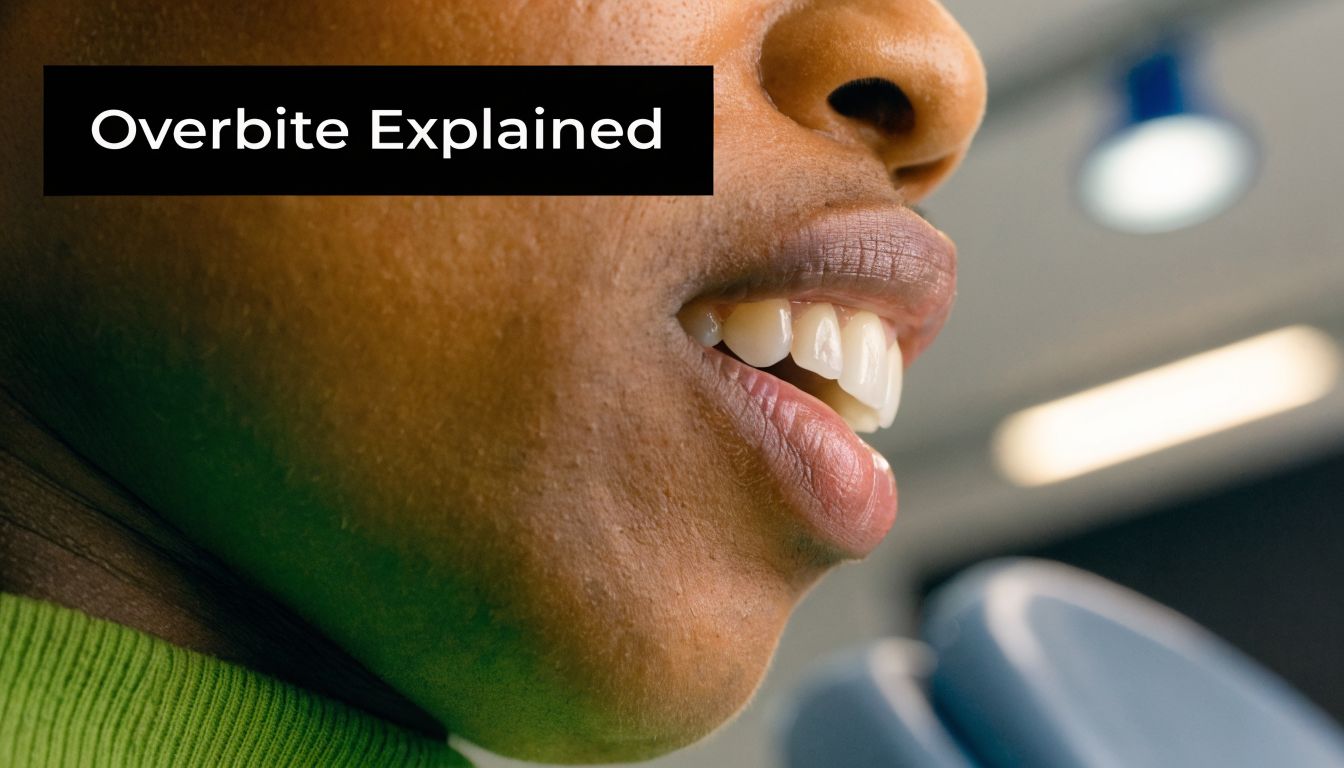
A simple way to picture it is to think of a lid on a box. The top should sit over the bottom in a controlled, balanced way. If the lid drops too far down, the fit changes. Teeth work the same way. The amount of overlap affects how your bite functions.
What a healthy bite is trying to do
Your bite isn't only about straight teeth. It's also about how forces get distributed when you chew, speak, and close your mouth. If the overlap is too deep, several things can happen:
- Front teeth absorb too much force. That can contribute to wear or chipping.
- The lower teeth may contact soft tissue. Some patients feel irritation behind the upper front teeth.
- Jaw movement can feel strained. Not every overbite causes jaw symptoms, but some do.
- Your smile can look unbalanced. Even when oral health is the main concern, appearance often matters too.
People sometimes assume an overbite and an overjet are the same thing. They aren't always. Overbite relates to vertical overlap. Overjet relates to how far forward the upper teeth sit compared with the lower teeth. A person can have one, the other, or both.
Dental overbite
A dental overbite usually means the main issue is tooth position.
Your jaws may be generally well related, but the teeth themselves have tipped, erupted, or shifted in a way that creates too much overlap. These are the cases where clear aligners often make the most sense, because aligners are built to move teeth in a planned sequence.
Common clues that suggest a more dental problem include:
- Crowded or tipped front teeth
- A bite that changed over time
- A smile that looks off even though facial balance looks fairly even
- A history of habits or tooth movement rather than jaw imbalance
If the problem is mostly dental, Invisalign often has more room to work predictably.
Skeletal overbite
A skeletal overbite means jaw structure plays a larger role.
That can happen if the upper jaw and lower jaw don't relate ideally, or if the lower jaw sits back relative to the upper jaw. In those situations, moving teeth alone may help, but it may not fully solve the underlying relationship.
Here is the important distinction:
| Type | Main cause | Invisalign alone may be enough |
|---|---|---|
| Dental overbite | Tooth position | Often, yes |
| Skeletal overbite | Jaw relationship | Sometimes, but not always |
A teen who is still growing may have options that an adult doesn't, because growth modification can become part of treatment planning. An adult with a more pronounced jaw discrepancy may need a different approach.
If you've been told your "jaws are off," that's a different conversation from "your teeth need to be moved."
Why this difference matters before treatment
Many people get stuck on this point. They want a yes or no answer, but the honest answer is tied to the cause.
If the overbite is dental, Invisalign can often guide the teeth into a healthier position. If the overbite is skeletal, aligners may still improve things, especially in milder cases, but the plan may need attachments, elastics, teen growth features, braces, or another combination.
That isn't bad news. It just means the right treatment should fit the problem.
How Invisalign Technology Corrects an Overbite
A lot of patients in Vienna come in with the same understandable question: if an overbite involves how the top and bottom teeth meet, how can a clear tray possibly change that?
The answer is that Invisalign works more like a set of carefully staged instructions than a simple retainer. Each aligner is designed to move selected teeth a small amount, in a specific sequence, so the bite changes gradually instead of all at once. For the right case, that step-by-step control can improve not only crowding, but also how much the upper teeth overlap the lower teeth.
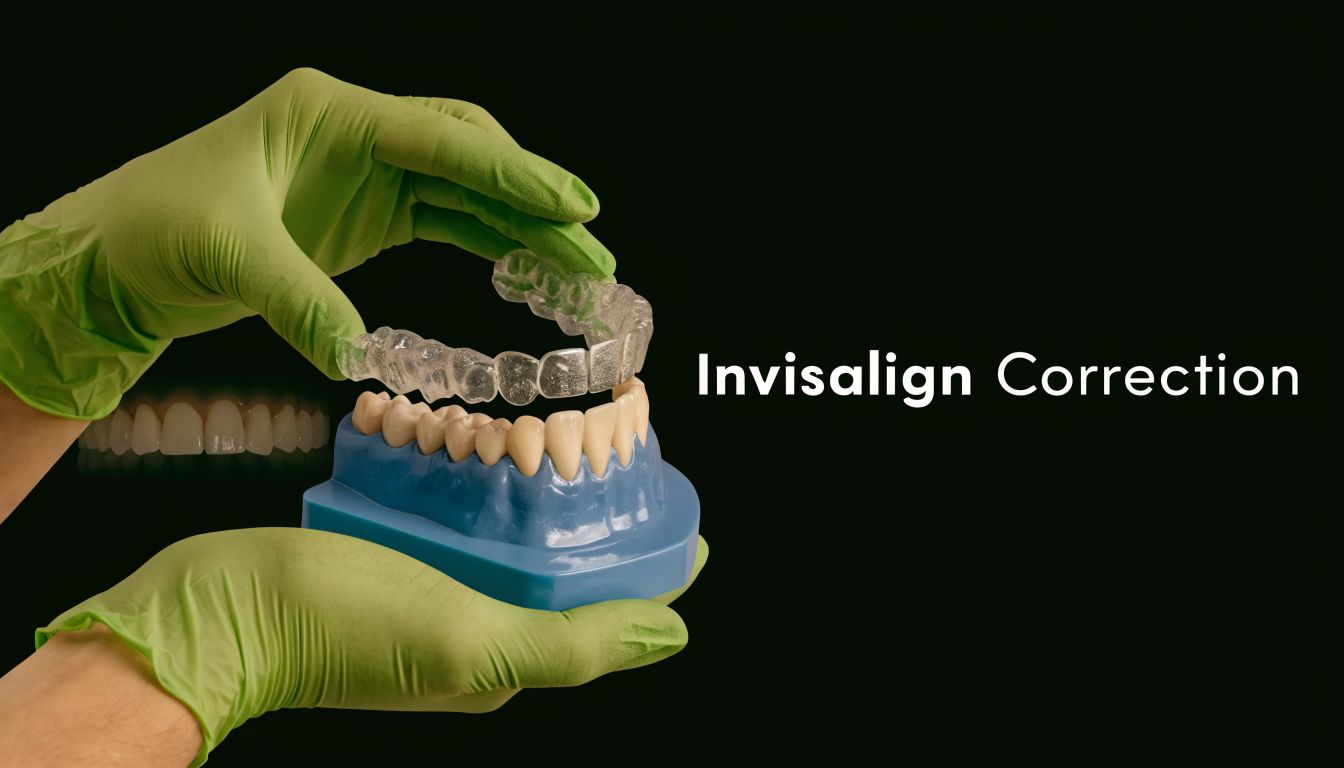
At our Vienna practice, we begin with a close look at the bite from several angles before recommending orthodontic treatment options for bite correction. That matters because overbite treatment is usually not about pushing one front tooth back. It often involves coordinating both arches, adjusting the way certain teeth contact, and controlling the vertical overlap with very intentional movements.
A helpful summary from this review of Invisalign for overbite treatment explains that Invisalign can correct many mild to moderate overbites by combining SmartTrack aligners with attachments and Class II elastics. That combination is what gives the system more control than people often expect.
SmartTrack aligners move teeth in small, planned stages
Each tray is slightly different from the one before it. That sequence matters.
A good comparison is a series of small course corrections on a road trip. One turn does not get you to the destination, but a series of precise turns does. Invisalign uses that same idea. The aligners can be programmed to shift certain teeth back, level parts of the bite, create room where the arches are colliding, and improve how the upper and lower teeth fit together when you close.
This is why overbite correction with aligners is more involved than simple cosmetic straightening. The visible front teeth are only part of the picture.
Attachments help the trays hold and direct force
Some movements need extra grip. Smooth plastic alone does not always control a tooth well enough, especially if the plan calls for root movement, rotation, or vertical changes.
That is why many overbite cases include attachments. These are small tooth-colored shapes bonded to selected teeth for part of treatment. They work like handles on a drawer. Without a handle, you can still pull, but not with the same control. With attachments, the aligner can guide force more accurately.
For overbite correction, attachments often help with:
- controlling vertical tooth movement
- improving rotation and root positioning
- increasing tray grip on specific teeth
- supporting the bite changes planned in the digital setup
Patients are often concerned that attachments will stand out. In everyday conversation, they are usually much less noticeable than expected.
Elastics can help change how the bite fits together
Many overbite cases also use elastics, or small rubber bands, to connect the upper and lower arches. Their job is to add directional force that the trays alone may not provide well enough.
That can be the missing piece for patients who wonder why aligners are sometimes paired with other components. Clear trays move teeth. Elastics help guide the relationship between the arches while those teeth are moving. In practical terms, that often means wearing aligners consistently, using elastics exactly as prescribed, and coming in for check-ins so we can confirm the bite is tracking the way it should.
Consistency matters here. If aligners are worn casually or elastics are skipped, the bite may not improve as planned.
Teen treatment can include growth-related features
For growing patients, treatment planning can be different because jaw development may still be part of the conversation. In selected teen cases, Invisalign may include features designed to encourage a better lower jaw position while growth is still active.
Adults are different. Once growth is complete, treatment relies on tooth movement and bite mechanics rather than growth guidance. That is one reason a personalized exam matters so much. Two patients can both say, "I have an overbite," and still need very different plans.
The technology matters, but the diagnosis matters more
Invisalign software can map out highly detailed tooth movements, but software does not replace judgment. A good result depends on identifying whether the bite problem is mainly dental, how much correction is realistic with aligners, and whether the patient can wear the trays as directed.
That is also why we keep the process patient-focused. Some patients feel perfectly comfortable with scans, attachments, and routine visits. Others feel anxious about dental treatment and need a gentler pace. If that sounds like you, it is worth knowing that comfort measures, including sedation dentistry when appropriate, can be part of the larger care experience at our Vienna office.
Clear aligners can do a lot for the right overbite. The key is using the technology for the right kind of problem, with a plan built around the person wearing it.
Are You a Good Candidate for Invisalign Overbite Correction
A common Vienna question sounds simple on the surface. "Can Invisalign fix my overbite?" The better question is whether your overbite comes mostly from tooth position, jaw position, or a mix of both, because that is what determines whether clear aligners are likely to work well.
An overbite case is a bit like a door that does not close properly. Sometimes the hinges are fine and the problem is the way the door sits in the frame. Sometimes the frame itself is off. Invisalign can often correct the first situation very well. The second may call for a different plan, or a combination of treatments.
Signs Invisalign may be a good fit
You may be a strong candidate if your overbite is mainly dental and your goals match what aligners do best.
That often includes:
- A mild to moderate overbite
- Front teeth that sit too far over the lower teeth because of tooth position
- Healthy gums and teeth that can support movement
- A preference for a removable, less noticeable orthodontic option
- A willingness to wear aligners and any elastics exactly as instructed
Consistency matters more than many patients expect.
Clear aligners only work when they are worn for the recommended hours each day. If trays spend long stretches in a case, treatment can slow down or stop tracking properly. For some patients, fixed braces are the more reliable tool because they do not depend on the same level of day-to-day follow-through.
Dental overbite vs skeletal overbite
This is the part that often clears up confusion.
A dental overbite means the teeth are positioned in a way that creates too much vertical overlap. In many of these cases, Invisalign can move the teeth into a healthier relationship.
A skeletal overbite means the upper and lower jaws themselves are out of balance. Adults with a more pronounced skeletal pattern may still improve their bite and smile with Invisalign, but there are limits to what tooth movement alone can accomplish. If the jaw relationship is the main issue, we need to say that clearly and discuss other options openly.
That is why an online quiz or quick glance in the mirror cannot tell you enough. A real candidacy exam looks at your bite as a whole system.
Age matters, but not in the same way for everyone
Teens and adults are evaluated differently because growth changes what is possible. In selected teen cases, treatment may include growth-related features as noted earlier in the article. Adults can still be excellent candidates, but adult correction depends on tooth movement and bite mechanics, not growth guidance.
Your comfort matters too. Some patients are excited to start. Others feel nervous about scans, attachments, or dental visits in general. At our Vienna office, we plan around the person, not just the bite. If dental anxiety has kept you from getting answers, comfort measures and sedation dentistry may be part of the conversation when appropriate.
A practical self-check
Before scheduling, ask yourself a few honest questions:
| Question | Why it matters |
|---|---|
| Does my overbite seem mild or moderate rather than severe? | Aligners usually have the best predictability in less extreme cases. |
| Do my jaws look fairly balanced, even if my teeth do not line up well? | That may point toward a dental issue rather than a skeletal one. |
| Can I wear aligners consistently every day and use elastics if prescribed? | Treatment depends on steady wear. |
| Do I want a discreet option that fits work, school, or social life? | Many patients choose Invisalign for appearance and convenience. |
If those answers sound like you, a personalized exam is the next step. You can start by learning more about orthodontic treatment options in Vienna and then have your bite checked in person.
The goal is not to force every overbite into the Invisalign category. The goal is to choose the treatment that fits your bite, your age, your comfort level, and your long-term result.
Your Invisalign Journey in Vienna From Start to Finish
For many patients, the hardest part isn't the treatment itself. It's not knowing what the process will feel like.
The path usually starts with a conversation, not a commitment. You come in, talk through what bothers you about your bite, and have your teeth and jaw relationship examined carefully. If you're anxious about dental visits in general, comfort options can be part of that conversation too.
Step one is understanding your bite clearly
At the first visit, the goal is to find out what kind of overbite you're dealing with.
That may include digital imaging, photos, and a scan instead of messy traditional impressions. Digital planning is especially helpful for overbite cases because the bite needs to be viewed as a system, not just as a row of front teeth.
A helpful note from this article on Invisalign trends and patient comfort is that AI-enhanced treatment planning and sedation dentistry for anxious adults can support a more personalized, comfortable experience. The technology doesn't replace clinical judgment, but it can help make planning more precise and the visit feel less intimidating.
Step two is seeing the plan before you start
Once records are taken, your aligner plan is mapped digitally.
This is often the point where treatment starts to feel real. You can see how teeth are expected to move over time and where attachments or elastics may fit into the plan. If your case is more dental than skeletal, that often becomes clearer here.
Patients usually want honest answers at this stage, such as:
- Will I need attachments?
- Will I need elastics?
- How visible will everything be?
- Will my bite need refinements later?
Those are good questions. Bite correction is detailed work, and a thoughtful plan should make room for adjustments if the teeth don't track exactly as expected.
Step three is learning the daily routine
When the aligners arrive, you'll receive your first sets and instructions for wear.
Daily life with Invisalign usually means removing trays for meals, brushing before putting them back in, and staying consistent. If elastics are part of the plan, wearing them correctly matters just as much as wearing the trays.
Most patients describe the first few days with a new tray as pressure, not sharp pain. That pressure is a sign that movement is happening. Speech may feel slightly different at first, but patients typically adapt quickly.
Consistency matters more than intensity. A calm routine worn every day usually beats a perfect plan worn inconsistently.
Step four is checking progress, not guessing
Progress visits are there to confirm that your teeth are moving the way the plan intended.
These visits are usually simpler than many people expect. The bite is checked, attachments are reviewed, and any needed refinements are discussed. If something isn't tracking well, it's better to catch it early than to hope it corrects itself.
If you're exploring Invisalign treatment options in Vienna, this is the part many adults appreciate most. The appointments are focused, the process is structured, and you're able to follow a treatment plan without the look and feel of traditional brackets.
The finish matters too
At the end, the question isn't just whether your teeth look straighter. It's whether the bite closes more comfortably and more predictably than it did before.
After active treatment, retainers help hold the result. That's true whether you finished with aligners or braces. Teeth naturally want to drift, especially after bite correction.
The end of Invisalign isn't really the end of care. It's the start of protecting the result you worked for.
Limitations of Invisalign and Alternative Overbite Treatments
An honest answer about Invisalign includes its limits.
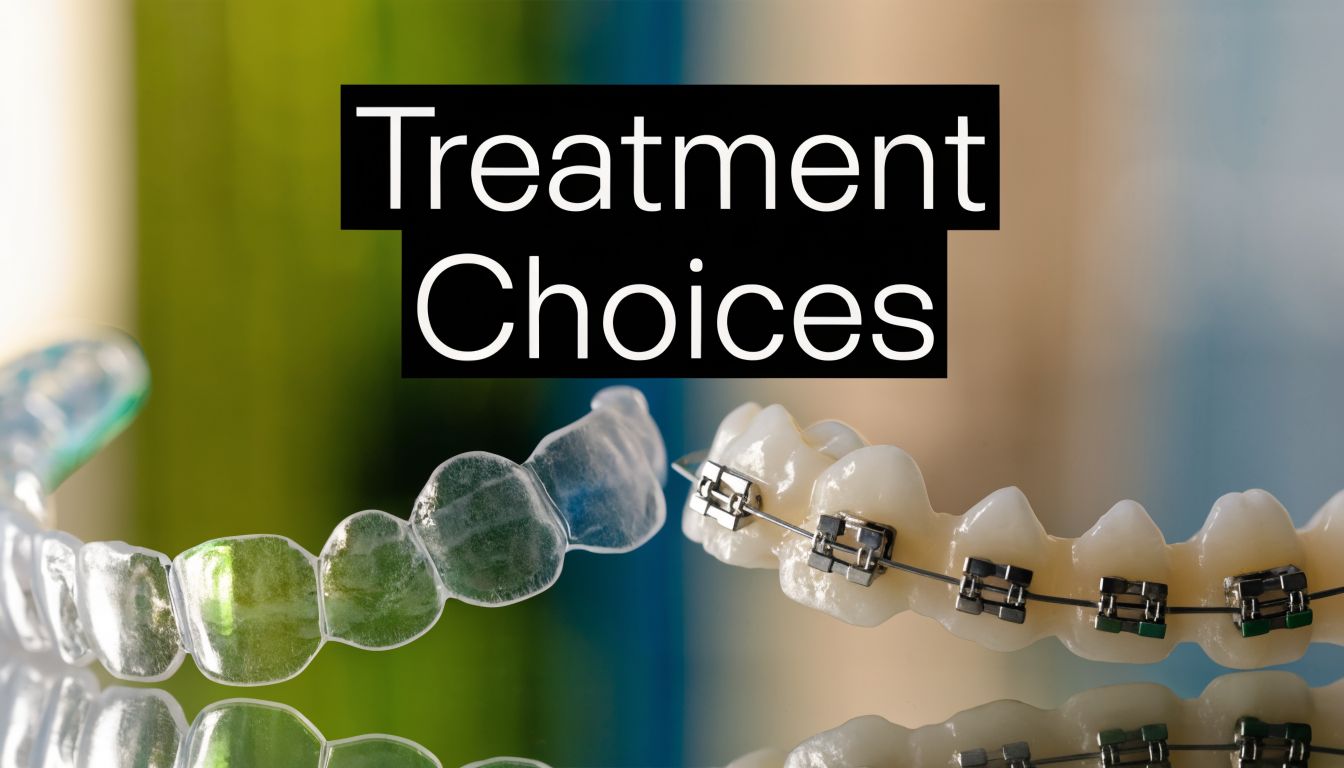
Clear aligners can do a lot, but they don't solve every overbite equally well. If the jaw relationship is more severe, if extractions are part of the case, or if vertical control is especially difficult, the final result may not match the original digital prediction.
A clinical discussion of Invisalign overbite reduction limits reported that adolescents achieved 63.5% of predicted mandibular incisor intrusion, while adults achieved 45.3%. That doesn't mean Invisalign fails in adults. It means adults often need more cautious expectations, especially when the plan depends on movements that are harder to express fully with aligners.
Where Invisalign may fall short
The main situations that deserve extra caution include:
- More severe skeletal overbites where jaw structure is the primary driver
- Adult cases needing difficult vertical tooth movement
- Extraction cases where planned bite changes may be harder to achieve
- Patients who know compliance will be inconsistent
This is one reason two people with "the same overbite" can have different recommendations. One may do very well with aligners. Another may get better control from braces, or from a blended plan that uses more than one method.
Why braces are still important
Traditional braces still matter because they offer a different type of control.
They stay on full time, which removes the compliance variable. They also allow very direct force systems for certain movements. If the case is complex, that can be an advantage.
That doesn't mean braces are automatically better. It means they may be more appropriate when:
| Situation | Often better fit |
|---|---|
| Mild to moderate dental overbite with strong compliance | Invisalign may work well |
| Complex movement or poor expected compliance | Braces may be more dependable |
| Growth-guided teen treatment | Either may be considered, depending on the case |
| Severe skeletal discrepancy | A broader treatment plan may be needed |
Hybrid planning can be the smartest path
Some patients do best with a hybrid approach.
That could mean starting with one method and finishing with another, or pairing aligners with elastics and additional monitoring. The right plan isn't always the most advertised option. It's the one most likely to give you a stable, healthy bite.
If you're concerned about risks, tracking problems, or daily wear demands, it also helps to review practical considerations like common Invisalign side effects and treatment realities.
The most trustworthy recommendation is not the one that sounds easiest. It's the one that fits your anatomy, your habits, and your goals.
Your Questions About Overbite Correction Answered
By the time patients reach this point, the biggest question usually is not, "Can this work?" It is, "What will this be like in my day-to-day life?" That is a fair question. Overbite correction succeeds when the plan fits your bite, your schedule, and your comfort level.
Cost is usually one of the first practical concerns. Invisalign for an overbite in Vienna, VA does not come with one flat fee because treatment can look very different from one person to the next. A mild dental overbite may need fewer trays and a simpler plan. A deeper bite that needs attachments, elastics, or additional refinement trays often takes more time and closer monitoring. The most accurate answer comes after an exam and digital planning, when you can see what your bite is doing and what it will take to change it safely. Insurance, financing, and in-house payment options can also affect your final out-of-pocket cost.
Patients also ask what treatment feels like. Attachments and elastics usually feel like pressure, not harm. That pressure is how teeth move. A useful comparison is breaking in a new pair of shoes. You notice the change at first, then your mouth adapts. Attachments can make aligners feel more secure and slightly tighter. Elastics may cause soreness in the beginning, especially if they are helping guide the lower jaw and upper teeth into a healthier relationship.
Eating is often easier with Invisalign than with braces because you remove the trays for meals. That means no long list of restricted foods. It also means the routine matters. Eat, brush, and put the aligners back in. Patients who do well with Invisalign usually make that sequence part of the day, like putting glasses back on after cleaning them.
Another common concern is what happens after active treatment ends. Patients should expect to wear retainers after active treatment ends. Teeth have memory, especially after an overbite has been corrected, and retainers help protect the result you worked for. The exact schedule depends on your case, but the principle is simple. Retention is part of treatment.
Some patients come in hoping Invisalign must be the better choice because it is less noticeable. The better question is whether it is the better tool for your overbite. For a dental overbite, clear aligners are often a very good option. For a more pronounced skeletal problem, braces, growth-guided treatment in younger patients, or another broader plan may make more sense. A clear answer starts with diagnosing the type of overbite, not choosing the appliance first.
Anxiety is another real part of this conversation. What patients often need is not more courage, but a plan that feels understandable and manageable. Seeing the scan, understanding each step, and knowing what the first weeks may feel like can make treatment feel far less intimidating. If dental visits have been difficult for you in the past, sedation dentistry and comfort-focused care can also be discussed at our Vienna, VA practice so the process feels calmer from the beginning.
That is why overbite treatment should feel personal, not generic. You deserve more than a yes or no. You deserve to know what kind of overbite you have, whether Invisalign fits it well, and what the process will ask of you.
Take the First Step Toward Your New Smile in Vienna
If you've been wondering whether can invisalign help overbite concerns in your specific case, the answer is often yes, but only after the right diagnosis. The ultimate decision depends on whether your overbite is mainly dental or more skeletal, how much correction is needed, and how well aligners fit your daily routine.
The good news is that you don't have to figure that out on your own. A careful exam can show whether Invisalign is likely to work well, whether another option would give better control, or whether a blended approach makes more sense. That kind of clarity usually brings a lot of relief.
At Vienna Implant and Family Dentistry, patients in Vienna, VA and surrounding Northern Virginia communities can get a personalized, judgment-free evaluation from a team that takes time to explain the why behind the treatment. If you're anxious about dental visits, comfort-focused care and sedation options can also be part of the conversation.
Schedule a consultation with Vienna Implant and Family Dentistry and get a clear answer about your bite, your candidacy, and your next step. A healthier, more confident smile starts with understanding what your bite needs.