You brush every day. You rinse, floss when you can, maybe use a whitening toothpaste, and still your teeth do not look as bright as you hoped. That is a common frustration.
Many people in Vienna, VA ask the same question. Can brushing your teeth whiten them? The short answer is not in the way many individuals mean by “whiten.” Brushing is excellent for keeping teeth clean and healthy. It is not usually enough to change the deeper color of your teeth.
That difference matters. It is also where a lot of confusion starts.
Your Guide to a Brighter Smile in Vienna VA
If your teeth look a little dull even though you brush faithfully, you are not doing anything wrong. In many cases, brushing is doing its job. It is removing food debris, plaque, and some surface stain. It is just not designed to transform the natural color of the tooth itself.
A brighter smile starts with knowing what brushing can do and what it cannot. Once people understand that, they stop blaming themselves and start choosing better options.
Why this question comes up so often
Most of us learn early that brushing keeps teeth healthy. Over time, it is easy to assume that “cleaner” should also mean “whiter.” Sometimes it does, but only a little.
If you drink coffee on your commute, sip tea during work, or enjoy dark sauces and berries, some of that color can settle on the outside of your teeth. Brushing may help with part of that. But if the shade you dislike comes from inside the tooth, brushing alone will not fix it.
A simple way to think about it
Think of your tooth like a window with a wall behind it.
- The window is the outer enamel.
- The wall behind it is the dentin, which often has a naturally warmer or slightly yellow tone.
Brushing can clean the window. It cannot repaint the wall.
That is why people often start with home care and then look for other options when the mirror still shows the same basic shade. If you want a gentle starting point, this guide on how to get whiter teeth naturally is a useful place to begin.
Good home care is never wasted. Even when brushing does not whiten, it creates the cleanest and safest foundation for any future whitening treatment.
What matters most
For most families in Northern Virginia, the best approach is not brushing harder. It is matching the solution to the type of discoloration. That starts with understanding tooth color clearly.
The Truth About Brushing and Tooth Color
Brushing helps your smile look cleaner. It does not usually make teeth whiter.
According to Colgate’s explanation of tooth brushing and whiter teeth, brushing teeth twice daily prevents plaque buildup but does not whiten teeth, because it removes surface debris without changing the natural off-white color created by dentin beneath translucent enamel. The same source notes that 67% of U.S. adults have tried whitening methods beyond simple brushing.
Surface stain and deeper color are not the same
Surface stain and deeper color are not the same. This distinction often confuses readers.
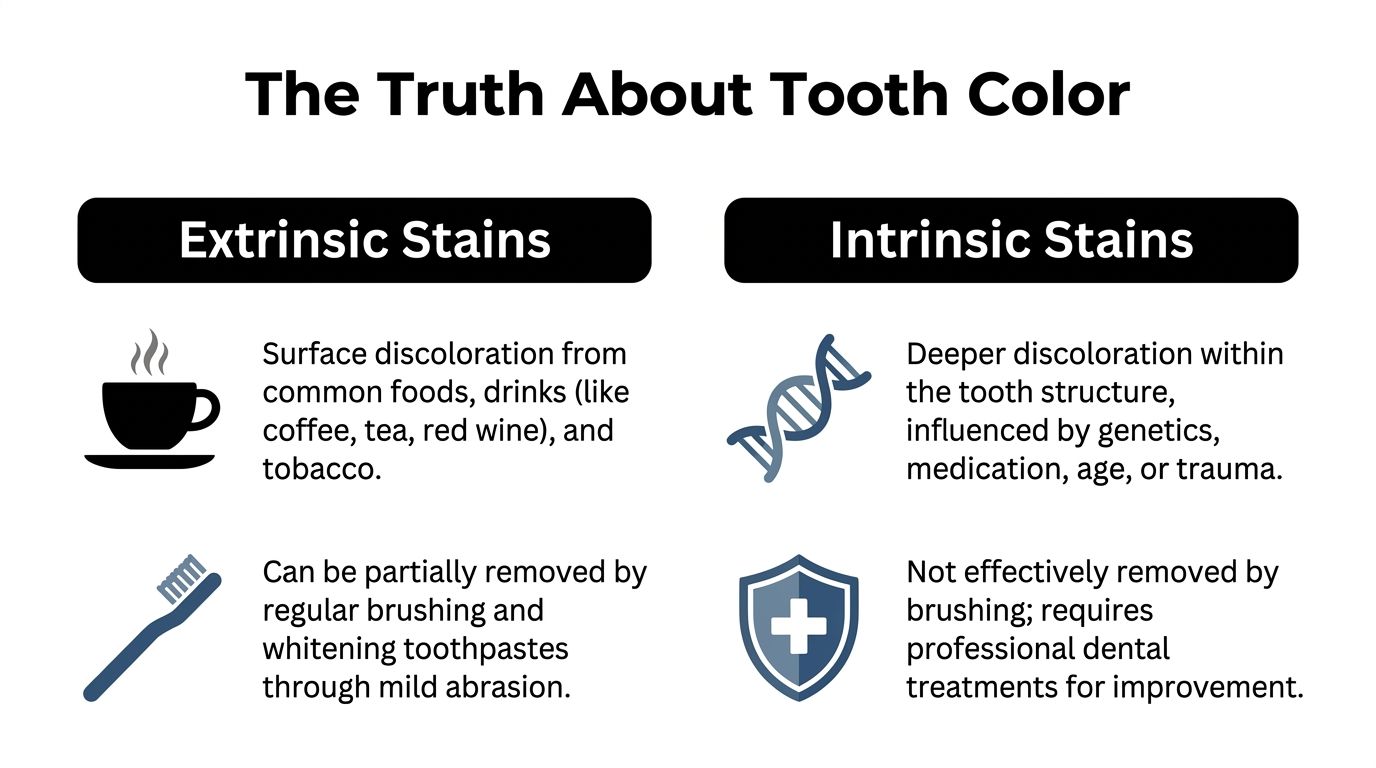
A tooth can look darker for two very different reasons:
| Type | What it means | Can brushing help |
|---|---|---|
| Extrinsic stains | Stains sitting on the outer surface from foods, drinks, or tobacco | Sometimes, partially |
| Intrinsic color | Color inside the tooth, often related to dentin, age, medication, or genetics | No, not effectively |
If you had coffee this morning and your teeth picked up a little surface stain, brushing may remove some of it. If your teeth are naturally darker or have changed with age, brushing will not reach that deeper source.
Why clean teeth can still look yellow
People often say, “My teeth feel clean, but they still do not look white.”
That makes sense biologically. Enamel is not a sheet of white paint. It is more like a translucent cover. The dentin underneath influences the color you see.
So a person can have very clean teeth and still have a cream, yellow, gray, or off-white appearance. That is not a hygiene failure. It is how teeth are built.
What brushing does very well
Brushing still matters every single day because it helps with oral health.
It removes plaque, reduces debris, and keeps the mouth healthier overall. If plaque and stain are allowed to sit, teeth can look duller and whitening treatments may work less evenly later.
A clean smile and a white smile are related, but they are not identical goals.
That distinction is the key to answering “can brushing your teeth whiten them.” Brushing supports health and removes some surface discoloration. It does not change the deeper shade of the tooth.
Can Whitening Toothpastes Make a Difference
Whitening toothpastes can help, but they help in a narrow way. They mostly work on surface stain.
How they work
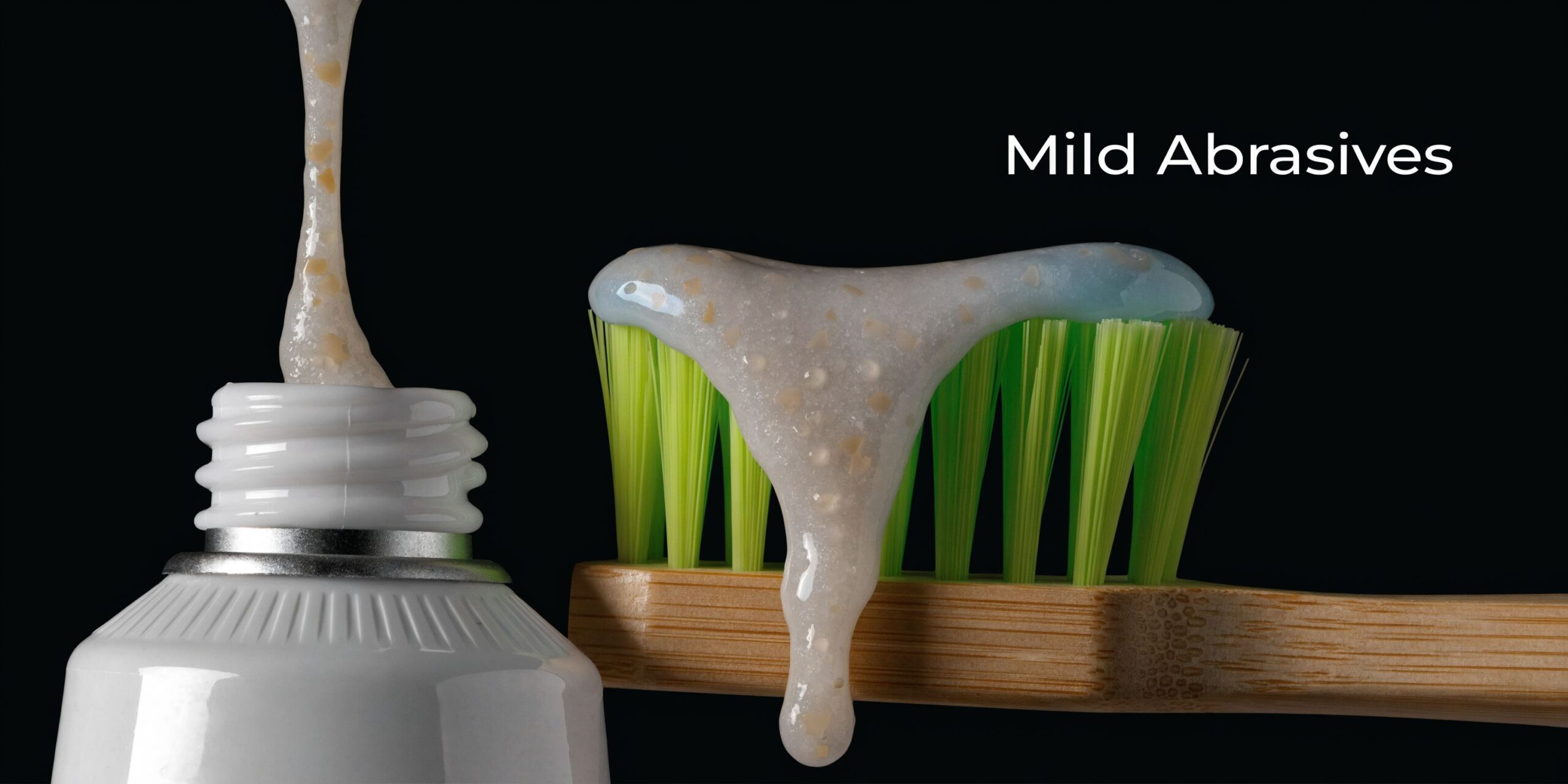
Most whitening toothpastes use mild abrasives to scrub away stain on the outside of the tooth. Some also include low levels of peroxide.
The American Dental Association notes in its guidance on whitening that a clinical study found 62% whiter teeth after six weeks of twice-daily brushing with a commercial toothpaste containing baking soda and hydrogen peroxide. That result came from stain scrubbing plus a mild bleaching effect. The same ADA resource also explains that these toothpastes contain less than 1% peroxide, and those ingredients need more than 20 minutes of contact time to penetrate enamel, which is far longer than a typical brushing session.
What that means in real life
This is the important part. A whitening toothpaste may help if:
- Your teeth have recent surface stains from coffee, tea, or similar foods.
- You want maintenance after a professional cleaning or whitening treatment.
- You expect gradual improvement, not a dramatic color shift.
It may disappoint you if:
- Your teeth are naturally darker
- Your shade changed with age
- Medication or trauma affected color
- You are hoping for a noticeably brighter smile fast
A useful comparison helps here. Whitening toothpaste is like using a polish on a countertop. It can lift residue from the top. It does not change the material underneath.
How to set realistic expectations
Some people use a whitening toothpaste for a week and assume it “doesn’t work.” Others use it for months and expect in-office style results. Both expectations miss the middle ground.
Whitening toothpaste can be reasonable for stain control. It is not the same as professional whitening.
If you want help choosing among formulas, this review of the most effective tooth whitening toothpaste can help you compare options more thoughtfully.
Whitening toothpaste is best seen as a maintenance product, not a full cosmetic treatment.
That mindset protects you from frustration and from using the wrong product too aggressively.
The Dangers of Over-Brushing for Whiteness
A common mistake is thinking, “If two minutes helps, more must help more.” It does not.
In fact, brushing too long or too hard can make teeth look worse over time.
What happens when people overdo it
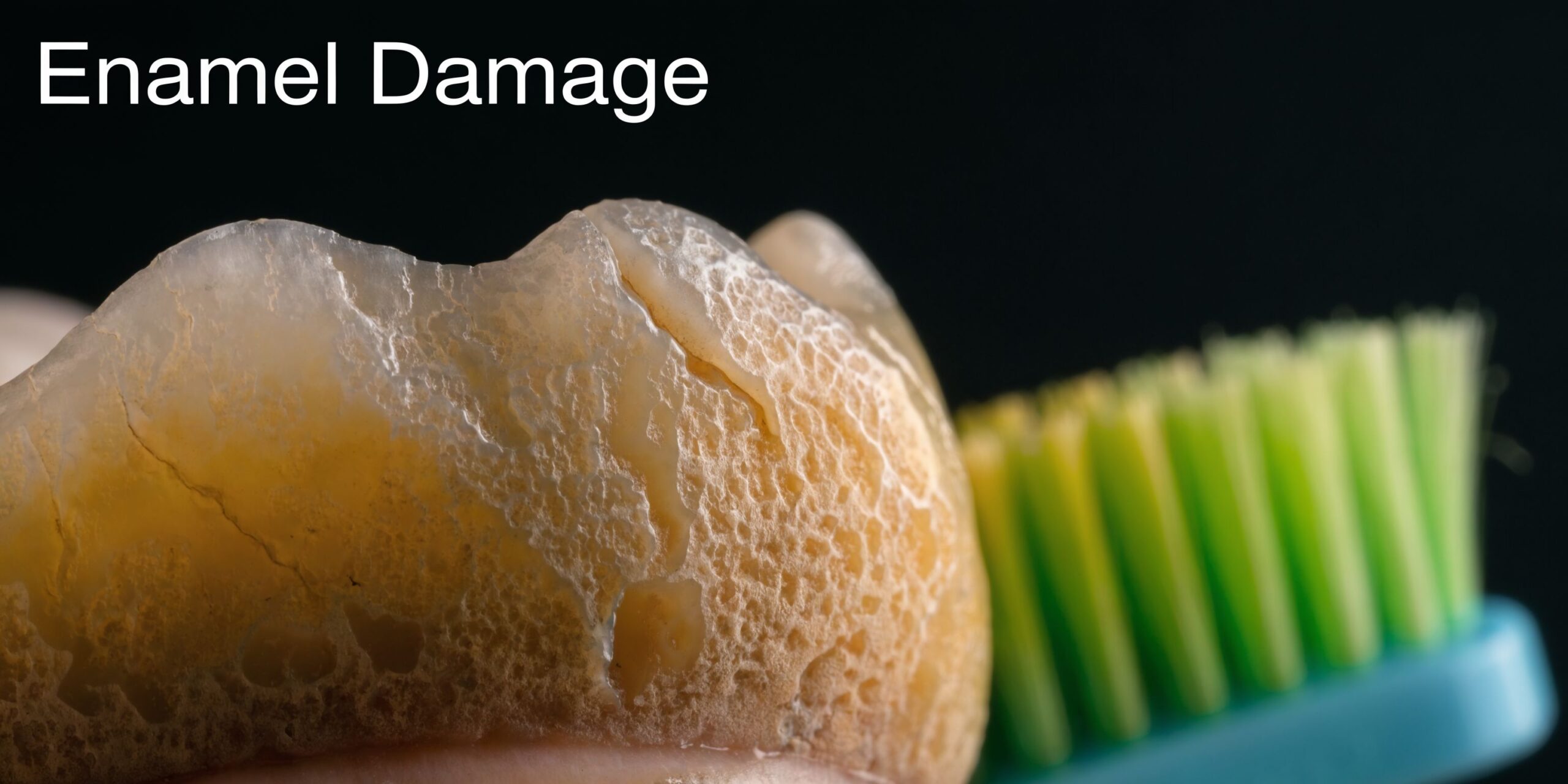
Research summarized by Terrell Hills Dental on over-brushing and whitening states that prolonged or aggressive brushing damages enamel microstructure, increases surface roughness, and risks dentin exposure. The same source says plaque removal is complete within 2 minutes with proper technique, and that whitening toothpastes with RDA above 100 can erode enamel by 10 to 20 microns annually.
That may sound technical, but the effect is simple. As enamel wears down, the yellower dentin underneath becomes easier to see.
So the person who is trying hardest to whiten may accidentally create a more yellow appearance.
Signs your brushing may be too aggressive
Look for patterns like these:
- Tooth sensitivity when drinking something cold
- Gum irritation or a receding gumline
- Notches near the gumline on certain teeth
- A rougher feel on the tooth surface
- No whitening improvement, despite brushing longer
These signs do not always mean over-brushing, but they are worth discussing with a dentist.
What to do instead
If your goal is a brighter smile, protect enamel first.
- Use a soft-bristled toothbrush
- Brush with light pressure
- Stay close to 2 minutes
- Be careful with highly abrasive whitening pastes
- Ask before combining multiple whitening products
Enamel does not grow back. Whitening plans should protect it, not trade it away.
This point matters for adults with thin enamel, existing sensitivity, acid reflux, or a history of heavy whitening product use. In those situations, “stronger” home care is often the wrong answer.
Why Brushing Isnt Enough for Many Northern Virginia Residents
Some discoloration has very little to do with how well you brush. That can be hard to hear, but it is often reassuring once you understand it.
Many adults in Northern Virginia keep up with regular home care and still notice teeth looking darker over time. The reason is usually deeper than surface stain.
Aging changes the look of teeth
As we get older, teeth often appear less bright. Part of that comes from years of stain exposure. Part of it comes from the way enamel and dentin change over time.
Brushing keeps the surface cleaner, but it cannot reverse natural internal color changes.
Medications can affect tooth color
This is another source of confusion. A patient may think, “I brush well, so why do my teeth still look gray or yellow?”
According to this discussion of why teeth can yellow despite daily brushing, brushing cannot alter intrinsic dentin color, which may be affected by aging and medications. The same source notes that some antibiotics such as tetracycline, as well as antihistamines, can contribute to gray or yellow dentin. It also states that post-COVID saliva changes have been linked to a 25% increase in intrinsic staining in 30 to 50 year-olds.
For someone dealing with those causes, brushing harder is like trying to scrub away a color that lives under the surface.
Local habits add another layer
Life around Vienna often includes coffee on the go, frequent tea, and busy routines that make stain exposure steady. Those habits can add extrinsic stain on top of intrinsic color.
That is why two people can brush with the same toothpaste and get very different results. One mainly has surface stain. The other has a deeper shade issue.
A stronger plan often starts with understanding your best teeth whitening options instead of blaming your routine.
When this becomes especially relevant
This question comes up often for adults considering cosmetic or restorative dentistry. If you are thinking about veneers, crowns, or even dental implants, tooth shade matters because you want the final result to look balanced.
A clean mouth is always the starting point. But for many people, especially adults seeing changes from age or medication, brushing alone will not create the smile color they want.
Achieving Your Ideal Smile at Vienna Implant and Family Dentistry
Once you know the limits of brushing, professional care makes more sense. It is not about skipping home care. It is about using the right tool for the right problem.
That is one reason whitening remains so popular. According to teeth whitening statistics compiled here, the demand for results beyond brushing has helped drive the whitening market to $8.52 billion, with nearly 90% of orthodontic patients requesting whitening. The same source says whitening accounts for 32% of all in-office dental procedures in the U.S.

What professional whitening does differently
Professional whitening is different from brushing because it is designed to address color change, not just cleaning.
A dentist can evaluate:
- whether your discoloration is mostly surface-based or internal
- whether sensitivity or enamel wear changes the safest approach
- whether whitening is the right treatment at all
That last point matters. Some stains respond well to whitening. Others respond better to veneers or other cosmetic options.
When whitening is a good fit
Professional whitening may be worth discussing if you:
- Brush consistently but still see dullness
- Have staining from coffee, tea, or wine
- Want a brighter smile before a major event
- Are planning cosmetic work and want a more even shade
- Need a safer option because OTC products have caused sensitivity
Some people also want whitening before restorative work so the surrounding natural teeth are closer to their preferred shade.
When another cosmetic option may be better
Whitening is not the answer to every discoloration problem.
If a tooth has deep internal staining, old dental work, or structural issues, treatments such as veneers, crowns, or broader smile design may make more sense. That is especially important for patients already considering restorative dentistry. For example, if someone is replacing a missing tooth with a dental implant, the final smile plan may include shade matching across several teeth, not just whitening alone.
The best cosmetic result usually comes from diagnosis first, treatment second.
This is why a thoughtful exam matters more than guessing from the toothpaste aisle. A dentist can help you avoid wasting time on methods that were never likely to work for your type of discoloration.
Begin Your Smile Journey With a Consultation
A consultation is often easier than people expect. You come in, talk through what bothers you, and get clear answers.
Some patients arrive saying their teeth look yellow no matter how often they brush. Others are worried that whitening will hurt, or that they have already damaged enamel by trying too many products at home. Those are normal concerns.
What a first visit usually feels like
The appointment begins with listening. Your dentist looks at the current shade of your teeth, checks for plaque buildup, existing dental work, gum health, and any signs of enamel wear or sensitivity.
From there, the conversation gets more personal. Are you trying to freshen your smile a little, or do you want a bigger cosmetic change? Do you have an upcoming event? Are you also thinking about veneers, crowns, or implants?
A plan that fits your mouth
Not every patient needs the same next step.
One person may need a professional cleaning first because surface buildup is making the smile look dull. Another may be a better candidate for supervised whitening. Someone else may learn that veneers or restorative treatment would create a more even and lasting result.
For anxious patients, comfort also belongs in the plan. Sedation options can help make care feel manageable, especially for people who have put treatment off for a long time.
The next step in Vienna VA
If you live in Vienna, VA or nearby Northern Virginia and keep wondering, can brushing your teeth whiten them, the most useful answer is a personalized one. Clean teeth are essential. Whiter teeth often require more than brushing.
Vienna Implant and Family Dentistry offers judgment-free care, cosmetic guidance, restorative treatment, and options for patients who feel nervous about dental visits. If you are ready for a clearer path to a brighter smile, schedule a consultation and find out which approach fits your teeth, your goals, and your comfort level.