A missing tooth has a way of showing up at the worst moments. You notice it when you're ordering lunch in Tysons, when you're smiling in a family photo, or when one side of your mouth starts doing all the chewing because the other side just doesn't feel dependable anymore.
For some people, the problem is obvious. A tooth is gone. For others, it's a failing crown, a cracked tooth, or a loose bridge that makes every meal feel uncertain. That uncertainty can slowly affect more than your bite. It can change how openly you laugh, how confidently you speak, and how comfortable you feel around other people.
If you've been searching for dental implants tysons corner, you're probably not just looking for a definition. You're trying to figure out whether this is safe, whether it will feel natural, whether you're a candidate, and whether the process is manageable with your schedule, budget, and comfort level.
This guide is meant to answer those questions in plain language, with a focus on what patients in Vienna and nearby Northern Virginia communities usually want to know before they take the next step.
Your Guide to a Confident Smile in Tysons Corner
A lot of implant conversations start the same way. Someone says, "I've been putting this off for a while."
That delay is understandable. Missing teeth can feel personal, and many adults worry they'll be judged for waiting too long or for not knowing their options. In real life, many are juggling work, family, errands, traffic, and a dozen other priorities before they ever make time for restorative dentistry.
Why people wait
Some people are worried about pain. Others assume implants are only for major dental cases. Many think they may have "missed their window" because the tooth has been gone for a long time.
Usually, the hesitation comes from one of these concerns:
- Everyday embarrassment: You may cover your mouth when you laugh or angle your face away in photos.
- Chewing difficulty: Crunchy foods, meats, or even a sandwich can become annoying when one side of your mouth isn't doing its job.
- Fear of the unknown: The word "implant" sounds technical, and technical often feels intimidating.
- Cost concerns: Many patients want to know the full picture before they commit to anything.
A missing tooth isn't just a cosmetic issue. It often changes how you eat, speak, and carry yourself day to day.
Why local care matters
For implant treatment, convenience matters more than people expect. You'll want a nearby office for consultations, imaging, follow-up visits, and maintenance over time. That's one reason local families often look for answers close to home rather than trying to piece together treatment across multiple offices.
A good implant experience should feel organized, calm, and understandable. You shouldn't have to decode dental language to know what's happening. You should be able to ask basic questions, get honest answers, and move at a pace that feels manageable.
A more reassuring way to think about treatment
If you're feeling nervous, it helps to reframe the goal. This isn't about chasing a perfect smile. It's about restoring something basic and important: the ability to chew comfortably, speak clearly, and stop thinking about that gap every time you look in the mirror.
For many adults in the Vienna and Tysons Corner area, implants become less intimidating once the process is explained step by step. That's when the treatment starts to feel less like a major mystery and more like a practical solution.
What Are Dental Implants? A Permanent Solution for Missing Teeth
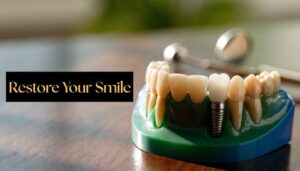
A dental implant is a replacement for a missing tooth root. It sits in the jawbone and supports a replacement tooth above the gumline. The easiest way to picture it is to think of a house. If the foundation is stable, everything built on top has support. If the foundation is weak or missing, the structure above it doesn't function the same way.
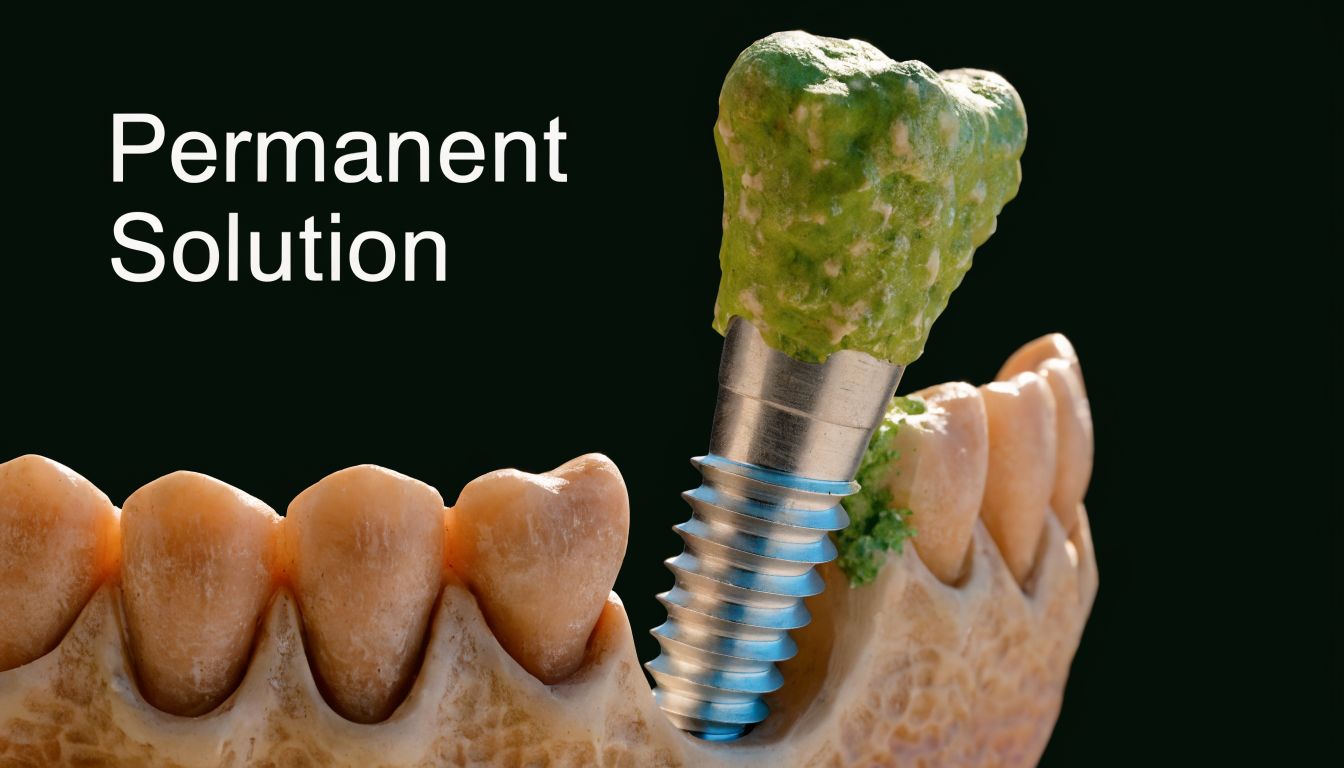
The three parts of an implant
A complete implant restoration usually includes three parts.
- Implant post: This is the part placed in the jawbone. It acts like an artificial root. Scientific literature cited by the American Academy of Implant Dentistry reports that dental implants have a 98% success rate, and over three million people in the US currently have them, according to this dental implant overview.
- Abutment: This small connector joins the implant post to the final tooth replacement.
- Crown: This is the visible tooth-shaped piece that looks and functions like a natural tooth.
Why implants feel different from other options
A bridge fills a space by using the teeth next to the gap for support. A removable denture rests on the gums and can shift when you eat or speak. An implant is different because it stands on its own.
That independent support matters. It often makes the tooth feel more secure and more natural in daily life. It also helps explain why many patients who have struggled with removable options start looking at implants as a longer-term answer.
Practical rule: If you're replacing a tooth, it's helpful to think about replacing both the part you see and the root support you don't see.
Dental implants vs bridges and dentures
| Feature | Dental Implants | Dental Bridges | Removable Dentures |
|---|---|---|---|
| Support | Placed in the jawbone and supports itself | Supported by neighboring teeth | Rests on gums |
| Effect on nearby teeth | Usually doesn't rely on adjacent teeth | Typically requires support from nearby teeth | Doesn't depend on nearby teeth, but may feel less stable |
| Feel while chewing | Often feels closest to a natural tooth | Can feel solid, but depends on supporting teeth | May shift or move more during eating |
| Daily routine | Brushed and cleaned like a fixed tooth | Cleaned around the bridge and supporting teeth | Removed for cleaning |
| Long-term approach | Designed as a durable tooth replacement | Useful in selected cases | Helpful for broader tooth loss, especially when removable treatment is preferred |
Why they matter in restorative dentistry
Implants aren't only about appearance. They sit at the center of restorative dentistry because they replace function. They help restore bite strength, support speech, and create a fixed solution where a gap once was.
For someone searching dental implants tysons corner, the biggest source of confusion is often this: "Is an implant just a nicer fake tooth?" Not exactly. It's a replacement system built from the jaw up, which is why it behaves differently from a removable appliance or a traditional bridge.
Are You a Candidate for Dental Implants in Vienna?
Most adults who ask about implants are worried they'll be told no. They assume they're too old, that their bone isn't strong enough, or that a medical condition automatically disqualifies them.
In practice, candidacy is usually more flexible than people expect. The key is a personalized evaluation rather than self-diagnosing from online lists.
Common reasons people think they don't qualify
Age by itself usually isn't the deciding factor. What matters more is your oral health, your healing ability, and the condition of the bone and gums in the area where the implant would go.
People also worry that they've waited too long after losing a tooth. Waiting can affect bone volume, but that doesn't always end the conversation. Modern treatment planning may include additional steps to prepare the area for an implant when needed.
What dentists actually look for
A dental implant evaluation usually focuses on a few practical questions:
- Gum health: Healthy gums create a better environment for long-term support.
- Bone support: The jaw needs enough bone in the right shape and location to hold the implant securely.
- General health: Conditions such as controlled diabetes or certain medications may affect planning, healing, or timing.
- Oral habits: Clenching, grinding, and smoking don't automatically rule out treatment, but they do affect how carefully the plan needs to be built.
Good candidates are not all the same
Some people are ideal straightforward candidates. They lost one tooth recently, their gums are healthy, and the site is ready. Others need more preparation, which might mean treating gum disease first, replacing a failing tooth before implant placement, or improving the support in the area.
That doesn't mean treatment is out of reach. It means the roadmap is customized.
Many patients who think they aren't implant candidates turn out to have options once the exam and imaging are done.
If you have anxiety, that matters too
Candidacy isn't only physical. Comfort matters. If dental fear has kept you from treatment for years, that history should be part of the conversation, not something you hide. Sedation options and a slower, clearly explained pace can make implant care much more realistic for patients who usually avoid the dentist.
When a consultation matters most
The internet can tell you broad principles. It can't examine your bite, check the health of the surrounding teeth, or show how much support is present in your jaw.
If you're in Vienna or nearby Northern Virginia and you're wondering whether implants are realistic for you, the most useful next step is a consultation with imaging and a treatment discussion specific to your actual mouth, not someone else's checklist. That's especially true if you've been told different things over the years or if your case involves a broken tooth, an old bridge, or multiple missing teeth.
Your Dental Implant Journey Step by Step at Our Vienna Office
It's common to feel calmer once the sequence is known. Implant treatment isn't one giant event. It's a series of planned steps, each with a clear purpose.
Step one begins with planning
The first visit is about diagnosis, not pressure. The dentist reviews your health history, examines the area, checks your bite, and talks with you about your goals. Some patients care most about chewing comfortably. Others are focused on restoring a front tooth that shows when they smile.
Advanced imaging plays a major role here. 3D dental imaging allows the dentist to create a detailed view of the jaw so bone volume, density, and nearby structures can be evaluated more precisely. This type of imaging helps clinicians avoid important structures like nerves and improves predictability, according to this explanation of 3D planning for dental implants.
What the scan helps answer
The scan can help answer questions that a standard visual exam can't fully resolve.
- Where will the implant go? The angle and depth matter.
- Is there enough support? Bone shape and density help guide the decision.
- Are nearby structures safe? The dentist needs to know where nerves and sinus spaces are before surgery.
- Will the final tooth look balanced? Planning isn't only surgical. It also affects the final appearance.
Step two is preparing the site
Not every patient moves straight to implant placement. If a damaged tooth needs to be removed first, that may happen before the implant is placed. If the area needs additional healing or support, the timeline is adjusted accordingly.
This part can frustrate people because they want everything done immediately. But careful staging often protects the long-term result. The point isn't speed alone. The point is building a stable foundation.
Step three is implant placement
The implant procedure itself is often shorter and more routine than patients expect. The area is numbed carefully, and the implant post is placed in the planned position.
For anxious patients, comfort options matter. Sedation dentistry can help make treatment feel more manageable if the sounds, sensations, or anticipation of dental work tend to overwhelm you. Some people don't need it. Others know from experience that it makes all the difference.
If fear has delayed care, tell the dental team early. Comfort planning works better when it's part of the treatment plan from the start.
Step four is healing and integration
After the implant is placed, the jawbone needs time to heal around it. This biological process is called osseointegration. In simple terms, the bone bonds with the implant so it becomes stable enough to support the final restoration.
During this stage, you'll usually follow instructions about cleaning, food choices, and protecting the area. Follow-up visits allow the dentist to monitor healing and make sure everything is progressing as expected.
Step five is the final tooth
Once the site is ready, the final restoration is attached. For a single missing tooth, that's often a custom crown shaped to match your natural smile. The goal is for it to look proportionate, feel comfortable, and function smoothly with the rest of your bite.
At this stage, patients often say the same thing: they stop thinking about the missing tooth. That's a meaningful shift. You're no longer managing a gap. You're using your mouth normally again.
Where comprehensive local care fits in
For patients comparing options in Northern Virginia, it's useful to know whether an office handles both implant planning and broader restorative care. Vienna Implant and Family Dentistry provides implant treatment, sedation dentistry, and related restorative services in one Vienna setting, which can simplify coordination for patients who need more than a single procedure.
Beyond a Single Tooth: Teeth-in-a-Day and Full-Mouth Solutions
A single implant is only part of the story. Some patients in the Tysons Corner area aren't dealing with one missing tooth. They're managing several failing teeth, an old partial denture, a bridge that no longer feels dependable, or a full denture that's become frustrating to wear.
For those cases, the treatment conversation changes. The goal isn't just to fill a gap. It's to rebuild comfort, stability, and day-to-day function across the whole mouth.
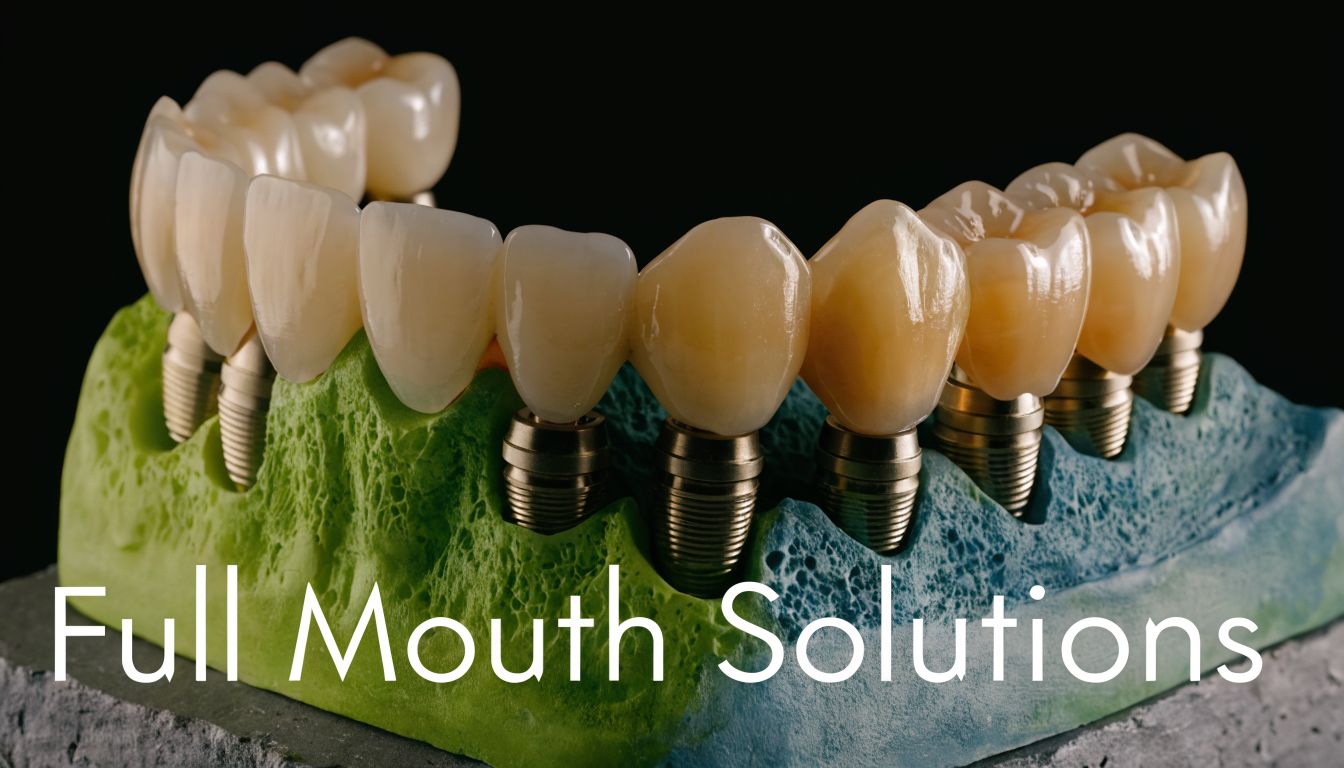
When full-arch treatment makes sense
Full-mouth or full-arch implant treatment may be appropriate when teeth are missing in multiple areas or when the remaining teeth are in poor condition. In these situations, replacing teeth one by one may not be the most practical plan.
Instead, the dentist may recommend an implant-supported solution that restores an entire arch. Some patients know these options by names such as All-on-4 or Teeth-in-a-Day. The details vary by case, but the basic idea is the same: use a small number of strategically placed implants to support a full set of replacement teeth.
Why patients ask about Teeth-in-a-Day
The phrase gets attention because it suggests a shorter path to a functional smile. That can be appealing if you're tired of loose dentures or facing the loss of several teeth at once.
What patients usually like about this approach:
- Fixed support: The teeth are secured to implants rather than resting loosely on the gums.
- Immediate confidence: Many people value leaving the office with a more complete smile instead of waiting through a long period with visible gaps.
- Simplified treatment planning: A full-arch strategy can be more practical than trying to save multiple compromised teeth one by one.
For a closer look at how this approach works, patients can review this page on Teeth-in-a-Day treatment options.
Why planning matters even more in complex cases
Complex implant cases require more than enthusiasm for a faster solution. The dentist has to look closely at bite forces, bone support, gum contours, smile line, and how the final teeth will function together.
Advanced planning is especially valuable. In full-arch treatment, small decisions affect the comfort and longevity of the whole restoration. The final result has to work when you chew, speak, and smile, not just when you first see it in the mirror.
The right full-mouth plan is the one that balances appearance, bite function, hygiene access, and long-term maintainability.
Who often benefits from this type of treatment
These solutions often appeal to adults who are ready for a major reset after years of patchwork dentistry. That may include people with failing crowns and bridges, repeated tooth fractures, advanced wear, or longstanding denture frustration.
For those patients, implant treatment isn't just cosmetic dentistry. It's often the point where restorative dentistry, function, and confidence come back together.
Investing in Your Smile: Costs and Payment Options in Northern Virginia
Cost is often the first question people ask privately and the last question they ask out loud. That's normal. Implant treatment is a meaningful investment, and most patients want clear information before they commit.
The hard part is that there isn't one universal fee for every case. The final cost depends on what your mouth needs.

What affects the price
A single straightforward implant case is different from a full-mouth reconstruction. The treatment fee may be influenced by:
- How many teeth are being replaced: One implant is very different from an implant-supported arch.
- Whether a tooth needs removal first: Extraction can change sequencing and total treatment needs.
- Site preparation: Some patients need additional procedures before an implant can be placed.
- Type of restoration: A single crown, bridge-supported implant plan, or full-arch prosthesis all involve different materials and lab work.
Why cheap dentistry can become expensive
An implant isn't just a product. It's diagnosis, planning, surgery, restoration design, follow-up, and maintenance. When people compare prices online, they often compare incomplete numbers that don't reflect the full treatment process.
That doesn't mean you should ignore cost. It means you should ask what is included, what may change after imaging, and how the office handles adjustments if the plan becomes more complex.
Ways patients make treatment more manageable
Many practices help patients spread out the financial side of care rather than paying everything at once.
Common options include:
- Insurance coordination: Some plans may contribute to parts of treatment, even if they don't cover every step.
- Financing plans: Monthly payment arrangements can make larger treatment plans easier to fit into a household budget.
- Phased care: In some cases, treatment can be sequenced over time rather than completed all at once.
Patients who want a deeper overview can read more about what influences dental implant costs.
A note about uninsured care
If you don't have dental insurance, ask whether the office offers an in-house membership or savings plan. Those programs can help reduce the routine care costs that support implant maintenance over time, such as exams and cleanings.
Implants aren't a one-visit purchase; they're part of your long-term oral health. Budgeting for maintenance is just as important as budgeting for placement.
Life After Implants: Recovery and Long-Term Care
Once the implant is placed, most patients want to know two things. "What will recovery feel like?" and "How do I make sure this lasts?"
The answer to both is simpler than many people expect. Protect the area while it heals, then commit to steady maintenance.
What recovery usually involves
After surgery, it's common to have some tenderness and to want softer foods for a period of time. Most patients do well when they follow the post-op instructions closely and avoid treating the area like a natural tooth before it's ready.
Good early habits usually include:
- Keep the site clean: Follow the dentist's cleaning instructions carefully rather than improvising.
- Choose food wisely: Soft foods are easier on the area while healing is underway.
- Don't skip check-ins: Follow-up visits help catch small concerns before they become bigger problems.
The long-term part people overlook
Implants don't get cavities, but the gums and bone around them still need care. If plaque and bacteria collect around the implant, the surrounding tissue can become inflamed.
That's why peri-implantitis prevention matters. An infection around the implant can affect 20 to 30% of implants within 10 years, and consistent professional maintenance plus strong home care are the best ways to reduce that risk, according to this FAQ on implant maintenance and peri-implantitis.
Clean around an implant as carefully as you would around a natural tooth, and keep your regular hygiene visits even when everything feels fine.
Daily care that protects your investment
The basics still matter:
- Brush thoroughly: Be gentle at the gumline, but be consistent.
- Clean between teeth: Floss or use the cleaning aids your dentist recommends for your specific restoration.
- Watch for changes: Bleeding, soreness, bad taste, or swelling around an implant should be checked, not ignored.
Patients who want practical home-care guidance can review these tips on how to care for dental implants.
Frequently Asked Questions About Dental Implants
Will the procedure hurt
Most patients are surprised that implant placement feels more manageable than they feared. Local anesthetic keeps the area numb during treatment, and sedation may also be an option for anxious patients. Some soreness afterward is normal, but the process itself is usually not the painful experience people imagine.
Do implants look and feel natural
When planned well, they can look very natural and feel stable in everyday use. The final crown is designed to fit your bite and blend with neighboring teeth, so the goal isn't just to fill a space. It's to restore normal function and appearance.
Can your body reject a dental implant
People often use the word "reject" to describe any implant problem, but that's not usually how it works. The more common concerns involve healing, gum health, bite pressure, or hygiene around the implant. Careful planning and long-term maintenance both matter.
How long do implants last
They are designed to be a durable long-term solution. Their longevity depends on factors such as home care, gum health, regular dental visits, and whether the bite places excessive stress on the restoration.
If you're ready to stop working around a missing tooth and start looking at real options, scheduling a consultation is the clearest next step. For adults and families in Vienna, VA and nearby Northern Virginia communities, implant care becomes much less intimidating once you can see the condition of the tooth, review the imaging, and talk through a treatment plan that fits your health, comfort level, and goals.