Professional teeth whitening usually lasts 1 to 3 years, while shorter-term options like store-bought products tend to fade much sooner. If you're wondering how long does teeth whitening last for your own smile, the duration depends on the method you choose and what you do afterward to protect the result.
A lot of people in Vienna ask this question when they catch their reflection before work, look at old photos, or notice that coffee and tea have slowly dulled their smile. They want whiter teeth, but they also want to know whether the result will last long enough to feel worth it.
That’s a smart question.
As a dentist, I’ve found that whitening feels much less confusing once you understand two things. First, not all whitening works the same way. Second, the treatment itself is only part of the story. The habits that follow matter just as much.
If you’ve been comparing in-office whitening, take-home trays, and store products, it helps to look at them as different levels of care with different staying power. The goal isn’t just to make teeth look brighter for a weekend. The goal is to create a result you can comfortably maintain over time.
Your Guide to a Lasting, Bright Smile in Vienna VA
A common situation goes like this. Someone has an upcoming wedding, work event, reunion, or family photo session. They start noticing the yellowing that built up slowly over time, usually from coffee, tea, red wine, or tobacco. Then the next question shows up almost immediately. If I whiten my teeth now, how long will it last?
That concern makes sense because whitening is both cosmetic and personal. People don’t just want a brighter smile. They want to feel comfortable laughing, talking, and showing their teeth without worrying that the effect will disappear right away.
Why this question matters so much
For many patients, whitening isn’t really about vanity. It’s about confidence. A brighter smile can make someone feel more polished, more rested, and more like themselves again.
The frustration is that online answers often sound too simple. Some make every whitening option seem the same. Others skip over the part patients care about most, which is longevity.
A whitening treatment can look impressive on day one and still feel disappointing if no one explains how to keep it looking good.
That’s why I like to talk about whitening in practical terms. Not just how teeth get whiter, but how long the result can hold, why some smiles stain faster than others, and what kind of maintenance makes sense for real life in Northern Virginia.
The local reality behind whitening results
People in Vienna often have busy schedules, commutes, family obligations, and social habits that affect whitening more than they realize. Morning coffee on the way to work, tea in the afternoon, dark sauces at dinner, and inconsistent touch-ups all add up.
Your teeth also don’t all respond in exactly the same way. Some patients start with mild surface staining and see longer-lasting brightness. Others have deeper discoloration and need a more customized plan to get a result that stays attractive over time.
Here’s the most useful perspective:
- The treatment creates the initial change
- Your daily habits determine how quickly stains return
- A maintenance plan helps you avoid starting over from scratch
When patients understand that partnership, whitening feels much more predictable.
Understanding the Spectrum of Teeth Whitening Options
Teeth whitening isn’t one product or one technique. It’s a range of options, and each one works a little differently. If you think of whitening as taking a trip to a brighter smile, some routes are faster, some are slower, and some only get you part of the way.
Here’s the visual many patients find helpful.
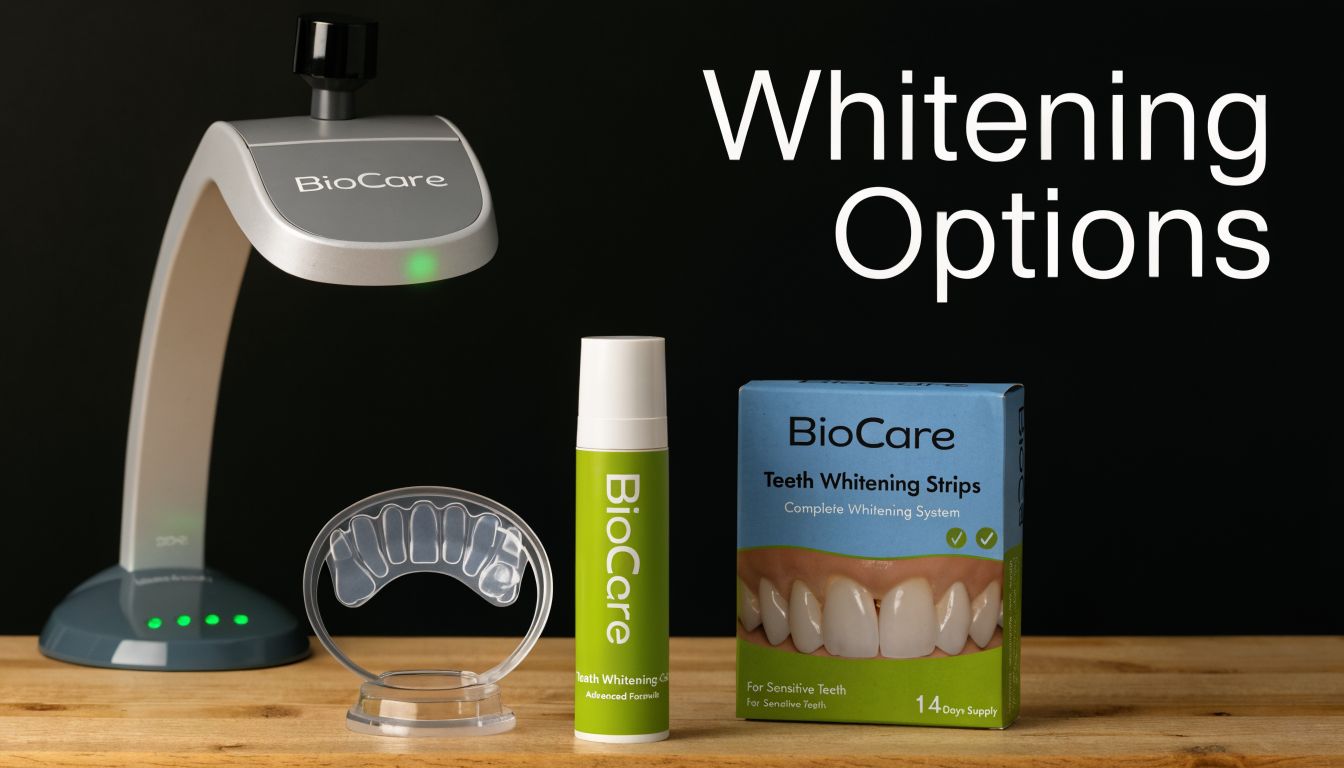
Three main paths to whiter teeth
The three most common categories are:
| Whitening option | What it’s best for | General expectation |
|---|---|---|
| Professional in-office treatment | Faster, stronger whitening and deeper stain removal | Longest-lasting among common options |
| Dentist-provided take-home kit | Gradual whitening with custom guidance | Stronger and more even than store-bought products |
| Over-the-counter products | Mild surface stain improvement | More limited change and shorter lifespan |
The biggest difference is control. A dentist-supervised approach allows the whitening material to be selected more carefully and applied more precisely. That usually leads to a more even result and better long-term value.
Professional in-office whitening typically lasts 1 to 3 years on average, which significantly outpaces at-home options, according to Aspen Dental’s explanation of whitening longevity.
If you’re comparing methods, this guide to best teeth whitening options can help you sort through the pros and cons in a more practical way.
Surface stains and deeper stains
A lot of confusion comes from not knowing that teeth can discolor in different ways.
Extrinsic stains are on the outer surface. These often come from coffee, tea, tobacco, and pigmented foods. They’re the easiest to see and usually the easiest to improve.
Intrinsic stains sit deeper within the tooth structure. Those are harder to change with low-strength products.
That’s why some people use whitening toothpaste or strips and feel underwhelmed. Those products may help with lighter surface staining, but they don’t always do much for discoloration that sits below the surface.
The method has to match the kind of stain. Otherwise, patients assume whitening “doesn’t work,” when the real issue is that the product wasn’t strong enough for the job.
Why store products feel different
Over-the-counter products can be appealing because they’re easy to buy and easy to start. But they also come with tradeoffs. Generic trays don’t fit every mouth well. Strips may not contact every tooth evenly. Whitening toothpastes can help polish away some surface buildup, but they don’t deliver the same depth of whitening as a professional approach.
That doesn’t mean they have no place. It just means expectations should be realistic. For many people, store-bought options are better viewed as limited cosmetic maintenance rather than a full whitening solution.
Professional In-Office Whitening A Closer Look
In-office whitening is the option commonly pictured when a fast, visible change is desired. This is the treatment done in the dental chair under close supervision, using professional-strength whitening gel and careful protection for the gums and soft tissues.
For patients who want stronger results without guessing their way through drugstore products, this is usually the clearest path.
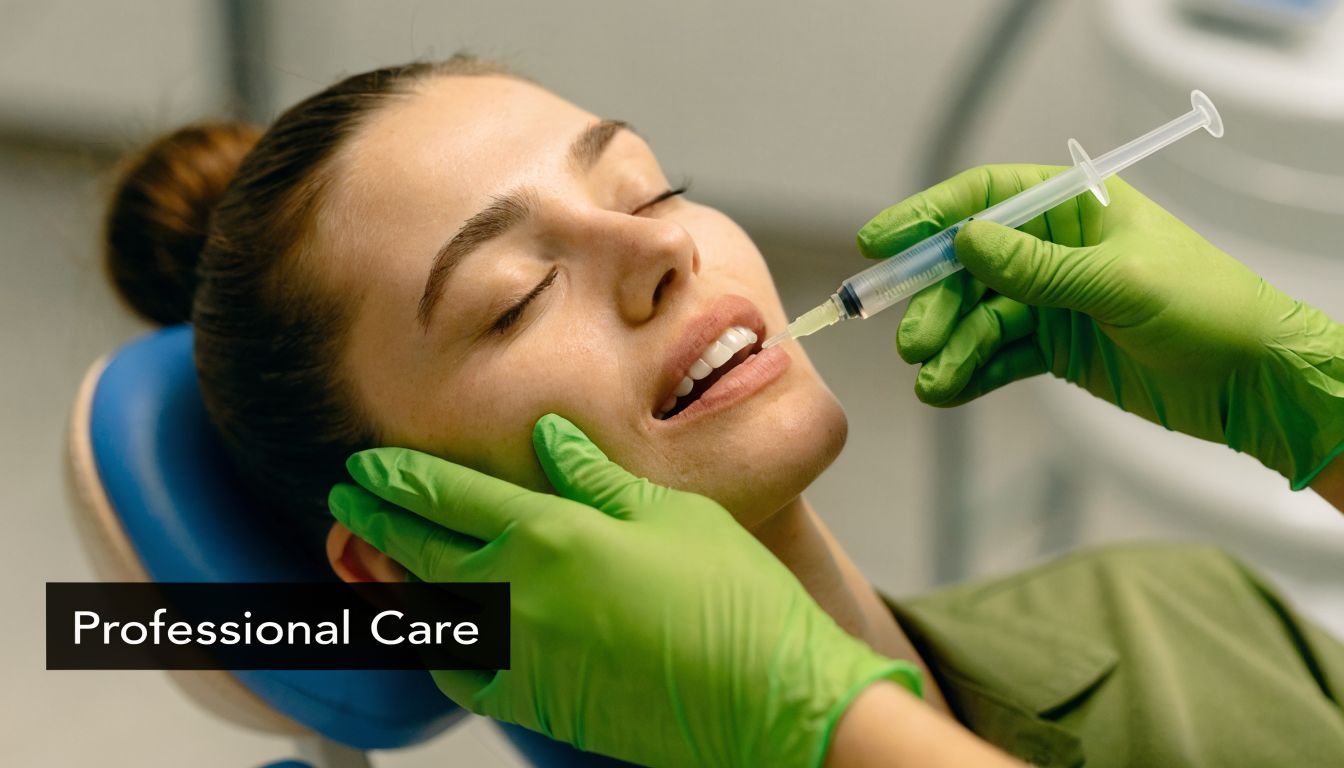
Why in-office whitening works faster
The science is straightforward. Professional in-office whitening uses high-concentration bleaching agents, such as 25 to 40% hydrogen peroxide, to penetrate and break down both surface and deeper discoloration. This approach can improve teeth by 6 to 8 Vita shades in a single 60 to 90 minute session, according to this discussion of in-office whitening performance.
That’s the core reason in-office treatment tends to outperform lower-strength options. It doesn’t just brighten the outer layer. It reaches stain molecules that milder products may leave behind.
Some systems also use light activation to help speed the process. Patients often ask whether the light itself does all the work. It doesn’t. The key player is still the whitening gel. The light is part of the system some offices use to support the treatment.
What the appointment usually feels like
Many people expect whitening to feel more intense than it is. In a supervised setting, the process is controlled step by step.
A typical visit includes:
- Shade assessment so your starting point is clear
- Protection of the gums and lips before gel is applied
- Careful application of whitening material across the visible teeth
- Monitoring throughout the session so comfort and uniformity stay on track
That structure matters. It reduces the patchy look that can happen when products aren’t applied evenly.
Why the result often lasts longer
A stronger initial result gives patients a better starting point. More importantly, the whitening reaches stains that weaker systems may miss. That’s why professional treatment generally offers the most durable improvement among common whitening methods.
When patients want one treatment that makes a noticeable change and gives them the best chance of long-lasting brightness, in-office whitening is usually the benchmark.
This option also lets the dentist evaluate issues that whitening alone won’t fix, such as old fillings, crowns, or veneers that won’t change color with bleach. That conversation prevents disappointment and helps the final smile look more balanced.
Take-Home Kits and OTC Products What to Expect
Not everyone wants in-office whitening first. Some patients prefer a slower approach they can use at home. Others start with store-bought strips and then wonder why the result looks uneven or fades quickly.
These options aren’t identical, even though they’re both used at home.
Dentist-provided take-home kits
A professional take-home kit sits in the middle. It gives you the flexibility of home use, but with better fit and better oversight than a store product.
The biggest advantage is the tray. A custom tray holds the whitening gel more evenly against the teeth, which helps reduce patchy areas. It also makes the process feel more controlled because the plan is based on your smile rather than a one-size-fits-all product.
This type of whitening can be a strong choice for patients who want a gradual change or a maintenance tool after an in-office treatment. It also gives anxious patients more control over the pace.
Over-the-counter products
Store products are the most accessible, but they usually come with the most modest expectations. Whitening strips, toothpastes, rinses, and generic trays mainly work on lighter surface stains.
A few common reasons patients feel disappointed with OTC products:
- The fit is generic. One-size trays and strips don’t always contact teeth evenly.
- The whitening is milder. Lower-strength systems tend to create less dramatic change.
- The result may fade sooner. Surface stain removal doesn’t always translate into durable brightness.
- Sensitivity can be harder to manage. Without guidance, some people overuse products or use them too often.
A side-by-side way to think about it
| Feature | Dentist take-home kit | OTC product |
|---|---|---|
| Tray fit | Custom | Generic |
| Treatment guidance | Supervised | Self-directed |
| Best use | Maintenance or gradual whitening | Mild surface brightening |
| Predictability | More even | More variable |
If you want a result that looks more natural and feels less like trial and error, dentist-provided home whitening usually gives a better experience than buying random products off the shelf.
Key Factors That Influence Your Whitening Results
Two people can get the same whitening treatment and have very different timelines afterward. That’s because everyday habits play a major role in how quickly teeth pick up new stains.
For most patients, the answer to how long teeth whitening lasts becomes personal.
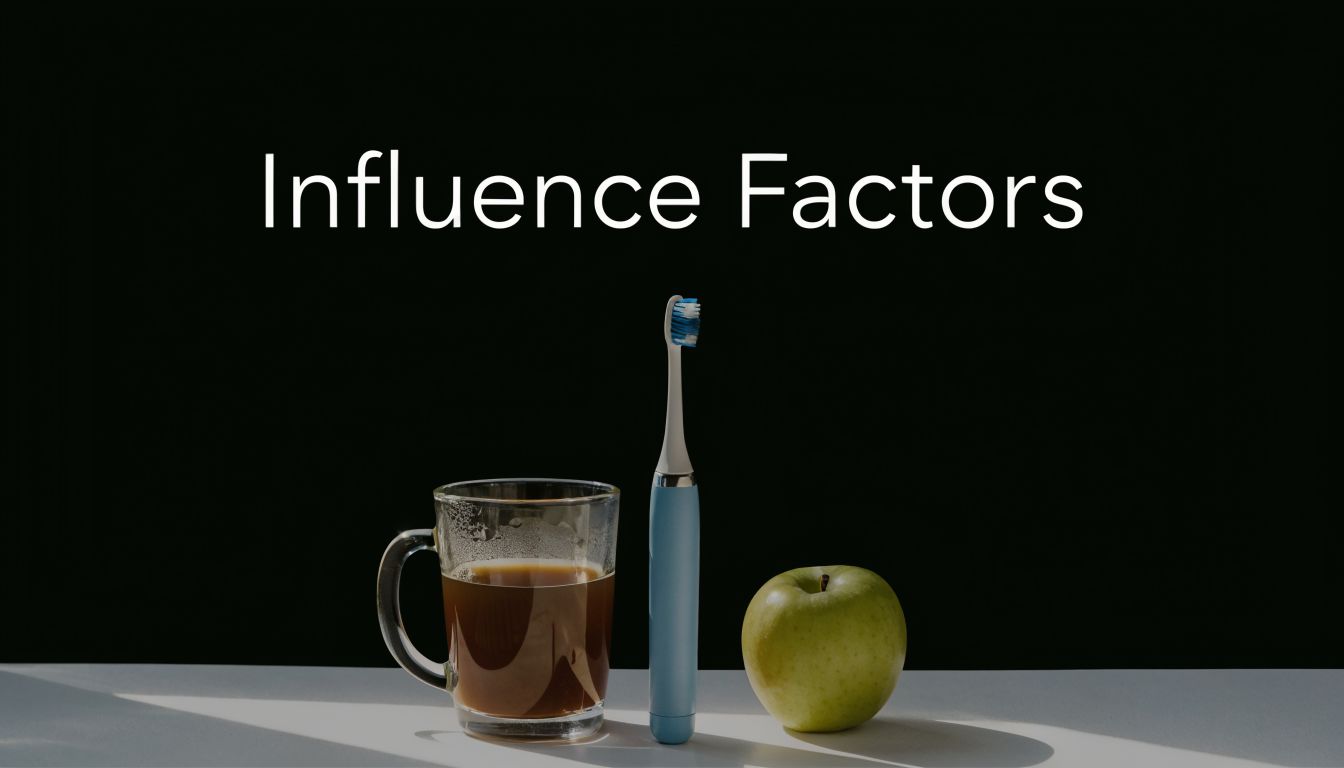
The habits that shorten results fastest
The strongest cause-and-effect pattern is staining exposure. Teeth can look significantly brighter after treatment, but repeated contact with dark pigments gradually pulls the shade back down.
Smoking is one of the clearest examples. Dental outcome data show that smokers experience 40 to 50% faster relapse, with results often falling into the 3 to 6 month range compared with 1 to 3 years for non-smokers, according to Cedarbrook Dental’s review of whitening duration factors.
That doesn’t mean coffee, tea, or red wine are harmless to whitening either. They can all add stain over time. The difference is frequency and exposure. A daily habit creates a different result than an occasional one.
Practical rule: The more often pigments contact your teeth, the sooner whitening starts to fade.
Four influences patients often underestimate
- Dark beverages. Coffee and tea are common reasons whitening slowly loses its brightness.
- Tobacco use. Smoking and other tobacco habits can undo whitening much faster.
- Oral hygiene consistency. Plaque gives pigments more places to cling.
- Existing dental work. Crowns, veneers, and tooth-colored fillings don’t whiten the way natural enamel does.
That last point surprises people all the time. If your front teeth have visible restorations, whitening may brighten the natural teeth around them but leave the restorations the same color. That can make color matching part of the treatment plan.
What helps protect your result
Good maintenance doesn’t have to be complicated. The goal is to reduce fresh stain buildup before it settles in.
A simple protection routine usually includes:
| Helpful habit | Why it matters |
|---|---|
| Brushing and flossing regularly | Reduces surface buildup |
| Rinsing after staining foods or drinks | Helps wash away pigments sooner |
| Keeping up with dental cleanings | Removes plaque and external stain more effectively |
| Following post-whitening instructions | Lowers the chance of rapid restaining |
This is why whitening should never be thought of as a one-time event only. It’s a cosmetic result that responds directly to what you do every day. Patients who treat it that way usually keep their smiles brighter for much longer.
Creating Your Long-Term Smile Maintenance Plan
The best whitening result isn’t just the one that looks good when you leave the office. It’s the one you can still feel good about months later without needing to start from zero again.
That’s where a smile longevity plan makes a difference.
Why maintenance beats repeating full treatment
Many patients assume whitening has only two phases. You either do it or you don’t. In reality, the most practical approach is often a hybrid one: get a strong initial result, then maintain it with lighter touch-ups.
Recent dental studies show that hybrid protocols combining in-office whitening with at-home maintenance using 10 to 16% carbamide peroxide trays can extend results by 18 to 24 months via bi-weekly 30-minute sessions, according to this discussion of hybrid whitening protocols.
That matters because maintenance is usually easier than correction. Once a smile has shifted significantly darker again, patients often need a more involved reset. Small touch-ups are typically more manageable.
If you’ve ever wondered about everyday care after treatment, this article on brushing after teeth whitening answers one of the most common maintenance questions.
What a realistic plan can look like
A long-term plan usually includes a few moving parts rather than one single product.
Consider this kind of structure:
- Start with the right baseline. If stains are deeper or more uneven, an in-office treatment may create the cleanest starting point.
- Use custom take-home trays for upkeep. These are often the most practical way to refresh brightness without overdoing treatment.
- Schedule regular cleanings. Cleanings help remove the buildup that can make whitening fade faster.
- Adjust based on your habits. A coffee drinker and a non-smoker won’t need the same maintenance rhythm.
Think in seasons, not emergencies
The most successful whitening patients usually don’t wait until their smile looks dull again. They check in before the relapse becomes obvious.
A good whitening plan should feel sustainable. It shouldn’t require daily effort forever, and it shouldn’t leave you wondering when everything faded.
That’s also why maintenance should fit your real life. Some people want the brightest result possible for public-facing work. Others want a natural upgrade they can maintain discreetly. Both are valid. The right plan depends on your goals, your habits, and how much upkeep feels realistic.
Your Whitening Journey at Vienna Implant and Family Dentistry
Most patients don’t walk into a dental office saying, “I know exactly which whitening system I need.” They usually start with a simpler thought. They want their smile to look better, and they want to know the process will be comfortable.
That first conversation matters.

What the process feels like as a patient
A whitening visit usually begins with a consultation and exam. The dentist looks at your current shade, checks for things that may affect the result, and asks what kind of change you want. Some patients want dramatic brightening. Others want a subtle refresh that still looks natural.
This is also the time to talk about sensitivity, old dental work, uneven staining, and timing. If you have an event coming up, that influences the plan. If you’re nervous about dental treatment in general, that should be part of the discussion too.
Comfort matters just as much as color
For anxious patients, cosmetic care can still feel intimidating even when the treatment itself is straightforward. That’s why a calm, judgment-free environment makes a real difference. You should be able to ask questions, move at a reasonable pace, and understand what’s happening before anything starts.
Patients who need extra support may also ask about sedation options for dental care. That can be especially reassuring for people who have avoided treatment in the past but still want to improve their smile.
A good whitening experience should feel personal, not rushed. It should leave you with a result you understand and a maintenance plan you can reliably follow.
Common Questions About Teeth Whitening Safety and Comfort
Patients often decide they want whiter teeth, then pause because of three worries. Will it damage enamel? Will it make my teeth too sensitive? Am I even a good candidate?
Those are good questions, and they deserve direct answers.
Is professional teeth whitening safe for enamel
When whitening is done under professional supervision, it’s generally considered a safe cosmetic treatment for appropriate candidates. The reason supervision matters is that the dentist can evaluate your teeth first, protect the gums during treatment, and choose a method that fits your situation.
Problems are more likely when people self-treat repeatedly without understanding why their teeth look dark in the first place. Sometimes the issue is stain. Sometimes it’s old restorations, enamel wear, or internal discoloration that won’t respond the same way.
What if my teeth are already sensitive
Sensitivity is one of the most common concerns, but it doesn’t automatically rule out whitening. In many cases, the approach just needs to be adjusted.
Helpful options may include:
- Shorter wear times with take-home products
- A gentler whitening schedule instead of trying to rush the result
- Desensitizing support before or after treatment
- Professional monitoring if you’ve had sensitivity before
If that sounds familiar, this guide to teeth whitening for sensitive teeth may help you understand what to ask for.
Whitening should be customized to your comfort level. Patients don't need to choose between a brighter smile and a tolerable experience.
Who may need a different plan
Not every smile should be whitened right away. Cavities, gum irritation, exposed roots, or visible front restorations may need attention first. Age and stage of dental development can matter too. The best candidates are people whose oral health has been evaluated and whose goals match what whitening can realistically do.
That’s why a consultation is worth more than guessing from packaging. The safest and most satisfying whitening result usually starts with knowing whether whitening is the right answer for your teeth.
If you're in Vienna, VA or nearby Northern Virginia and want a brighter smile that lasts, schedule a consultation with Vienna Implant and Family Dentistry. Dr. Vikram Chauhan and the team can help you choose the right whitening approach, build a personalized maintenance plan, and make the experience comfortable from start to finish.