You wake up, open your mouth to yawn, and your jaw feels tight. Maybe your temples ache. Maybe one tooth suddenly seems sensitive to cold water, or your partner has mentioned a grinding sound at night. Those signs can be unsettling, especially when you don’t know whether you’re dealing with stress, a bite problem, or something bigger.
Nighttime teeth grinding is called sleep bruxism. It’s common, and it’s treatable. The most important thing to know is that it usually isn’t just about your teeth. In many cases, it reflects a mix of sleep patterns, muscle activity, stress, habits, medication effects, and family history.
For people searching what causes teeth grinding at night in Vienna, VA, the answer usually isn’t one simple trigger. A careful dental evaluation helps separate occasional clenching from a pattern that can wear teeth down, strain the jaw joint, and disturb sleep.
Waking Up with Jaw Pain? Understanding Nightly Teeth Grinding
A lot of people don’t realize they grind their teeth until the evidence starts showing up in the morning.
You may notice jaw soreness while brushing. You may feel a dull headache near your temples during your commute. Some patients say their teeth don’t hurt exactly, but they “feel tired” when they wake up. That’s a very typical description of sleep bruxism.
What sleep bruxism actually is
Sleep bruxism means involuntary grinding or clenching during sleep. It can happen loudly, with a grinding sound, or with forceful clenching that never makes a sound at all. Silent clenching often goes unnoticed for a long time.
That matters because many people assume they’d know if they were grinding. Often, they don’t. A spouse hears it first, or a dentist sees the wear patterns before the patient ever connects the dots.
Why it feels worse in the morning
Jaw muscles can stay active overnight in short bursts. By morning, that repeated tension may leave you with:
- Sore cheeks or jaw muscles
- Temple headaches
- A stiff feeling when opening wide
- Tender teeth
- Clicking or strain around the jaw joints
If jaw discomfort has become part of your routine, it’s worth looking at both bruxism and joint strain together. Patients dealing with jaw tension in Northern Virginia often benefit from a closer look at TMJ treatment options in Vienna, VA.
Grinding at night is common, but it’s not something you should ignore once pain, wear, or sleep disruption starts showing up.
The reassuring part
This condition can feel mysterious because it happens while you’re asleep. But the signs are usually clear once someone knows what to look for. A dentist can evaluate the teeth, jaw muscles, and bite surfaces for patterns that fit bruxism instead of guessing.
That’s good news. Once the cause pattern becomes clearer, treatment becomes much more targeted.
What Really Causes Teeth Grinding at Night
Night grinding rarely has one single cause. Most cases involve several overlapping factors. That’s why quick explanations like “it’s just stress” or “your teeth don’t line up” usually miss the full picture.
Stress is the most common trigger
Stress remains the biggest trigger for many adults. The body doesn’t always shut tension off when sleep starts. Some people carry that tension into the jaw, where it shows up as clenching or grinding during the night.
Anxiety can play a similar role. Patients under pressure at work, dealing with family stress, or moving through a period of poor sleep often notice that jaw pain and grinding get worse together.
Genetics matter more than most people think
Sleep bruxism also has a strong hereditary component. It affects approximately 8% to 10% of adults globally, and as many as 50% of individuals with sleep bruxism have a close family member affected, according to the review available through the National Library of Medicine.
If a parent or sibling grinds, that family history is relevant. It doesn’t guarantee you’ll have the same problem, but it raises suspicion when the symptoms fit.
Other common contributors
Several everyday factors can make nighttime grinding more likely or more intense.
- Caffeine overload can keep the nervous system more activated, especially late in the day.
- Alcohol use may seem relaxing at first, but it can interfere with sleep quality and contribute to grinding.
- Smoking is also associated with higher risk.
- Certain medications can increase susceptibility, including some SSRIs, amphetamines, and antipsychotics.
- Poor sleep quality can make episodes more frequent.
It’s not usually just a bite issue
Many people assume crooked teeth are the main cause. In reality, modern understanding points much more strongly toward the central nervous system and sleep-related factors than toward dental alignment alone.
That distinction matters. If grinding is driven by stress, sleep disruption, or medication effects, smoothing a tooth or blaming the bite won’t solve the underlying issue.
Practical rule: If grinding started during a stressful period, after a medication change, or alongside poor sleep, that timeline matters. Bring it up at your dental visit.
Beyond the Grind Recognizing the Telltale Symptoms
Some patients think teeth grinding only counts if someone hears a scraping sound at night. That’s not true. Many cases show up through physical symptoms long before anyone hears anything.
Common symptoms of nightly teeth grinding
| Symptom | What to Look For |
|---|---|
| Morning jaw soreness | Tightness, fatigue, or pain when chewing breakfast or opening wide |
| Temple headaches | A dull ache near the sides of the head after waking |
| Tooth sensitivity | Teeth that react more to cold, heat, sweets, or brushing |
| Flattened teeth | Shorter-looking biting edges or a worn, polished appearance |
| Chipped enamel | Small breaks, rough edges, or unexplained fractures |
| Jaw joint strain | Clicking, popping, or stiffness near the ears |
| Poor sleep feeling | Waking unrested, tense, or as if your face worked overnight |
The signs dentists often see first
A clinical exam can reveal clues patients miss in the mirror.
Dentists often look for shiny wear facets on the chewing surfaces, small fractures in enamel, scalloping along the edges that receive heavy force, and tenderness in the chewing muscles. In some cases, the teeth aren’t badly worn yet, but the muscles are already overworking.
One important clue is pain that seems hard to pin down. Patients sometimes say, “It’s not one bad tooth. It’s several teeth that just feel off.” That pattern can fit clenching.
When sensitivity and pain overlap
Bruxism can also mimic other problems. A person may think they need a filling because a tooth feels tender, when the issue is repeated pressure overnight. That’s one reason self-diagnosis can be tricky.
If you’re trying to tell the difference between grinding-related discomfort and a true toothache, this guide on how to stop tooth pain fast can help you understand when pain needs prompt attention.
Don’t wait for dramatic damage. Mild morning symptoms are often the earliest warning signs.
When to get checked
It’s smart to schedule an evaluation if you’ve noticed any combination of the following:
- Repeated morning headaches
- Jaw fatigue or locking
- New tooth sensitivity without an obvious cavity
- Visible flattening or chipping
- A partner reporting nighttime grinding sounds
Those patterns don’t always mean severe bruxism, but they do justify a closer look.
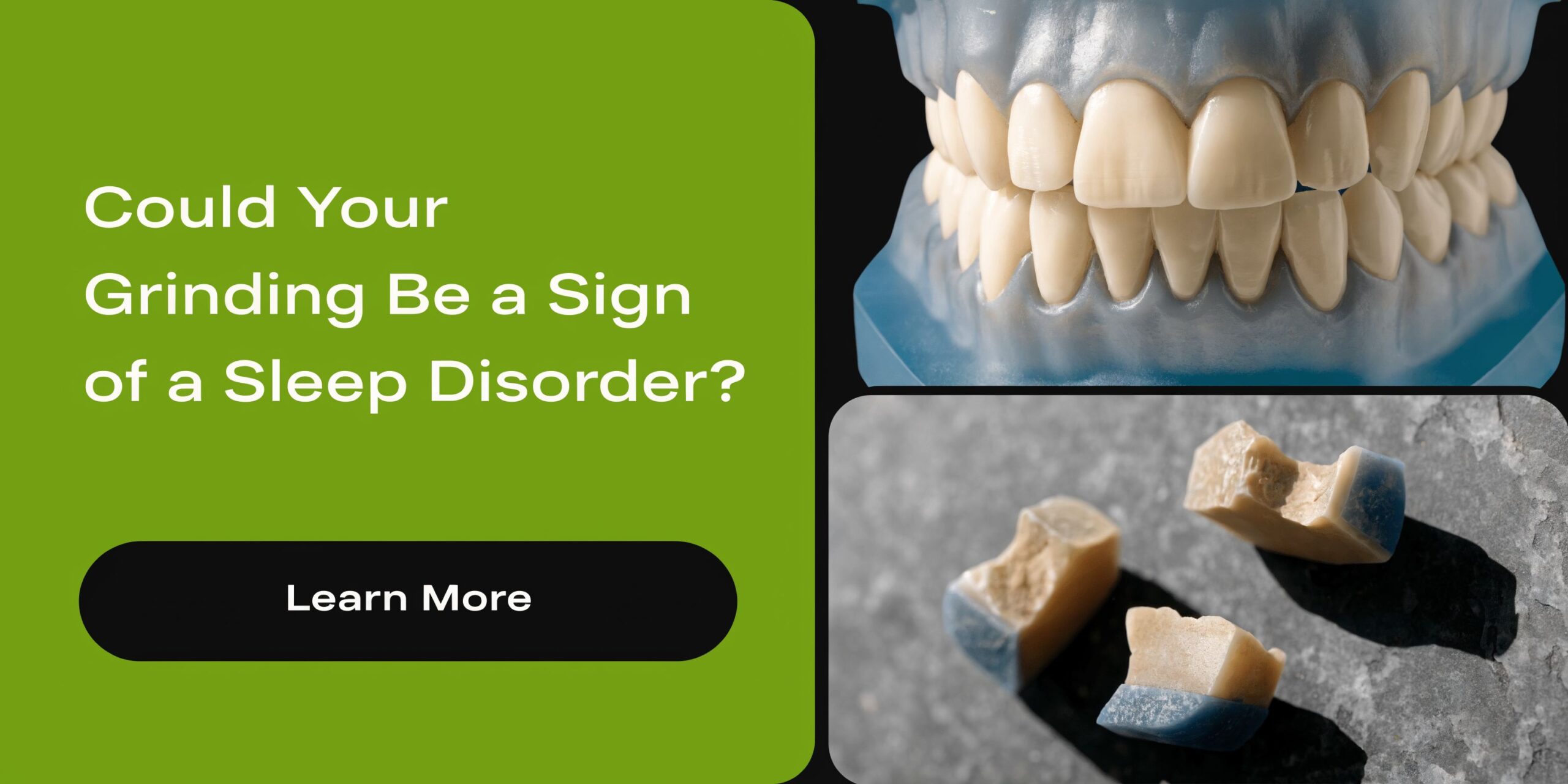
Could Your Grinding Be a Sign of a Sleep Disorder
Many articles stop at stress. That’s incomplete.
For some patients, nighttime grinding raises another question. Is the jaw activity connected to a breathing problem during sleep?
The link between bruxism and sleep apnea
There’s a recognized correlation between sleep bruxism and obstructive sleep apnea, often called OSA. OSA involves repeated breathing interruptions during sleep. Those interruptions can disturb normal sleep architecture and trigger brief arousal responses.
Recent thinking has made this relationship more interesting. Instead of viewing grinding only as a symptom caused by disordered sleep, some researchers are exploring whether grinding may sometimes act as a reflex response around airway events.
According to the summary provided by Dentek, recent studies indicate bruxism episodes often precede micro-arousals, and a 2024 meta-analysis in Sleep Medicine Reviews found 60% of bruxism events in OSA patients occur prior to apneic episodes, suggesting a possible role in reopening the airway during breathing lapses. That’s why screening for OSA in patients who grind their teeth matters.
Why this changes treatment decisions
This is the critical point. If someone has both bruxism and undiagnosed sleep apnea, treatment shouldn’t focus only on stopping tooth damage.
A night guard may still protect enamel. But if the bigger issue is interrupted breathing, the patient also needs evaluation for the sleep component. Otherwise, the dental damage may be managed while fatigue, snoring, fragmented sleep, or broader health issues continue in the background.
Clues that point beyond simple grinding
Grinding deserves a deeper sleep conversation when it appears alongside patterns like these:
- Loud snoring
- Waking up gasping or choking
- Dry mouth in the morning
- Daytime fatigue despite enough time in bed
- A partner noticing breathing pauses
If grinding comes with snoring or heavy daytime fatigue, don’t assume it’s only a dental problem.
That doesn’t mean every grinder has sleep apnea. It means the possibility should be considered, especially when the symptom picture extends beyond the teeth and jaw.
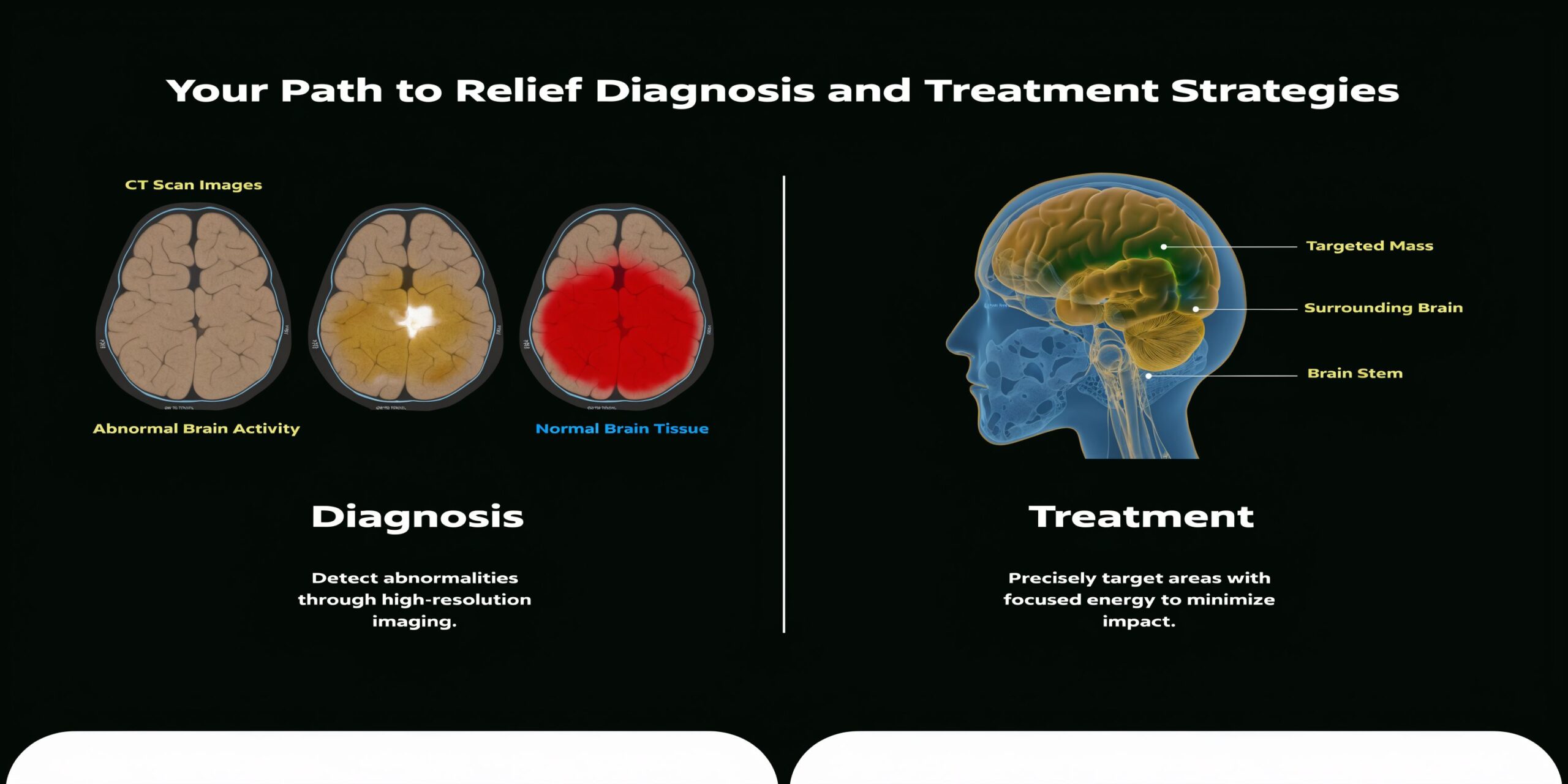
Your Path to Relief Diagnosis and Treatment Strategies
Relief starts with identifying what kind of problem you have. Some patients need tooth protection. Some need muscle relief. Some need a sleep medicine referral. Many need a combination.
What a dental diagnosis involves
A bruxism evaluation usually starts with a hands-on exam and a history, not a guess.
A dentist looks for wear patterns, chipped edges, cracked restorations, jaw tenderness, muscle enlargement, and signs of overload near the joints. The timeline matters too. Did symptoms begin during a stressful period? After a medication change? Alongside snoring or poor sleep?
According to the overview on Sleep Foundation, sleep bruxism episodes are often preceded by microarousals from sleep, and diagnosis requires repetitive jaw-muscle activity plus clinical signs like worn teeth or headaches. The same review notes that custom night guards can reduce occlusal forces by 50 to 70%, and CPAP therapy can decrease bruxism episodes by 30 to 50% when OSA is also present.
When a sleep study enters the picture
A dentist may recommend further sleep evaluation if the history suggests breathing-related sleep disruption.
That conversation is especially important when grinding appears with snoring, witnessed pauses in breathing, chronic morning fatigue, or heavy dry mouth on waking. In those cases, a formal sleep study may be the right next step.
What works well
Treatment works best when it matches the driver of the problem.
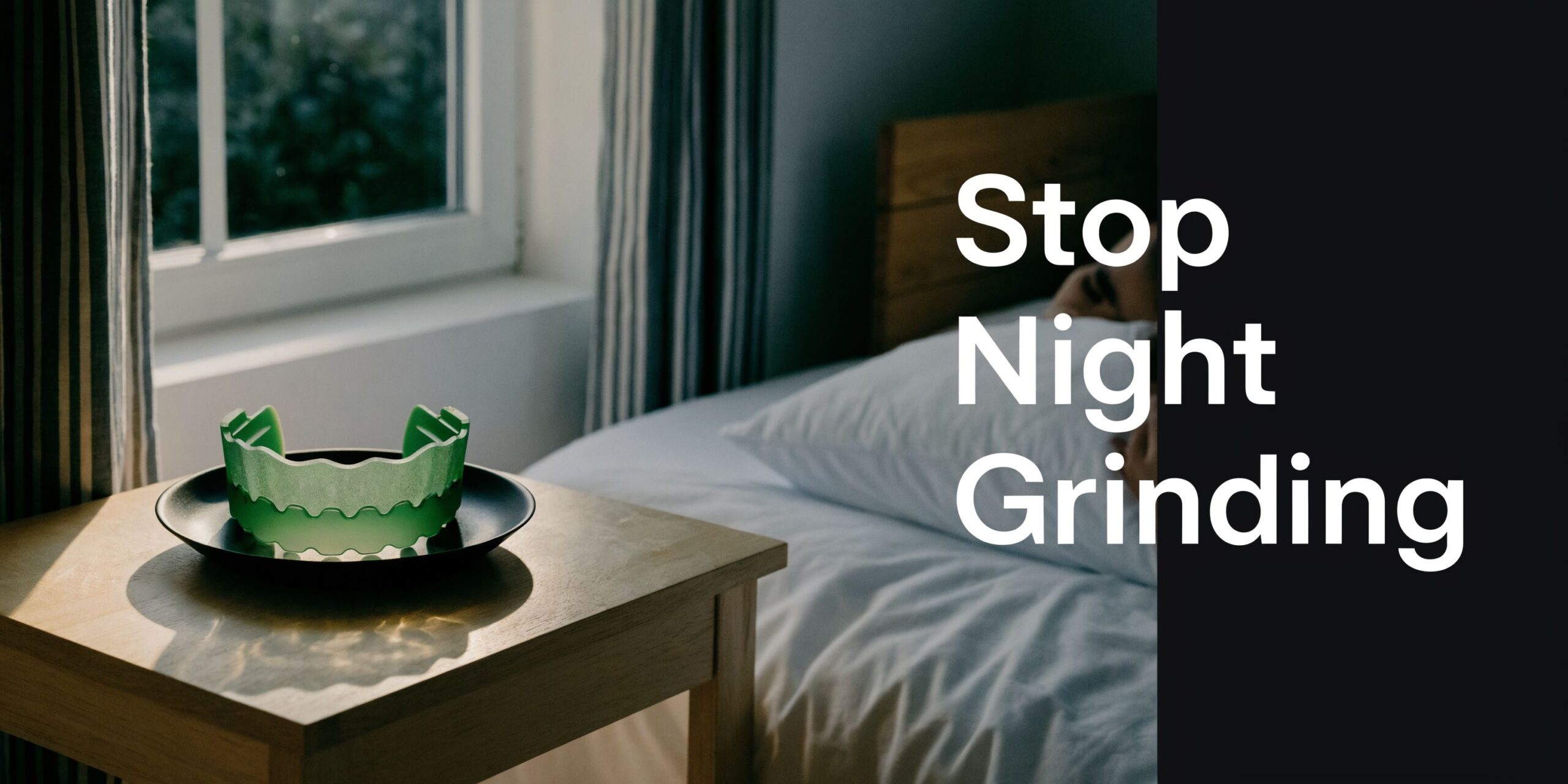
Custom night guards
A custom appliance protects teeth from direct wear and helps distribute force more safely. It does not “cure” the nervous system pattern behind bruxism, but it can prevent a lot of damage while other contributing factors are addressed.
Over-the-counter guards are different. They’re bulkier, less precise, and often less comfortable. Patients frequently stop wearing them.
If a dentist confirms grinding, a professionally made appliance is usually the more dependable choice. Patients looking into protective options can learn more about custom night guards in Vienna, VA.
Stress and habit management
When stress is a major factor, treatment often includes practical behavior changes. That may mean reducing late caffeine, cutting back on alcohol, improving sleep routines, and noticing daytime jaw clenching.
One useful self-check is this: if your teeth are touching during the day and you are not chewing or swallowing, your jaw may be carrying more tension than it should.
Restorative repair when damage has already occurred
Some patients come in after years of grinding with chipped enamel, fractured fillings, or worn-down tooth edges. At that point, protecting the teeth is only part of the plan. Rebuilding damaged structure may also be necessary.
What doesn’t work well
A few common approaches tend to disappoint:
- Ignoring it and hoping it passes
- Using a one-size-fits-all mouthguard from a drugstore as a long-term solution
- Focusing only on the teeth when sleep symptoms suggest a broader issue
- Assuming pain means a cavity when muscle overload may be the primary driver
The best treatment plan protects the teeth and asks why the grinding is happening in the first place.
Comprehensive Bruxism Care at Vienna Implant and Family Dentistry
When bruxism has already started affecting your comfort, sleep, or smile, treatment needs to do two things well. It has to protect you from further damage, and it has to address the results of the grinding that’s already happened.
That’s where a full-service approach matters.
At Vienna Implant and Family Dentistry in Vienna, VA, Dr. Vikram Chauhan evaluates bruxism as more than a surface-level habit. The exam looks at tooth wear, jaw strain, bite pressure, symptom patterns, and whether a sleep-related referral should be part of the conversation.
Care that matches the level of damage
Some patients only need a custom night guard and monitoring. Others need restorative treatment because the grinding has already broken down enamel or weakened existing dental work.
The published overview in StatPearls notes that chronic teeth clenching and grinding can lead to significant tooth wear, and modern dental practices in Northern Virginia can address this damage with same-day CEREC crowns and cosmetic treatment in a stress-informed, judgment-free environment, as described in this clinical overview of bruxism and treatment considerations.
That can make a major difference for patients who are dealing with:
- Worn or shortened teeth
- Chipped edges or fractured crowns
- A smile that no longer looks even
- Jaw tension that makes dental visits feel intimidating
Comfort matters too
Patients with bruxism are often already tense before they sit in the chair. For anxious patients, sedation dentistry can make diagnosis and treatment much easier. That’s especially helpful when someone needs more than a simple appliance, such as full-mouth reconstruction, crowns, or cosmetic repair.
If your grinding has led to visible wear, pain, or repeated breakage, it makes sense to choose a practice that can both stop the damage and rebuild what has been lost.
Frequently Asked Questions About Teeth Grinding
Can children grind their teeth at night too
Yes. Bruxism can happen in children as well as adults. If a child is grinding frequently, complaining of jaw pain, or showing wear on the teeth, it’s worth bringing up at a dental visit rather than assuming they’ll outgrow it.
Can nighttime teeth grinding go away on its own
Sometimes it can improve, especially if it’s tied to a short-term stressor or temporary sleep disruption. But if symptoms keep coming back, or if teeth are already wearing down, it’s better to get it evaluated than to wait.
Are store-bought night guards good enough
They can provide short-term protection in some cases, but they’re not ideal for ongoing use. They’re less precise, often bulkier, and can be harder to wear consistently. A custom appliance fits better and usually protects teeth more predictably.
Does grinding always mean I’m stressed
No. Stress is common, but it isn’t the only cause. Medication effects, sleep quality, family history, and possible airway issues can all play a role. That’s why a proper evaluation matters.
What can I do about daytime clenching
Start by checking in with your jaw several times a day. Your lips can be closed while your teeth stay slightly apart. If you notice yourself clenching while driving, working, or concentrating, relax the jaw and let the tongue rest lightly behind the upper front teeth.
When should I schedule an appointment
Schedule one if you have repeated jaw pain, headaches on waking, new tooth sensitivity, visible wear, broken dental work, or a bed partner who hears grinding. If snoring or poor sleep is part of the picture too, mention that clearly.
If you’re dealing with jaw pain, worn teeth, headaches on waking, or suspected nighttime grinding, Vienna Implant and Family Dentistry can help you get answers and a practical treatment plan. Dr. Vikram Chauhan provides custom night guards, restorative care including same-day CEREC crowns, cosmetic repair, and supportive options for anxious patients in Vienna, VA and nearby Northern Virginia communities. To take the next step, schedule a consultation with Vienna Implant and Family Dentistry.