Everyone in Vienna, VA wants a whiter, more confident smile, but the crowded aisles of whitening toothpastes can be confusing. The truth is, the "most effective" tooth whitening toothpaste isn't a one-size-fits-all solution. It all comes down to your specific needs—primarily, the type of stains you're dealing with. A daily coffee habit creates a different challenge than deeper discoloration, and this guide is designed to reduce anxiety and help our community understand the difference to choose wisely. At Vienna Implant and Family Dentistry, we believe informed patients make the best decisions for their oral health.
Your Guide to a Brighter Smile in Vienna VA
A bright smile is often the first thing people notice, and it’s a feature that nearly half of American adults find most memorable after meeting someone. If you feel your teeth have lost some of their natural luster, you're certainly not alone. The desire for a whiter smile is exactly why Americans spend over $1 billion annually on teeth whitening products.
The real challenge for our patients in Vienna, VA, is cutting through the marketing claims to find what actually works. Between whitening strips, gels, and professional treatments, the options can feel endless. This guide is designed to give our community here in Vienna and surrounding areas in Northern Virginia clear and reassuring answers.
Understanding the Two Types of Tooth Stains
Before you can pick the right toothpaste, it’s crucial to know what you’re up against. Tooth discoloration falls into two main categories, and the best product for you will target the specific type of stain affecting your smile.
- Extrinsic Stains: These are the stains on the surface—the outer layer of your teeth called the enamel. They are typically caused by what we eat and drink and are the easiest to address with at-home care.
- Intrinsic Stains: These stains are deeper, occurring within the tooth's inner structure (the dentin). They are far more challenging to treat with over-the-counter products alone.
To help you decide on the right approach, here is a simple breakdown of what causes each stain type and which methods tend to work best. You can find more details in our complete guide to the best teeth whitening options.
| Stain Type | Common Causes | Best At-Home Approach |
|---|---|---|
| Extrinsic | Coffee, tea, red wine, tobacco, dark berries | Whitening toothpastes with mild abrasives or enzymes; whitening strips with low-concentration peroxide. |
| Intrinsic | Aging, certain medications (like tetracycline), dental trauma, excessive fluoride | Limited effectiveness with at-home products; professional whitening is almost always required for visible results. |
Key Insight: Most whitening toothpastes are designed to combat extrinsic (surface) stains. For deeper, intrinsic discoloration, at-home products often fall short, and seeking professional cosmetic dentistry guidance is the best path forward.
For our neighbors in Vienna, VA, seeking guaranteed results for any type of stain, professional guidance is invaluable. At Vienna Implant and Family Dentistry, we are committed to helping you achieve your smile goals safely and effectively. We're here to provide the knowledge you need to make confident decisions about your oral health, whether that involves at-home care or our advanced cosmetic treatments like veneers or professional whitening.
How Whitening Toothpastes Actually Work
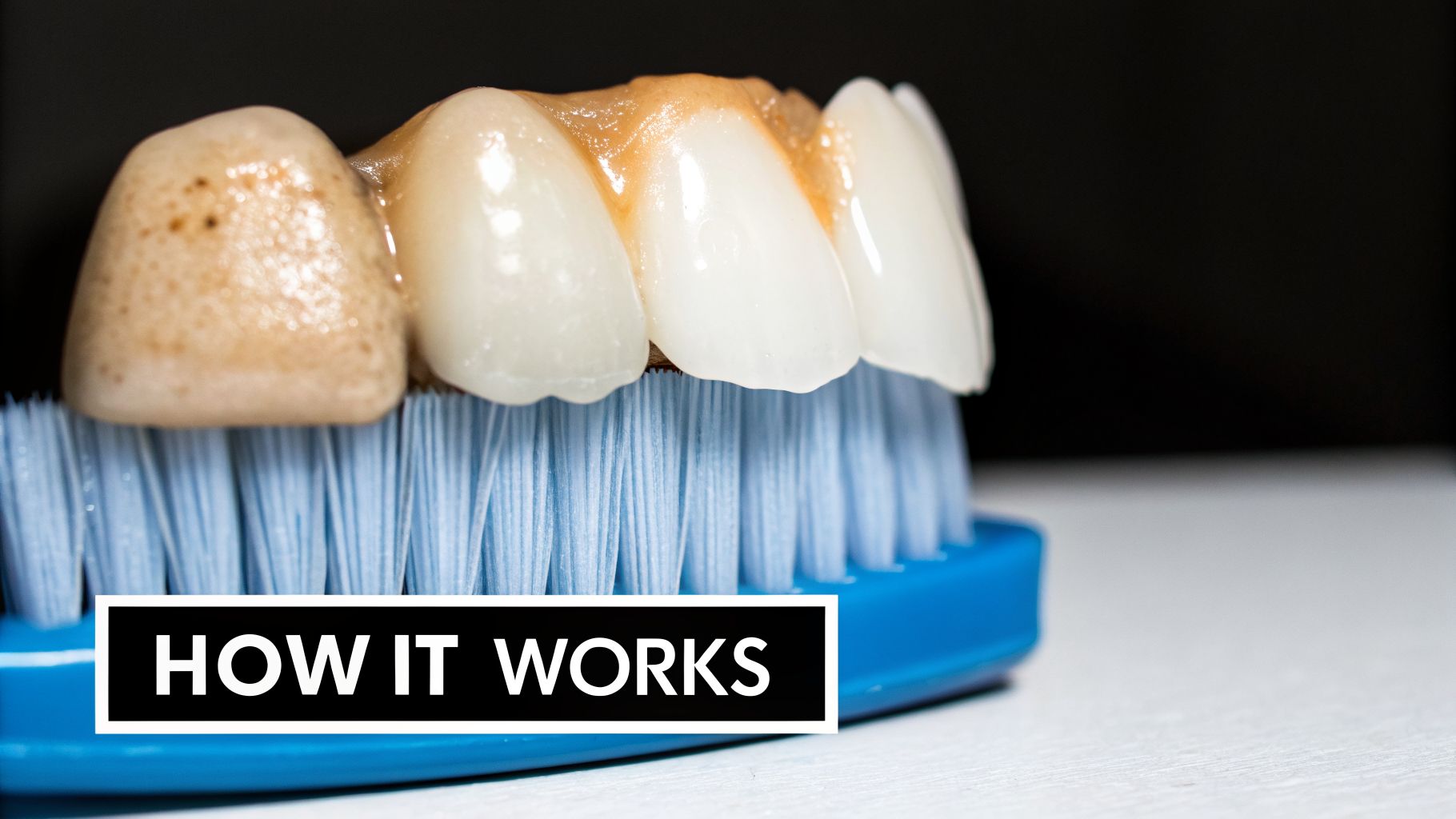
To pick the most effective tooth whitening toothpaste, it helps to know what’s happening on a microscopic level. These products don't all work the same way. Instead, they use two distinct strategies to tackle tooth discoloration, each designed for a different type of stain.
The first approach is all about physical abrasion. These toothpastes contain mild abrasives, like hydrated silica or baking soda, that act like a gentle polish for your enamel. They’re designed to scrub away extrinsic stains—the discoloration that builds up on the surface from things like coffee, tea, red wine, and tobacco.
The second strategy is chemical whitening. This method uses active ingredients, usually low-concentration hydrogen peroxide or carbamide peroxide, to lighten the tooth's color from the inside out. This is for addressing minor intrinsic stains, the kind that are deeper within the tooth’s structure.
Targeting Surface Stains with Abrasives
Think of an abrasive toothpaste as a micro-exfoliant for your teeth. Much like exfoliating your skin removes dull surface cells, these toothpastes carefully polish away the pigmented film that sticks to your enamel day after day.
This mechanical action is great for maintaining brightness and fighting off the daily stain accumulation from your morning coffee or evening glass of wine. The key is to find a product that is gentle enough to be effective without wearing down your enamel over the long term.
Breaking Down Deeper Stains with Peroxides
For stains that have settled below the enamel surface, a simple polish just won't cut it. This is where chemical agents come into the picture.
- Hydrogen Peroxide: This is a fast-acting bleaching agent. It releases oxygen molecules that are small enough to penetrate the enamel and break apart the colored compounds causing the discoloration.
- Carbamide Peroxide: This compound works a bit differently. It breaks down more slowly into hydrogen peroxide, offering a more gradual and often gentler whitening effect, which can be a better choice for people with sensitive teeth.
Key Takeaway: The "most effective" toothpaste for you really comes down to what you’re trying to fix. Abrasives are excellent for managing daily surface stains, while peroxide-based formulas are needed to achieve a modest lightening of your tooth's natural shade.
Understanding this difference is critical. If your main concern is surface discoloration, a high-quality abrasive toothpaste might be all you need for daily maintenance. For a deeper dive into the causes of discoloration, you can learn more about how to fix discolored teeth in our comprehensive guide.
However, if your stains are older or deeper, you'll need a product with a chemical whitener to see a noticeable difference. It’s also important to have realistic expectations; for significant, lasting results that go beyond what any toothpaste can deliver, professional cosmetic dentistry is your best bet. At Vienna Implant and Family Dentistry, we help patients in Vienna, VA understand all their options, guiding them toward a path that is both safe and effective for their unique smile.
Comparing the Most Common Whitening Ingredients
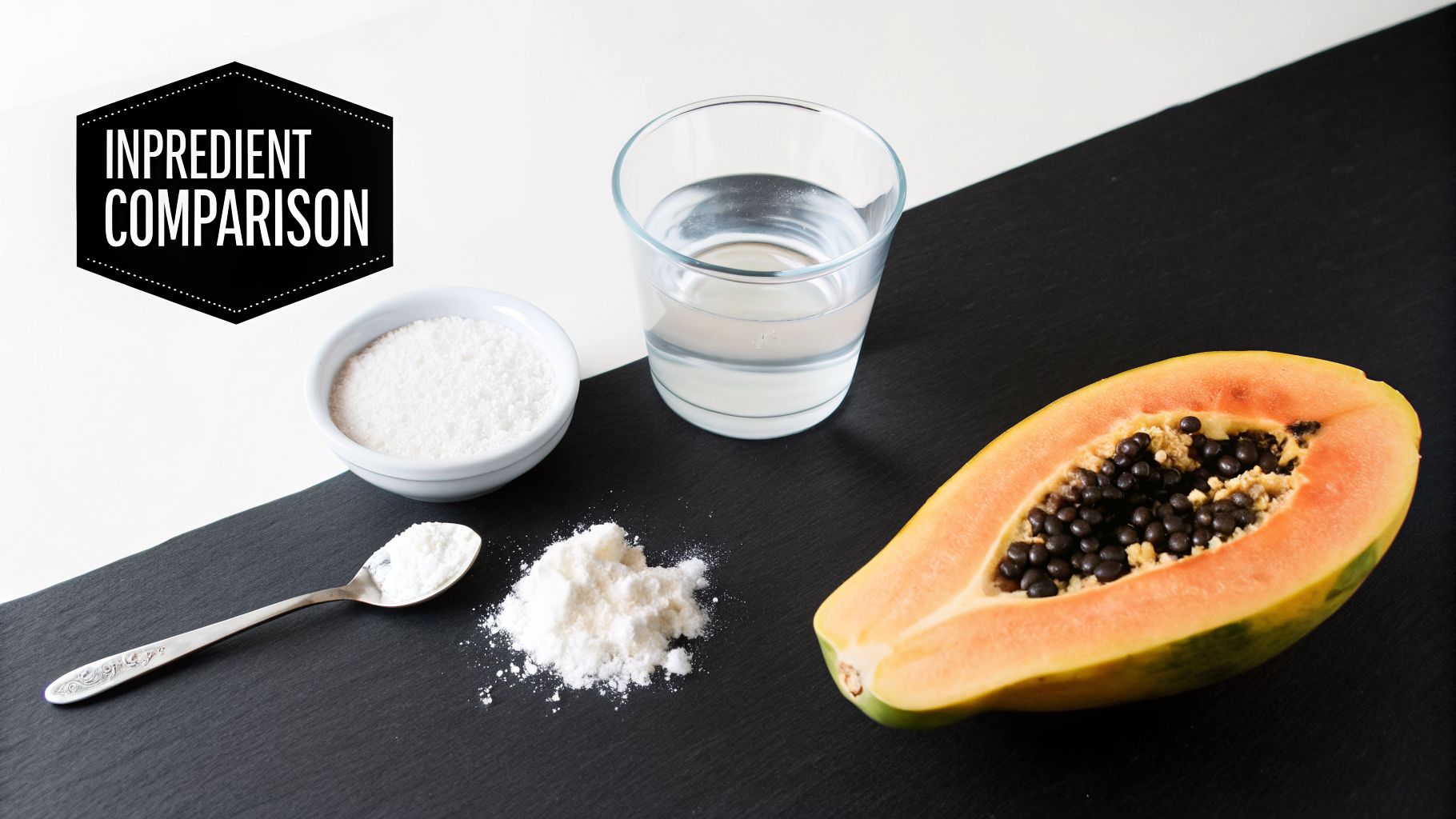
When you're standing in the toothpaste aisle, it's easy to feel overwhelmed by the bright packaging and bold claims. But the real secret to finding a toothpaste that truly whitens isn’t on the front of the box—it's in the ingredient list.
Instead of focusing on brand names, let's look at the science. Whitening ingredients generally fall into three distinct categories, each tackling stains in a completely different way. Understanding how they work is the key to picking the right product for your smile.
Physical Abrasives for Surface Stain Removal
The workhorse of most whitening toothpastes is a group of ingredients called physical abrasives. Think of them as a gentle exfoliant for your teeth, designed to polish away the daily surface stains left behind by things like coffee, tea, and red wine.
You’ll commonly find these on the label:
- Hydrated Silica: This is a very common, safe, and effective polishing agent. It's formulated as a gel to gently scrub enamel without being harsh.
- Baking Soda (Sodium Bicarbonate): A time-tested ingredient, baking soda is a mild abrasive that helps lift stains. Its alkaline properties also work to neutralize acids in your mouth that can lead to more staining.
Abrasives are fantastic for maintaining your current shade and preventing new surface discoloration. They just can't change the natural, underlying color of your teeth.
Chemical Whiteners for Deeper Lightening
For stains that have penetrated beyond the surface and settled into the enamel, you need a different strategy. Chemical whiteners are active agents that go deeper to break down the discolored molecules that cause that stubborn yellow tint.
The two main players in this category are:
- Hydrogen Peroxide: This is a powerful and fast-acting bleaching agent. It works by releasing oxygen molecules that break the chemical bonds holding stains together, making them colorless. Toothpastes use it in low, safe concentrations for daily use.
- Carbamide Peroxide: This compound acts as a slower-release version of hydrogen peroxide. It breaks down gradually, making it a gentler choice that’s often better tolerated by people with tooth sensitivity.
These ingredients are what provide a true "whitening" effect, lightening the intrinsic shade of your teeth. The trade-off is that they can sometimes cause temporary sensitivity. If that's a worry for you, our guide on teeth whitening for sensitive teeth has some great advice.
Emerging Enzymatic Agents
A newer and gentler approach to whitening comes from enzymes. These ingredients, often derived from natural sources, offer a way to fight stains without using abrasives or bleach.
The primary one you’ll see is:
- Papain: This enzyme, which comes from papayas, works by dissolving the protein film (known as the pellicle) that builds up on your teeth. Since stains stick to this film, breaking it down helps wash them away.
Enzymatic agents are exceptionally gentle, making them an excellent option if you’re looking to avoid both peroxides and more abrasive formulas.
Key Differentiator: The fundamental difference lies in how each ingredient works. Abrasives scrub the surface, peroxides bleach the tooth from within, and enzymes dissolve the protein layer that holds stains.
To make the choice a bit clearer, this table breaks down how each ingredient type stacks up.
Whitening Ingredient Effectiveness and Safety
This table compares common whitening ingredients to help you choose the most effective and safest option for your specific needs and sensitivity level.
| Ingredient Type | How It Works | Best for Stains From | Key Considerations |
|---|---|---|---|
| Physical Abrasives | Gently polishes the tooth surface to remove extrinsic (surface) stains. | Coffee, tea, red wine, and daily food pigments. | Excellent for maintenance. Effectiveness depends on the Relative Dentin Abrasivity (RDA) value; overuse of highly abrasive products could wear enamel. |
| Chemical Whiteners | Penetrates enamel to break down intrinsic (deeper) stain molecules. | Aging, minor genetic yellowing, and long-set extrinsic stains. | Provides a true lightening effect. Can cause temporary tooth sensitivity or gum irritation in some users. |
| Enzymatic Agents | Dissolves the protein film on teeth where stains attach. | General surface discoloration and preventing new stain buildup. | Extremely gentle and non-abrasive. Works best on newer stains and may be less effective on old, set-in discoloration compared to peroxides. |
Ultimately, the most effective tooth whitening toothpaste is a personal choice that depends on your type of staining, sensitivity levels, and what you want to achieve. For our Vienna patients, the team at Vienna Implant and Family Dentistry is always here to help you navigate these options. We believe in empowering you with the right knowledge to care for your smile with confidence.
Using Whitening Toothpastes Safely and Effectively
Picking a toothpaste with the right whitening ingredients is a great start, but how you use it is just as important for getting that brighter smile safely. It's a common myth that brushing harder or more often will get you faster results. In reality, that approach can do more harm than good. To get the most out of even the best whitening toothpaste, you have to pair it with the right technique.
First things first, always follow the product's directions. Those guidelines are there for a reason—to help you achieve the best outcome without putting your enamel or gums at risk. This typically means brushing for a full two minutes, twice a day.
Protecting Your Enamel While Whitening
One of the biggest worries people in Vienna have with whitening products is the potential for damaging their enamel. While any toothpaste with the ADA Seal of Acceptance has been tested for safety, using it the wrong way can still cause issues. The goal is to gently polish away stains, not scrub away your precious enamel.
Here’s how to brush safely:
- Use a Soft-Bristled Brush: A soft brush is all you need to effectively clean your teeth and remove plaque. Medium or hard bristles are often too abrasive, especially with a whitening formula, and can lead to enamel wear and gum recession over time.
- Avoid Over-Brushing: Brushing with too much force is a surprisingly common mistake that can be very damaging. You have to let the bristles and the toothpaste’s ingredients do the work. A gentle, circular motion is far more effective and safer than aggressive back-and-forth scrubbing.
- Don't Exceed Recommended Use: It can be tempting to use your whitening toothpaste more than twice a day, but resist the urge. Overexposing your teeth to abrasive or chemical agents won’t make them whiten faster, but it can definitely increase your risk for sensitivity and irritation.
Managing and Preventing Tooth Sensitivity
Tooth sensitivity is one of the most common side effects of teeth whitening, affecting a large number of people. It happens when whitening agents get past the enamel and reach the sensitive dentin layer underneath. The good news is that this discomfort is usually temporary and very manageable.
Expert Tip: If you start feeling sensitivity, it doesn't automatically mean you have to stop whitening. Think of it as a signal from your teeth to adjust your routine, give them a break, and bring in some products designed to soothe and protect.
Consider these simple strategies to keep sensitivity under control:
- Alternate with a Desensitizing Toothpaste: You don’t have to use a whitening toothpaste every single time you brush. Try alternating—use your whitening paste in the morning and a toothpaste made for sensitive teeth (look for ingredients like potassium nitrate or stannous fluoride) at night.
- Be Mindful of Your Diet After Brushing: Right after brushing, your enamel is a little more vulnerable. Try to avoid highly acidic foods and drinks—like citrus, soda, or wine—for at least 30 minutes to prevent both staining and sensitivity.
- Rinse with Water: After you have coffee, soda, or other staining or acidic drinks, swish your mouth with plain water right away. This simple step helps neutralize the acids and wash away staining compounds before they get a chance to set.
Remember, patience is key. The results you get from over-the-counter products are gradual, often taking 2 to 6 weeks of consistent use before they become noticeable. For our patients here in Vienna, VA, our team at Vienna Implant and Family Dentistry is always ready to offer personalized advice to make sure your journey to a brighter smile is both successful and safe.
When to Consider Professional Teeth Whitening in Vienna, VA
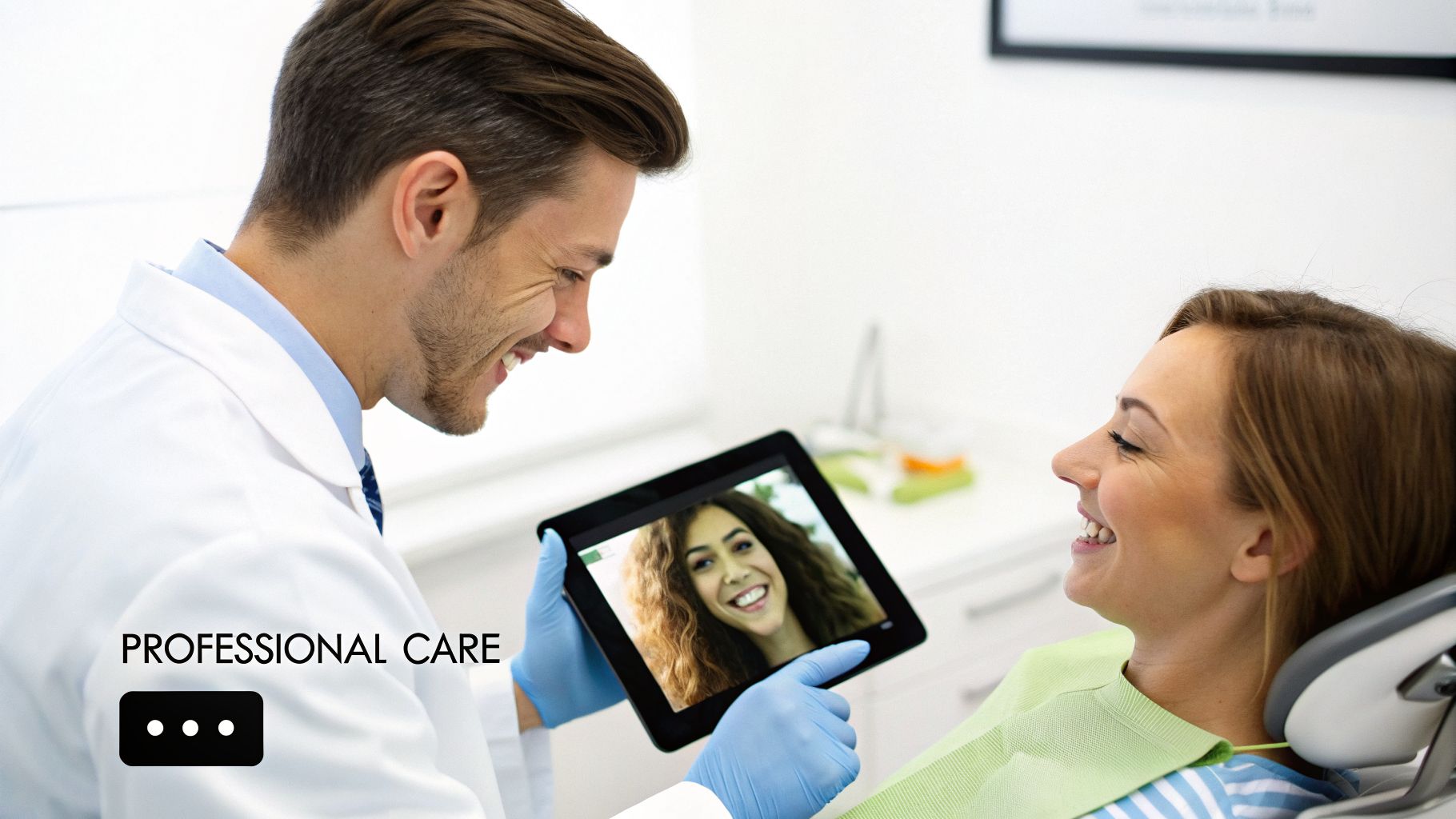
While the most effective whitening toothpaste is a fantastic tool for keeping your smile bright and lifting away minor, recent stains, it’s important to have realistic expectations. These at-home products are really designed for maintenance and subtle improvements. For a truly transformative, long-lasting change—or for certain types of discoloration—a professional approach from your dentist in Vienna is usually the right call.
Simply put, over-the-counter toothpastes just don't have the power that treatments from a cosmetic dentist do. If you've been using a whitening toothpaste faithfully but aren't seeing the bright smile you'd hoped for, it might be time to consider a more powerful solution. Knowing when to make that switch is the key to getting the results you want, safely and efficiently.
When At-Home Whitening Isn't Enough
The truth is, not all tooth discoloration is the same. While toothpastes are great at polishing away fresh surface stains from your daily coffee or tea, they aren't built to tackle deeper, more stubborn issues. A consultation with a dentist is the best next step if you're dealing with these common challenges.
Consider professional whitening if you have:
- Deep Intrinsic Stains: This is discoloration that comes from inside the tooth, often caused by aging, genetics, certain medications (like tetracycline), or a past dental injury. These stains live deep in the tooth’s dentin layer, and the low concentration of peroxide in toothpaste isn't nearly strong enough to penetrate that far and break them down.
- A Desire for Dramatic Results: If your goal is to lighten your teeth by several shades, professional treatments are the only way to get there. The whitening agents we use at our Vienna, VA practice contain a much higher concentration of peroxide, delivering a noticeable "wow" factor in a very short time—sometimes in just a single appointment.
- Existing Dental Restorations: This is a big one. It's crucial to understand that whitening agents do not work on dental materials. If you have crowns, veneers, bonding, or fillings, they won't change color with your natural teeth. Whitening at home can leave you with a mismatched, uneven-looking smile.
A professional cosmetic dentist can develop a complete treatment plan to make sure your entire smile is a uniform, brilliant shade. This might involve replacing older restorations after whitening to perfectly match your newly brightened teeth.
For our patients here in Vienna, VA, and the surrounding Northern Virginia area, this is a very common concern we help navigate. At Vienna Implant and Family Dentistry, we make sure every detail is accounted for so you get a beautifully consistent result.
The Professional Advantage in Cosmetic Dentistry
Choosing professional teeth whitening at our Vienna practice means putting your smile in the hands of a skilled dental team that is fully committed to your safety and satisfaction. We offer advanced cosmetic dentistry solutions that go far beyond what any store-bought product can do, ensuring your smile isn't just whiter, but healthy, too.
Our professional options provide several key benefits:
- Customized Treatment: We never use a one-size-fits-all approach. We start by assessing your specific type of staining, any sensitivity issues, and your personal smile goals to recommend the perfect whitening protocol for you.
- Safety and Supervision: Professional whitening is always performed under careful supervision. We take great care to protect your gums and other soft tissues from the powerful whitening gels, minimizing the risk of irritation and sensitivity that can happen with poorly fitting over-the-counter trays or strips.
- Predictable and Lasting Results: With professional-grade materials and proven techniques, we can deliver dramatic, predictable results that last. We’ll also give you the tips and guidance you need to maintain that bright smile for a long, long time.
If you're ready for a change that no toothpaste can give you, it’s time to see what professional cosmetic dentistry can do. Schedule a consultation at Vienna Implant and Family Dentistry to discover how we can help you achieve the confident, radiant smile you deserve.
Schedule Your Whitening Consultation in Vienna, VA
This guide has walked you through the world of whitening toothpastes, and hopefully, you now have a much clearer picture of how they work. While a great whitening toothpaste is fantastic for keeping surface stains at bay and maintaining your smile’s brightness, sometimes you need more help to get the truly stunning, long-lasting results you’re looking for.
For our neighbors here in Vienna, VA, and the surrounding Northern Virginia communities, that’s often where the next, more exciting chapter begins. If you’re ready for a significant, noticeable change, a professional consultation is your next step. At-home products offer gradual improvements, but cosmetic dentistry delivers predictable, impactful results designed specifically for you.
Your Custom Path to a Radiant Smile
At Vienna Implant and Family Dentistry, we start with a simple conversation. We provide a personalized, judgment-free assessment where we listen to your goals and take a close look at the specific type of discoloration you're experiencing. This is the only way to recommend a treatment plan that’s not just effective, but also safe and successful for you.
Our cosmetic dentistry services, including professional whitening and veneers, can achieve what no toothpaste can—addressing even deep-set intrinsic stains or creating an even, brilliant smile when old dental work is involved. We're committed to building a plan that aligns with your vision for a smile you can feel truly confident in.
We believe every patient in our Vienna community deserves to feel proud of their smile. Our role is to provide the expert guidance and advanced care needed to make that a reality, whether through professional whitening or other cosmetic solutions.
Contact Us Today
Don't let uncertainty about tooth discoloration hold you back any longer. If you’re ready to explore options that go far beyond what even the most effective whitening toothpaste can offer, we invite you to take the first step toward a radiant new smile.
Contact Vienna Implant and Family Dentistry today to schedule your cosmetic dentistry consultation. We are proud to serve the Vienna, VA, community and look forward to helping you achieve the confident, brilliant smile you deserve.
Frequently Asked Questions About Whitening Toothpastes
When patients ask us about whitening toothpastes, a few common questions always come up. As your family dentistry practice here in Vienna, VA, we want to give you the clear, straightforward answers you deserve so you can make confident decisions for your oral health. Let's walk through some of the things we hear most often.
How Long Until I See Results?
This is easily one of the most popular questions we get. With any whitening toothpaste, the results are going to be gradual. How quickly you see a change depends on your individual teeth, the kinds of stains you have, and the specific ingredients in the product you’ve chosen.
Generally speaking, you can expect to see a noticeable reduction in surface stains within 2 to 6 weeks of consistent, twice-daily brushing. It's crucial to remember that these toothpastes are designed for maintenance and lifting minor discoloration, not for dramatic, overnight transformations. For a significant change in shade, professional whitening treatments are still the gold standard.
Can Whitening Toothpaste Damage My Tooth Enamel?
When you use them as directed, whitening toothpastes from reputable brands are absolutely safe. They undergo rigorous testing for their abrasivity levels, and looking for the American Dental Association (ADA) Seal of Acceptance is a great way to know a product is both safe and effective.
The real risk comes from improper use.
Key Takeaway: Brushing too aggressively, overusing a highly abrasive toothpaste, or experimenting with unverified products from online sellers can potentially wear down your tooth enamel over time.
To keep your smile protected, always use a soft-bristled toothbrush and stick to the manufacturer's instructions. A gentle touch is all you need to let the ingredients do their job without causing any harm.
Will Whitening Toothpaste Work on My Dental Crowns or Veneers?
No, and this is an essential point to understand. Whitening agents, whether in over-the-counter products or professional treatments, do not change the color of dental restorations.
The materials used for dental work, such as:
- Crowns
- Veneers
- Bonding
- Fillings
These are meticulously color-matched to your natural teeth when they are placed, and they are impervious to bleaching agents like hydrogen peroxide. If you try to whiten your teeth at home, you can easily end up with an uneven, mismatched smile where your natural teeth get lighter but your restorations stay the same.
If you have existing dental work and you're dreaming of a brighter, more uniform smile, we encourage you to schedule a cosmetic dentistry consultation at our Vienna practice. At Vienna Implant and Family Dentistry, we can create a personalized plan to help you safely achieve the bright, consistent smile you deserve.