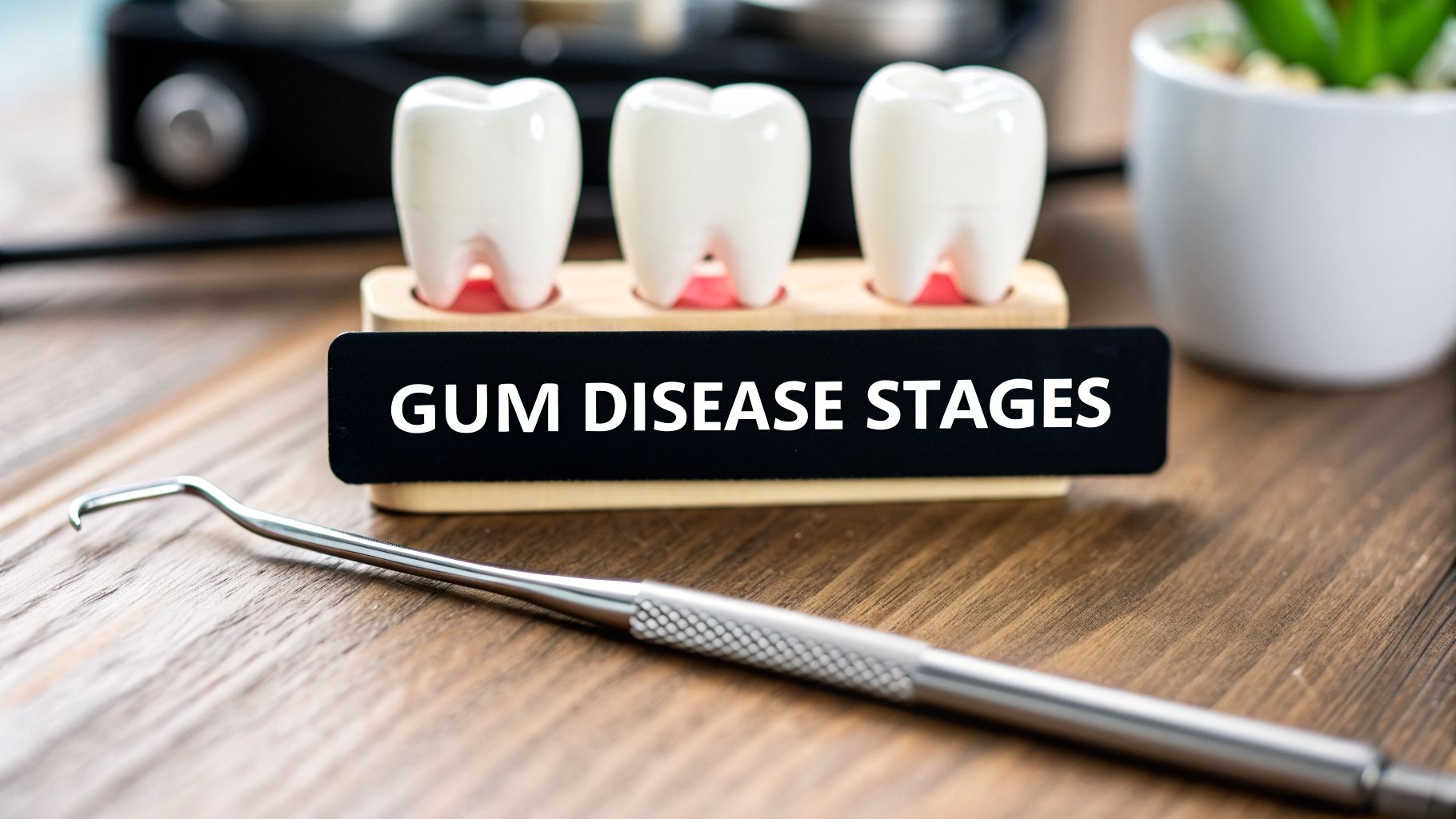
Gum disease is a surprisingly common condition, but it’s also a sneaky one. It can quietly progress without you even realizing it, moving from a minor issue to something that can seriously impact your smile and overall health. Think of it as a path with several clear stages—and the good news is, knowing what to look for at each stage is your best defense.
This guide will serve as your map, helping you understand the progression of gum disease, from the mild, reversible beginning to the more advanced stages that require expert care from your local dentist in Vienna, VA.
Your Guide to Understanding Gum Disease in Vienna, VA
Understanding how gum disease develops is the first—and most powerful—step you can take to protect your smile. Here in Vienna, VA, we often see patients who notice things like bleeding gums when they brush or a nagging case of bad breath, but they aren’t sure if it’s a serious problem. Recognizing these early signs is critical, because at its initial stage, gum disease is often completely reversible.
Here at Vienna Dental Implant & Family Dentistry, we want to be your trusted partner in oral health. We want our community in Vienna and the surrounding Northern Virginia areas to know that no matter what you’re facing, Dr. Vikram Chauhan and our compassionate team are here to provide effective, judgment-free care to get your smile back to its healthy, happy state.
Why Early Awareness Matters
Gum disease doesn’t just show up one day. It develops slowly, often without any pain until significant damage has already been done. This stealthy progression is exactly why your regular dental checkups at our family dentistry practice are so vital.
- It protects your teeth: Untreated gum disease is the #1 cause of tooth loss in adults.
- It affects your whole body: Bacteria from infected gums can travel through your bloodstream and have been linked to other serious health problems, including heart disease and diabetes.
- It's highly preventable: With the right daily habits and professional care, you can often stop gum disease before it ever gets a foothold.
Understanding the distinct phases of gum disease empowers you to act. From minor inflammation to advanced tissue damage, knowing what to look for allows you to seek timely, effective treatment and protect your smile for a lifetime.
Our goal is to help you spot any issues at their earliest, most treatable point. Catching those first clues is everything, and you can learn more by exploring our detailed guide on the signs of gum disease. We are dedicated to giving the families of Vienna, VA, the knowledge and care they need to keep their smiles bright and healthy for years to come.
Stage 1: Gingivitis – The Reversible Warning Sign
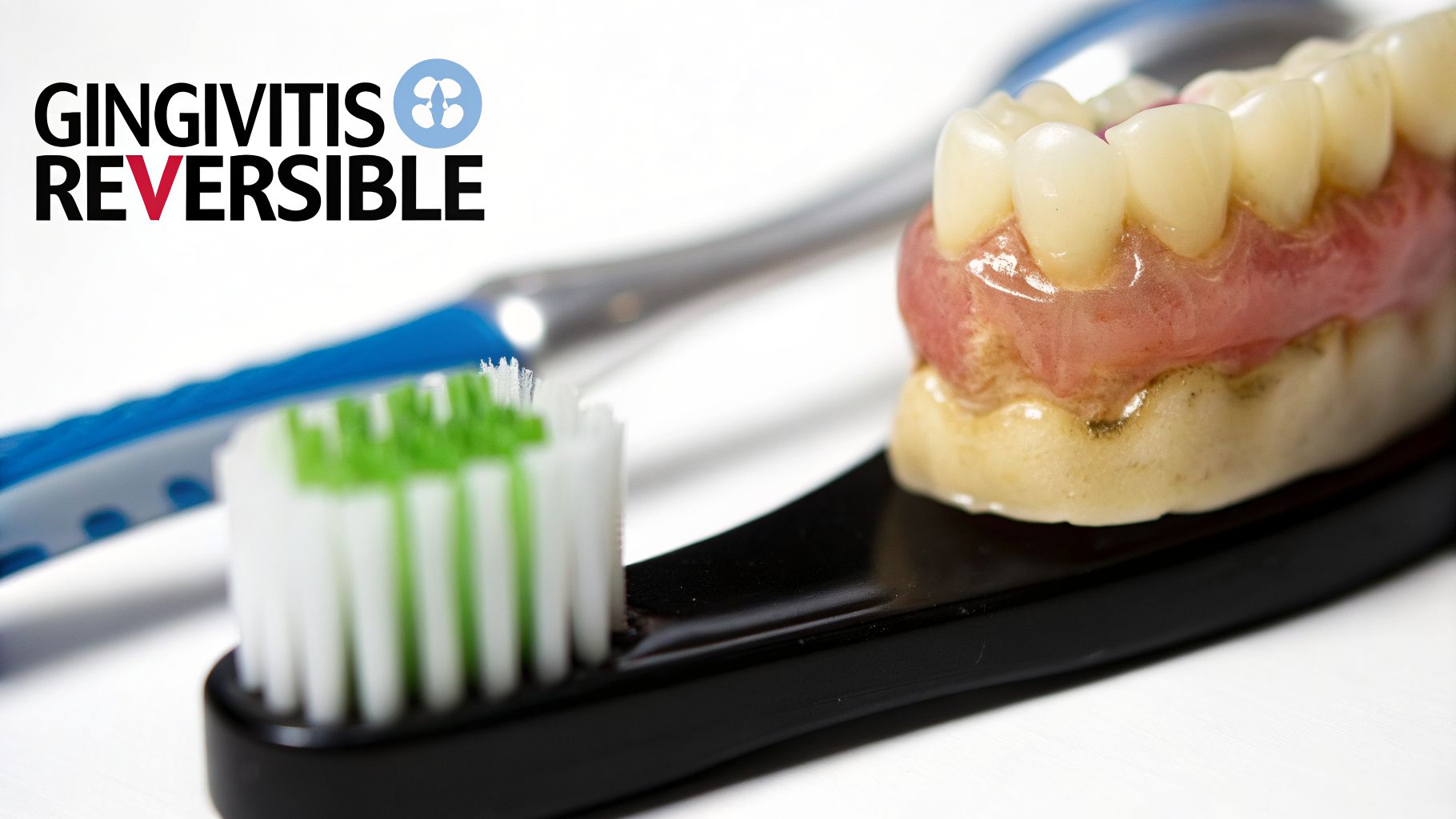
Think of gingivitis as the first stop on the map of gum disease—and thankfully, it’s the one where you can still easily turn back. It’s your body’s earliest warning signal. When that sticky film of bacteria called plaque isn't cleared away, it starts to irritate the sensitive tissue along your gumline.
This initial stage is essentially your gums' reaction to a constant bacterial presence. Your body sends more blood flow to the area to fight the germs, which leads to inflammation. The signs are often subtle, which is why they’re so easy to ignore. But they are a clear sign that it's time to pay attention.
Key Signs of Gingivitis
At this point, you probably won’t feel any real pain, which is the main reason gingivitis often goes completely unnoticed. Being aware of the early indicators is your best chance to take action before the problem gets more serious.
Keep an eye out for these common signs:
- Red or Puffy Gums: Healthy gums should be a firm, pale pink. If your gums look bright red or even purplish, that’s a classic sign of inflammation.
- Bleeding When You Brush or Floss: A little pink in the sink is not normal, despite what many people think. It’s one of the most common signs that your gums are irritated by plaque.
- Tenderness or Discomfort: While not always painful, your gums might feel a bit sore or tender when you brush or touch them.
The great news? Gingivitis is completely reversible. At this stage, the irritation is only on the surface. It hasn't caused any permanent damage to the deeper connective tissues or the bone that holds your teeth in place. As insights on gum disease from MedlinePlus explain, because the underlying structures are unharmed, proper care can fully resolve the issue.
Think of gingivitis like a sunburn on your skin—it's red, irritated, and sensitive, but with proper care, it heals completely without leaving a scar. Neglecting it, however, leads to deeper, more permanent damage.
At Vienna Dental Implant & Family Dentistry, we help our patients in Vienna, VA, hit the "reset" button on their gum health every day. Treating gingivitis is straightforward and highly effective. It starts with a professional dental cleaning to remove every trace of plaque and hardened tartar, followed by personalized guidance to help you perfect your at-home oral hygiene routine.
This simple one-two punch stops the irritation in its tracks, allowing your gums to heal and preventing the jump to more serious stages of gum disease.
Stage 2: Early Periodontitis — When Gums Begin to Detach
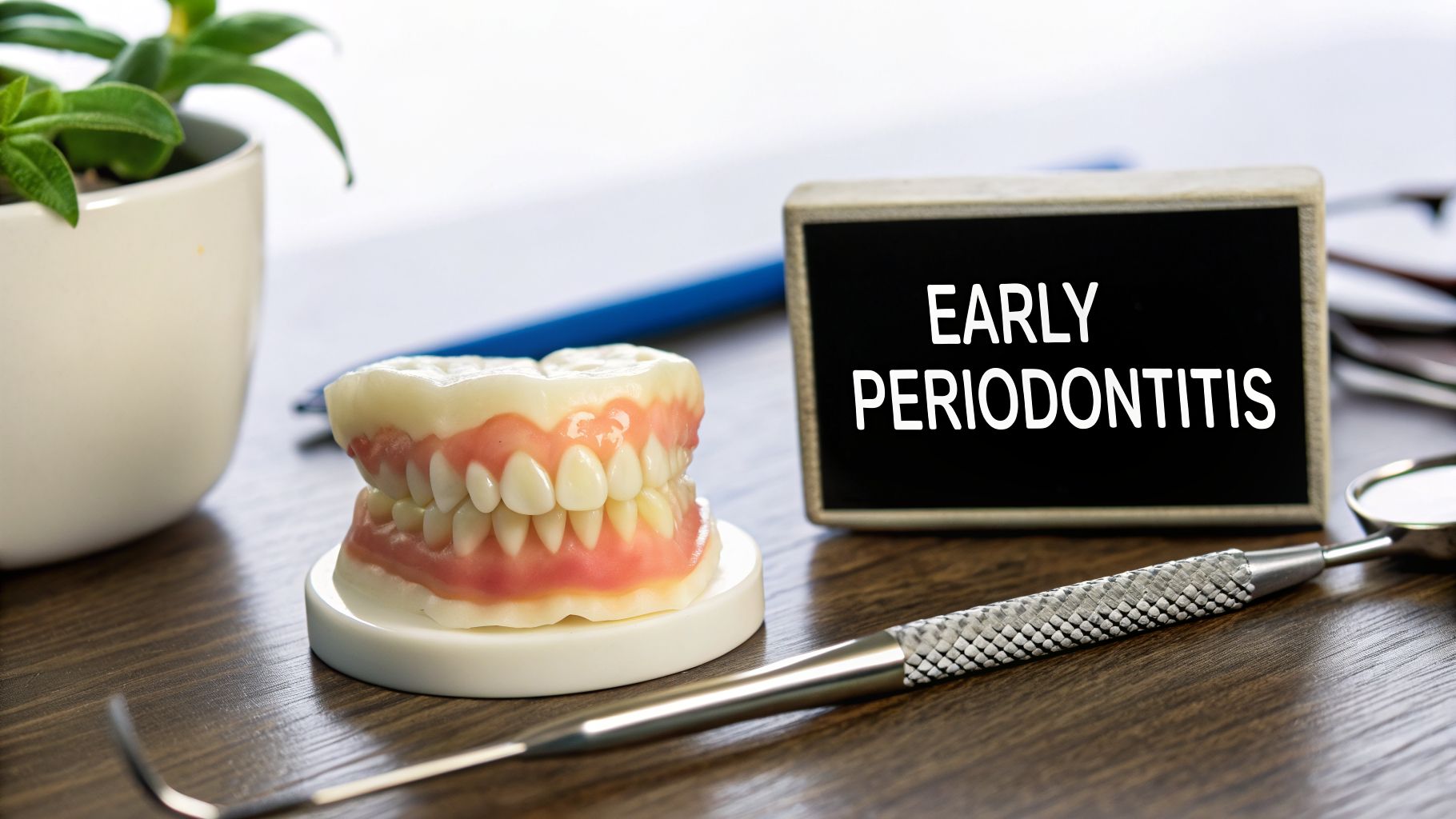
If the early warnings of gingivitis aren't addressed, the infection doesn't just stay put—it progresses into a much more serious condition known as early periodontitis. This is a critical turning point because the damage that occurs from here on out is permanent.
At this stage, the soft plaque that caused the initial irritation hardens into tartar, also called calculus. This is a tough, cement-like deposit that you can no longer remove with a toothbrush or floss.
This hardened tartar creates constant inflammation, and your body’s response is to pull the gums away from the teeth. This process is called gum recession, and it does more than just change the look of your smile. It creates small gaps between your teeth and gums, known as “pockets.”
These pockets are the perfect hideout for harmful bacteria, shielding them from your daily cleaning routine. As the infection digs deeper, so do the pockets, starting a destructive cycle that can lead to irreversible consequences.
The Irreversible Shift From Irritation to Damage
Unlike gingivitis, periodontitis means the structures supporting your teeth are being actively destroyed. The bacteria flourishing in these deepening pockets begin to attack not just your gum tissue, but also the underlying bone that anchors your teeth.
The signs of early periodontitis are much more obvious and demand immediate attention:
- Deepening Gum Pockets: You won’t be able to see this, but during an exam, Dr. Chauhan can measure them. Pockets measuring 4 to 5 millimeters deep are a clear red flag for early periodontitis.
- Persistent Bad Breath: The growing colonies of bacteria in these pockets often create a noticeable foul odor that mints and mouthwash can’t hide.
- Receding Gums: You might start to notice that your teeth look longer than they used to. This is a classic sign that your gum line is pulling back, which can affect the look of your smile and may be a concern for those interested in cosmetic dentistry.
- Increased Bleeding and Tenderness: Your gums are likely to be far more sensitive and will bleed more easily than they did in the gingivitis stage.
At this stage, the infection is no longer just a surface-level problem. It has moved deeper, attacking the very foundation of your smile. While the bone loss that occurs is permanent, the good news is that we can stop the disease from progressing further.
How We Stop Periodontitis in Its Tracks
At Vienna Dental Implant & Family Dentistry, we tackle this critical stage with a targeted, non-surgical treatment called scaling and root planing. Think of it as a deep cleaning that’s absolutely essential for the long-term health of your gums and teeth. This restorative dentistry treatment is a crucial step in preserving your smile.
The procedure is broken down into two main steps:
- Scaling: Dr. Chauhan meticulously removes all the plaque and stubborn tartar buildup from your teeth—both above and, most importantly, below the gumline.
- Root Planing: Once the tooth surfaces are completely clean, the roots of your teeth are smoothed out. This step makes it much harder for new bacteria to cling on and helps your gums heal and reattach to the clean tooth surfaces.
For our patients here in Vienna, VA, scaling and root planing is our first line of defense to bring periodontitis to a halt. It gets right to the source of the infection, giving your gums the chance they need to recover and preventing the disease from spiraling into a more destructive stage.
Stage 3: Advanced Periodontitis and Its Systemic Impact
When gum disease is left untreated, it progresses to its final and most destructive phase: advanced periodontitis. This is where the infection has done extensive, and often irreversible, damage to the bone and connective tissues that anchor your teeth.
Think of the foundation of a house slowly crumbling away. Eventually, the house becomes unstable and is at risk of collapse. In the same way, your teeth lose their structural support, leading to symptoms that are impossible to ignore. This isn’t just a problem—it’s a true dental emergency that needs immediate care from a professional like Dr. Chauhan at Vienna Dental Implant & Family Dentistry.
The Visible and Painful Signs of Destruction
By this stage, the subtle hints of earlier gum disease have turned into severe and often painful symptoms that can dramatically impact your day-to-day life. You're no longer just dealing with a minor issue; the very structure of your smile is failing.
You will almost certainly experience:
- Loose or Shifting Teeth: With so much of the supporting bone gone, your teeth may feel wobbly to the touch or might have visibly moved out of place. This can create smile alignment issues that services like Invisalign might address in a healthy mouth, but here, it signals severe damage.
- Painful Chewing: The instability of your teeth, combined with the deep, active infection, can make biting and chewing food an uncomfortable and difficult process.
- Pus Between Teeth and Gums: A definitive sign of a severe infection is the presence of pus, an yellowish fluid that may ooze from the gumline when pressed.
- Severe Gum Recession: Your gums may have pulled away from your teeth so dramatically that large portions of the tooth roots are now exposed.
At this point, tooth loss is no longer just a risk—it becomes a near certainty without aggressive intervention.
The Mouth-Body Connection: Its Systemic Impact
One of the most critical things to understand about the stages of gum disease is that advanced periodontitis is not a problem that stays in your mouth. The deep pockets of infection in your gums act as a direct gateway for harmful bacteria to enter your bloodstream and travel throughout your body.
Think of the infection as a constant, low-grade fire that your body is always trying to put out. The inflammatory agents and bacteria produced by this fire can travel through your system, fueling and worsening other serious health conditions.
This link between oral and systemic health is well-documented. The bacteria from advanced periodontitis are strongly associated with a higher risk for several major health problems, including:
- Heart Disease and Stroke: Chronic inflammation can contribute to the hardening of your arteries (atherosclerosis).
- Diabetes Complications: An active gum infection can make it much harder to control your blood sugar levels.
- Respiratory Infections: Bacteria from your mouth can be inhaled into your lungs, increasing the risk of pneumonia and other issues.
Protecting your oral health is truly about protecting your whole body. The infection in your mouth has far-reaching consequences that make seeking immediate treatment an absolute necessity.
Restoring Your Health After Advanced Damage
For our patients in Vienna, VA, and the surrounding Northern Virginia communities who are facing this challenging stage, there is still a path forward. At Vienna Dental Implant & Family Dentistry, our focus shifts to aggressively controlling the infection, stopping any further destruction, and creating a plan to rebuild your smile.
Treatment is much more involved and may include a combination of procedures:
- Gum Surgery: This allows us to access and thoroughly clean the deep pockets of infection around the tooth roots and reshape the damaged gum and bone tissue.
- Bone Grafts: In some cases, we can use bone grafting materials to regenerate some of the bone that was lost, creating a stronger foundation for your teeth or future restorations.
- Dental Implants: For teeth that are too damaged to be saved, dental implants are the gold standard. As the premier implant dentist near you, Dr. Chauhan provides a permanent, stable, and fully functional replacement that looks and feels just like a natural tooth.
Dr. Chauhan has the expertise to develop a comprehensive plan to address the damage, restore both the function and appearance of your smile, and put your long-term health back on the right track.
How We Diagnose and Treat Gum Disease in Vienna, VA
Figuring out what’s really going on with your gums is the first step, and here at Vienna Dental Implant & Family Dentistry, we make that process clear, comfortable, and gentle. We know that many folks in Vienna, VA, get a little anxious about dental appointments, especially when they suspect something might be wrong. That’s why our entire approach is designed to be reassuring and give you a straightforward path forward.
First, Dr. Chauhan will perform a simple and painless check to get a clear picture of your gum health. He uses a tiny, specialized measuring tool—think of it as a miniature ruler—to gently measure the small space, or ‘pocket,’ between each tooth and the surrounding gum tissue. These precise measurements are the key; they tell us exactly what stage of health your gums are in and allow us to map out the right treatment just for you.
Personalized Treatment for Every Stage
Once we understand the specific stage of gum disease you’re dealing with, we can match the treatment directly to your needs. Your care is never a one-size-fits-all plan but a specific strategy to get you the best possible results.
Our treatment plans generally follow this path:
- For Gingivitis: In this earliest stage, the solution is often straightforward. A thorough professional dental cleaning combined with some fine-tuning of your at-home care routine is usually all it takes to completely reverse the inflammation and get your gums back to perfect health.
- For Periodontitis: When the disease has progressed, we move to a non-surgical procedure called scaling and root planing. This "deep cleaning" is crucial for removing stubborn, hardened tartar from below the gumline and smoothing the tooth roots. This helps your gums heal and reattach firmly to your teeth.
- For Advanced Cases: If there's been significant damage, we will calmly and clearly walk you through your restorative options. These might range from minor surgical procedures designed to rebuild lost support to cosmetic dentistry solutions, such as dental implants, that bring back the beautiful appearance of your smile.
We believe that understanding your treatment is just as important as the treatment itself. Dr. Chauhan takes all the time needed to explain every step, ensuring you feel confident and in control of your oral health journey.
Your Comfort Is Our Priority
We get it—dental anxiety is very real. The idea of any procedure, no matter how simple, can be a source of stress. This is exactly why we proudly offer sedation dentistry right here in our Vienna, VA office. Sedation can help you feel completely relaxed and calm, transforming what could be a stressful appointment into a comfortable, easy experience.
Whether you're here for a routine cleaning or a more involved procedure, your comfort comes first. Our goal is to take the mystery out of the process, remove fear from the equation, and help you achieve a healthy, confident smile without the stress. For those interested in advanced cleaning techniques, you can learn more about how we use modern technology in our guide to laser deep cleaning.
Preventing Gum Disease: A Lifelong Commitment to Your Smile
When it comes to the stages of gum disease, the most effective approach is to stop it before it ever has a chance to begin. Think of prevention as a true partnership—a collaboration between your daily habits at home and the professional care you receive from our team.
It’s a lifelong commitment, not just to your smile, but to your overall health. This commitment is built on simple, non-negotiable daily actions that serve as your first line of defense against the plaque that kicks off the entire disease process.
Your Role in At-Home Prevention
Your daily routine is the single most powerful tool you have. Consistent, proper care disrupts the colonies of bacteria that cause inflammation, keeping your gums healthy and resilient day in and day out.
Your essential at-home tasks include:
- Brushing Thoroughly Twice a Day: Always use a soft-bristled brush and fluoride toothpaste. Your goal is to gently clean every tooth surface, paying special attention to the area where your teeth meet your gums.
- Flossing Daily: This is absolutely crucial. Floss is the only tool that can effectively clean the tight spaces between your teeth and just beneath the gumline, where a toothbrush simply cannot reach.
- Using an Antiseptic Mouthwash: A good rinse can help reduce the overall bacterial load in your mouth, offering an extra layer of protection against plaque.
Think of your daily hygiene as preventative maintenance for your smile. Just like a car needs regular oil changes to keep the engine running smoothly, your teeth and gums need daily cleaning to prevent a breakdown.
Our Role as Your Professional Partner
While your daily efforts are critical, they can’t do the job alone. Any plaque that gets missed can quickly harden into tartar (also called calculus), a concrete-like substance that’s impossible for you to remove at home. That's where we come in.
Your regular checkups and professional cleanings here at our Vienna, VA office are every bit as important as your daily brushing. As your family and cosmetic dentist near you, we use special tools to expertly remove that stubborn tartar, stopping gum irritation before it can escalate into disease. If you're curious about what makes these visits different from more intensive treatments, we have a detailed guide explaining a teeth cleaning vs deep cleaning.
We also partner with you to manage key lifestyle factors that can increase your risk, such as smoking or a diet high in sugar. By working together, we can provide the comprehensive care you need to protect your oral health.
Take the Next Step for a Healthier Smile in Vienna, VA
At our Vienna, VA, practice, we get a lot of questions about gum disease. It's a common concern, and we believe getting clear, honest answers is the first step toward feeling in control of your oral health. Let's tackle some of the most frequent ones we hear.
Can Gum Disease Be Cured Completely?
This is a fantastic question, and the answer really depends on the stage. The great news is that in its earliest form, gingivitis, the disease is 100% reversible. With professional cleanings and a solid at-home hygiene routine, we can stop it in its tracks and restore your gums to perfect health.
However, once gingivitis progresses to periodontitis, the game changes. At this stage, the bacteria have caused permanent damage to the bone and tissues that support your teeth. While we can't "cure" it in the sense of reversing that damage, we can absolutely manage and control the disease to prevent it from getting any worse. This is why catching it early is so incredibly important.
Are My Receding Gums Going to Grow Back?
Unfortunately, once gum tissue has been lost to recession, it doesn't grow back on its own. Think of it like soil erosion—once the topsoil is gone, it doesn't just reappear.
The key is to stop the erosion. Restorative dentistry treatments like scaling and root planing are designed to halt the progression of the disease and prevent further recession. For more significant cases where roots are exposed, Dr. Chauhan might discuss a gum graft. This procedure can cover the exposed roots, protecting them from decay and restoring a more natural, healthy appearance to your smile.
Is Gum Disease Contagious?
You can't "catch" gum disease the way you'd catch a cold or the flu. It isn't an airborne virus. However, the specific, aggressive bacteria that cause gum disease can be transferred from one person to another through saliva.
This means that activities like kissing or sharing toothbrushes, forks, and spoons can pass these harmful germs between family members. It’s another great reason for everyone in your household to be diligent about their own oral hygiene and see their dentist regularly.
If you are worried about the health of your gums, don't wait. The earlier you seek care, the simpler the solution. Contact Vienna Dental Implant & Family Dentistry today to schedule a consultation. We are proud to serve our neighbors in Vienna, VA, and the surrounding Northern Virginia communities, and we are ready to help you achieve a lifetime of healthy smiles.