You bite into toast, a nut, or a piece of crusty bread, and something feels wrong. Maybe you hear a sharp crack. Maybe there’s a sudden zing of pain when you chew. Maybe the tooth doesn’t look very different, but it no longer feels safe to bite on.
That moment can be unsettling. One immediately wonders: Is this serious, and what should I do right now?
A cracked tooth can range from a small surface problem to a deeper fracture that needs prompt treatment. The good news is that panic doesn't help, but fast, sensible action does. If you’re searching for cracked tooth what to do in Vienna, VA, the right next step is to protect the tooth, avoid making it worse, and get it evaluated as soon as possible.
That Sudden Crack A Guide for Residents in Vienna VA
A cracked tooth often happens during an ordinary day. You’re eating lunch, driving home, helping your kids, or finishing dinner, and suddenly one side of your mouth feels different. Patients describe it in similar ways. A quick snap, a sharp bite pain, or a strange awareness that one tooth now feels weak.
That fear is understandable. Teeth usually don’t warn you much before they crack. Sometimes the tooth already had a filling, hidden wear, or stress from grinding. Other times it happens on a tooth that seemed completely fine the day before.
What matters first is this. A cracked tooth is serious, but it isn’t automatically a lost tooth. Many cracked teeth can be stabilized and saved when they’re treated before the crack spreads.
The first goal is simple. Keep a manageable problem from becoming a bigger fracture, an infection, or a tooth that splits.
What patients usually notice first
Some people feel pain only when they release their bite. Others feel cold sensitivity, pressure, or a rough edge with their tongue. A few notice swelling or that a piece has broken off.
The confusing part is that cracked teeth don’t all behave the same way. A tiny crack can feel dramatic. A deeper crack can sometimes feel mild at first. That’s why guessing based on pain alone isn’t reliable.
A calm response matters
If you’re in Vienna or elsewhere in Northern Virginia, the best approach is to slow down and protect the area. Don’t keep testing the tooth. Don’t chew on it to “see if it’s still bad.” Every extra bite can drive the crack farther.
Instead, treat it like an injury that needs protection until a dentist can determine whether the tooth needs smoothing, bonding, a crown, root canal treatment, or replacement if it can’t be saved.
Immediate First Aid for Your Cracked Tooth
The first hour matters. Your job at home is not to fix the crack. Your job is to reduce pain, lower irritation, and prevent further damage until you can be seen.
If you’re having pain, you’re not imagining it. A large study found that 46% of cracked teeth caused symptoms, with common problems including cold sensitivity (1055 cases), sharp pain when biting (459), and spontaneous pain (367), according to this cracked teeth clinical review.
What to do right away
Rinse gently with warm water
This clears away food and helps you see whether a fragment is loose. Warm water is less likely to trigger sensitivity than very cold water.Use a cold compress on the outside of your cheek
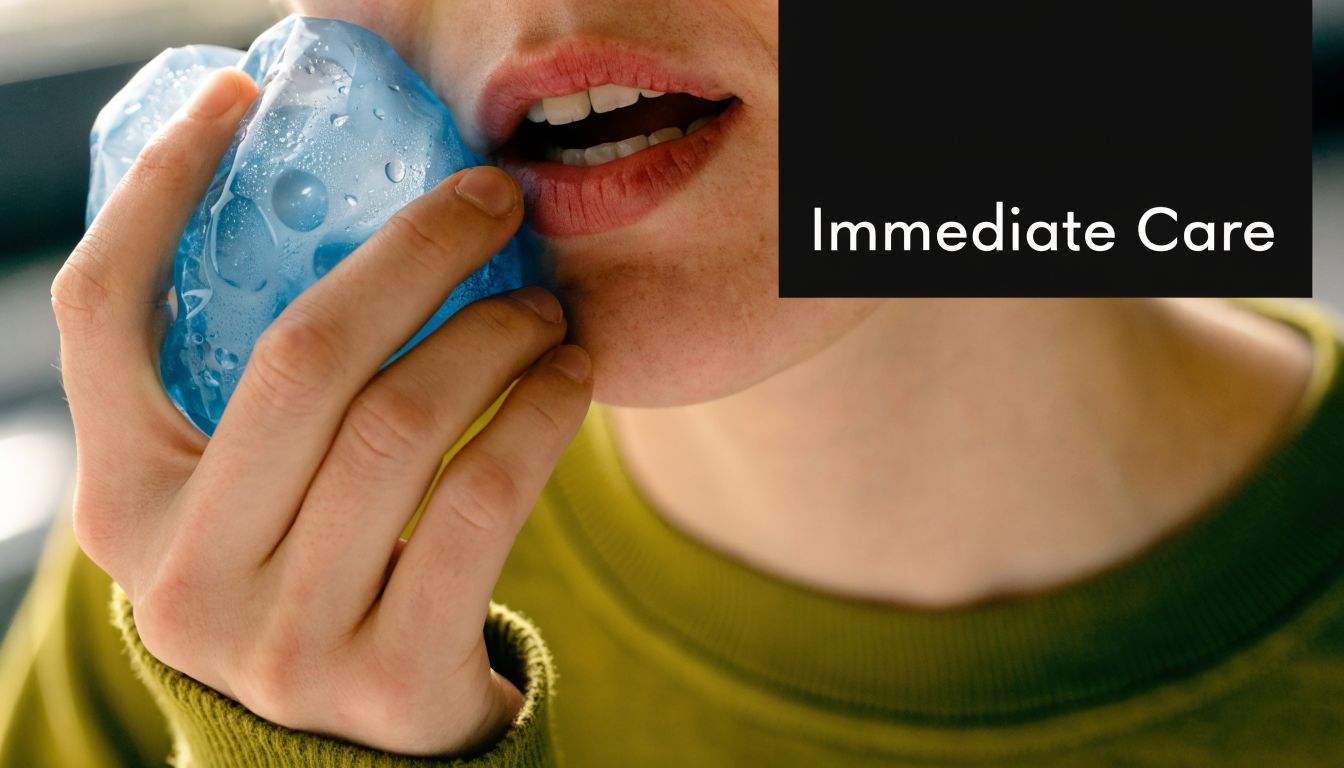
This helps calm swelling and can blunt pain signals. Hold it against the face near the sore area for short intervals.Take an over the counter pain reliever if you can use it safely
Follow the label instructions and your physician’s guidance if you have medical restrictions. This won’t treat the crack, but it can make the situation more manageable until your visit.Chew on the other side, or better yet, don’t chew at all until the tooth is assessed
Soft foods are safer. Soups that aren’t hot, yogurt, eggs, smoothies, and other low-pressure foods are easier on the tooth.If an edge feels sharp, avoid rubbing it with your tongue
That won’t smooth it. It only irritates the area and can make the tooth feel worse.
What not to do
- Don’t test the tooth repeatedly by biting down to check if it still hurts.
- Don’t chew hard foods such as nuts, ice, hard candy, or crusty bread.
- Don’t use the tooth as usual just because the pain fades for a few hours.
- Don’t place aspirin directly on the gum. It can irritate or burn the tissue.
- Don’t ignore temperature sensitivity, especially if cold or heat suddenly triggers a strong response.
Practical rule: If a tooth hurts when you bite, assume it needs protection until a dentist tells you otherwise.
What to eat and drink until your appointment
A simple way to think about it is to avoid anything that creates pressure, stickiness, or temperature shock.
| Safer choices | Avoid for now |
|---|---|
| Soft eggs | Ice |
| Yogurt | Hard candy |
| Oatmeal | Nuts |
| Smoothies that aren’t icy cold | Sticky caramel |
| Pasta | Very hot coffee |
| Soup that has cooled down | Very cold drinks |
If the pain is intense and you need short-term relief ideas while you’re arranging care, this guide on how to stop tooth pain fast may help you stay more comfortable.
Red Flags That Require Emergency Dental Care
Some cracked teeth can wait for a prompt office visit. Others should be treated like a true dental emergency.
The dividing line is whether the crack may be exposing the nerve, allowing bacteria in, or leaving the tooth structurally unstable. When that happens, waiting gets riskier.

Call right away if you have these warning signs
- Severe throbbing pain that doesn’t settle down or quickly returns after pain medicine wears off
- Swelling in the gums, face, or jaw
- A large visible piece of tooth missing
- Pain when you bite that feels sudden and sharp every time
- A bad taste, drainage, or signs of infection
- Fever along with dental pain
- A tooth that feels loose or unstable
- A crack that seems to run toward the gumline
These symptoms don’t always mean the tooth can’t be saved. They do mean you shouldn’t take a wait-and-see approach at home.
Why these signs matter
A deep crack can let bacteria reach the inner part of the tooth. Once the pulp becomes inflamed or infected, the problem usually gets more urgent. A tooth can also weaken enough that a normal chew turns a crack into a split.
That’s the reason I tell patients not to focus only on whether they can “tough it out” overnight. Pain tolerance and actual risk are not the same thing.
If your face is swelling or the tooth feels structurally broken, don't wait for it to declare itself more clearly. It already has.
One smart next step
If your symptoms fit any of the red flags above, contact an emergency dentist the same day. If you’re unsure whether swelling or pressure could mean infection, this page on a tooth abscess emergency can help you understand why immediate care matters.
Your Dental Visit What to Expect at Our Vienna Office
Most patients feel better once they know what the appointment will involve. A cracked tooth evaluation is usually careful, methodical, and more conservative than people expect.
The first part is conversation. I want to know what you felt, when it started, whether the pain happens on biting or on release, whether hot or cold triggers it, and whether the tooth has a filling, crown, or history of grinding. Those details matter because cracks don’t always show up clearly at first glance.
How a cracked tooth is diagnosed
A proper exam usually includes several small steps rather than one dramatic test.
- Visual inspection to look for missing tooth structure, old fillings, wear, or a visible fracture line
- Gentle bite testing to see whether pressure reproduces the pain
- Transillumination, where a bright light helps reveal crack patterns
- Periodontal probing around the tooth to check the gums and supporting structure
- Digital imaging to rule out related problems and look for changes around the root
Sometimes the crack itself is easy to identify. Sometimes the diagnosis depends more on the pattern of symptoms than on a clearly visible line.
Monitoring can be the right decision
Not every cracked tooth needs immediate drilling or root canal treatment. In many cases, a conservative approach is appropriate. In a study of over 2,800 cracked teeth, 64% were initially recommended for monitoring, and 80% of those remained stable without needing further treatment. That finding comes from the evidence summarized earlier in this article.
That matters because good dentistry isn’t about doing the most treatment. It’s about doing the right treatment.
A careful exam should answer two questions. Is the tooth currently in danger, and what is the least invasive way to protect it?
What the visit should feel like
You should expect clear explanations, not pressure. If the crack is minor, treatment may be as simple as smoothing a rough spot or watching the tooth closely. If the crack is more significant, the focus shifts to stabilization so the tooth doesn’t break further.
For many patients, anxiety drops once they understand that diagnosis comes before decisions. A cracked tooth appointment is not automatically a root canal appointment. It’s an information-gathering visit that leads to a treatment plan based on what the tooth needs.
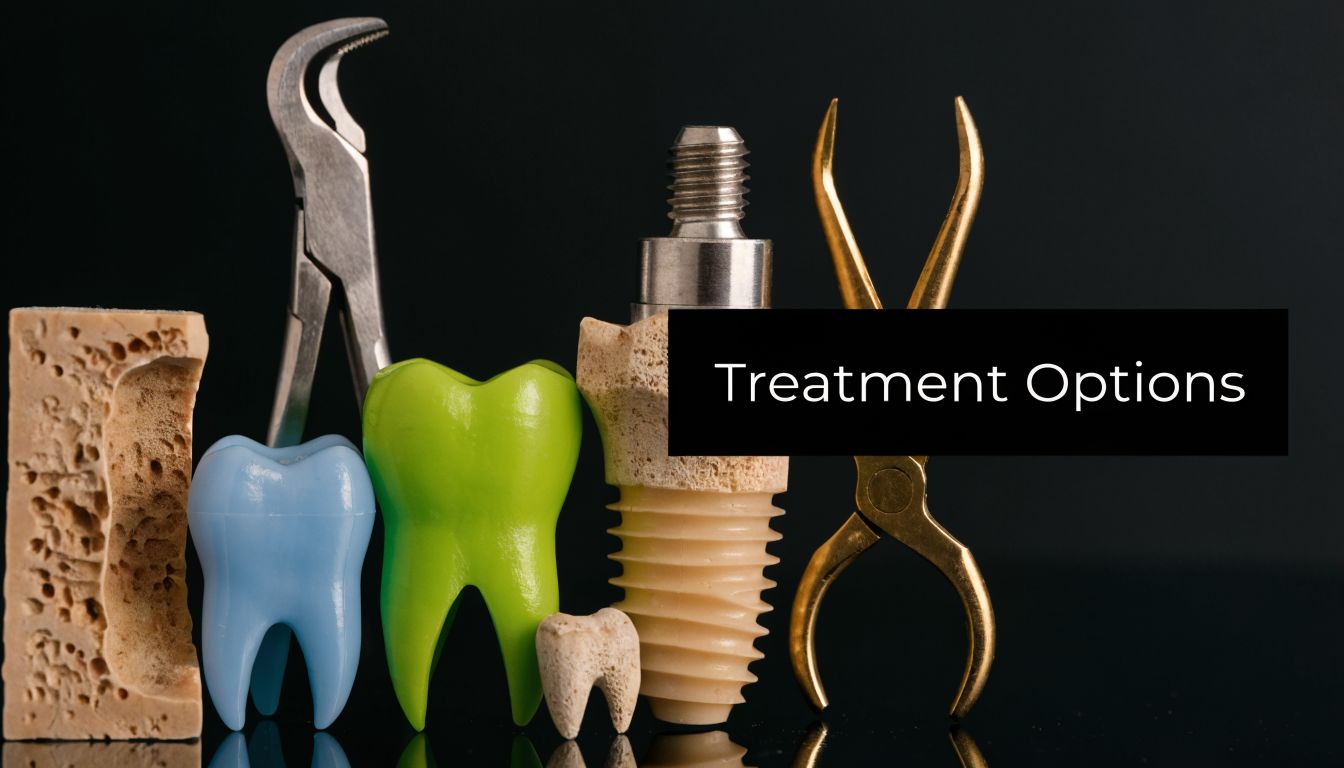
Cracked Tooth Treatment Options from Bonding to Implants
Treatment depends on three things. How deep the crack goes, whether the nerve is involved, and whether the tooth can still be predictably restored. Some teeth need only minor repair. Others need full coverage. A few are too damaged to save and need replacement.
Option one for minor damage
A small chip or very limited crack near the edge of a tooth may be repaired with bonding. In bonding, tooth-colored composite is shaped and polished to restore the form of the tooth and smooth rough areas.
This works best when the damage is shallow and the tooth is still structurally sound. Bonding is conservative, quick, and useful when the goal is to restore shape rather than brace a heavily stressed tooth.
If the damage is minor and mostly cosmetic, bonding of teeth is one common restorative option.
When a crown becomes the better answer
A tooth that has cracked under biting pressure often needs more than a filling. It may need cuspal coverage, which means covering and protecting the parts of the tooth that flex when you chew. That’s where a crown comes in.
A crown acts like a protective shell over the damaged tooth. It helps hold the tooth together and lowers the chance that normal chewing will keep driving the fracture deeper.
This isn’t a small detail. Prompt crowning matters. A landmark study found that cracked teeth treated with root canal therapy but not covered by a crown had only a 20% 2-year survival rate, while teeth that were crowned had a 94% survival rate, according to the American Association of Endodontists review on cracked teeth.
Root canal treatment saves teeth
If the crack has irritated or infected the pulp, the tooth may need a root canal. Patients often arrive worried that this is the worst possible outcome. In reality, root canal treatment is often the procedure that keeps you from losing the tooth.
The goal is to remove inflamed or infected tissue inside the tooth, clean the canals, seal them, and then restore the tooth properly. The root canal solves the inside problem. The final restoration, often a crown, protects the outside.
That combination is why timing matters. A tooth that gets endodontic treatment but never receives its definitive protection remains vulnerable.
When extraction is the right call
Some cracks extend too far below the gumline or leave the tooth split in a way that can’t be predictably repaired. In those cases, extraction may be the most honest and safest recommendation.
A tooth that can’t be restored shouldn’t be held onto just because everyone wishes it could be saved. The trade-off is straightforward. Keeping a non-restorable tooth can mean repeated pain, infection, and a more difficult problem later.
Implant replacement after a non-restorable crack
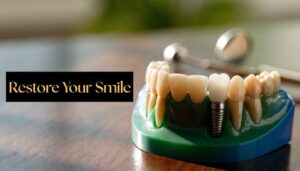
If a cracked tooth has to come out, a dental implant is often the strongest long-term replacement option. An implant replaces the missing tooth root and supports a crown, helping restore function and appearance without relying on neighboring teeth for support.
In one office, that can mean diagnosis, emergency care, root canal coordination, same-day CEREC crown planning, extraction when necessary, and implant replacement. Vienna Implant and Family Dentistry provides those restorative options, including same-day emergency visits, CEREC crowns, implants, and sedation when treatment needs to move quickly.
A simple comparison
| Treatment | Best for | Main advantage | Main limitation |
|---|---|---|---|
| Bonding | Small chips or shallow defects | Conservative and quick | Not enough for major structural cracks |
| Crown | Cracks that weaken chewing surfaces | Protects the tooth from further fracture | Requires enough healthy tooth to support it |
| Root canal plus crown | Crack has affected the pulp | Saves the natural tooth when nerve tissue is involved | Needs prompt final restoration |
| Extraction plus implant | Tooth can't be predictably saved | Replaces a lost tooth with a stable option | Involves removal and replacement rather than preservation |
The best cracked tooth treatment is the one that matches the biology and the mechanics. A tiny cosmetic fix won't rescue a tooth that needs structural protection.
Managing Dental Anxiety and Treatment Costs
Two things stop people from calling. They’re afraid of the procedure, or they’re worried the visit will spiral into expenses they didn’t expect.
Both concerns are real. They also lead people to wait longer than they should, and cracked teeth rarely improve because someone postponed the diagnosis.

Anxiety changes treatment timing
Addressing fear is part of clinical care, not an extra courtesy. For up to 40% of adults with dental anxiety, delaying treatment for a cracked tooth can make the situation much worse, as described in this Cleveland Clinic overview of fractured and cracked teeth.
Sedation can help break that cycle. Nitrous oxide and oral sedation can make it possible for anxious patients to tolerate an exam, a crown preparation, a root canal appointment, or an extraction without the dread that kept them away in the first place.
Cost conversations should be direct
Individuals can handle treatment better than uncertainty. What they dislike is not knowing what comes next.
A good emergency visit should sort out the problem, explain the treatment choices, and give you a clear idea of priorities. Sometimes the immediate need is primarily pain control and stabilization, with the final restoration scheduled after that. Sometimes the tooth can be monitored. Sometimes there are several reasonable paths and the decision depends on your goals, timeline, and budget.
- Ask what needs to happen now versus what can safely be phased.
- Ask whether the tooth is restorable before committing to a bigger sequence.
- Ask about payment options and savings plans if you don’t have insurance.
Fear and cost both feel bigger before the first conversation. Once the diagnosis is clear, most patients feel more in control.
Preventing Future Cracks and Your Next Steps
A cracked tooth can feel abrupt, but the next move is usually simple. Protect the tooth, avoid chewing on it, and get it evaluated before the crack has a chance to deepen.
Prevention also matters, especially if you’ve already had one cracked tooth. The habits that help are practical.
- Skip hard chewing habits like ice, popcorn kernels, hard candy, and using teeth as tools.
- Wear a nightguard if you clench or grind.
- Use a sports mouthguard during contact activities.
- Keep regular dental visits so worn fillings, bite stress, and weakened teeth are caught earlier.
- Don’t ignore small warning signs like biting pain, a rough edge, or sudden cold sensitivity.
If you came here searching for cracked tooth what to do, the main answer is this. Don’t panic, but don’t delay. Cracked teeth often remain treatable when patients act early.
For residents of Vienna, VA and nearby Northern Virginia communities, the next step is to schedule an evaluation, especially if the tooth hurts when you bite, feels unstable, or has changed suddenly.
If your tooth cracked today, call for prompt care and get a clear diagnosis before the damage gets worse.