You may be juggling a child who needs a first checkup, a teen asking about straighter teeth, your own overdue cleaning, and a parent or grandparent dealing with missing teeth. That’s a common family reality in Vienna, VA. Dental needs don’t arrive one at a time, and they rarely stay simple for long.
Good family dentistry makes that easier. Instead of treating kids, adults, and seniors as separate worlds, it creates one clear path for dental care for the whole family. That means prevention when things are healthy, repair when something breaks down, and thoughtful planning when a smile needs more support.
Many families also want one more thing. They want care explained in plain language. They want to know what happens at each age, what counts as urgent, whether implants are too complicated, and whether sedation is safe for anxious patients. Those questions matter, and they deserve calm, practical answers.
A Lifetime of Healthy Smiles Your Family Dental Care Roadmap
A healthy smile usually doesn’t come from one big treatment. It comes from many small decisions made at the right time. That starts earlier than many parents expect, and it continues through every life stage.
Children often learn oral health habits by watching the adults around them. Research summarized by the Colorado Health Institute shows that children whose parents or caregivers had a dental visit are more likely to have good teeth and receive preventive care, and over 50% of children ages 6 to 8 have cavities in baby teeth, with risk twice as high in low-income families, according to the Colorado Health Institute’s family oral health analysis.
Practical rule: If you want your child to feel that dental visits are normal, let them see that your own appointments are a normal part of life too.
Start early and keep the routine simple
For babies and toddlers, the first visit should happen by age one. Parents sometimes wonder if that’s too soon, especially when only a few teeth are visible. It isn’t. Early visits help catch feeding habits, brushing challenges, and early decay before they become painful or expensive problems.
For school-age children, the focus shifts. Dentists watch how the teeth come in, whether brushing is reaching the back molars, and whether extra support like fluoride or sealants may help. This is also when many parents first hear that baby teeth matter more than they assumed. They hold space for adult teeth, support speech, and help children chew comfortably.
Teens enter a different phase. Their needs often include sports protection, cavity prevention around busy schedules, and orthodontic evaluation if teeth or bite alignment are a concern. At this age, motivation can dip, so clear routines matter more than perfect intentions.
What adults and seniors often overlook
Adults tend to ignore small warnings because life gets busy. Bleeding gums, occasional sensitivity, or a rough edge on a filling may not seem urgent. But these are often the signs that routine care is doing exactly what it should do. It catches a manageable issue before it turns into a bigger one.
Older adults may face a different set of concerns. Dry mouth, gum recession, worn dental work, root exposure, dentures, implants, and changes in dexterity can all affect home care. Seniors often need less guesswork and more practical adjustments, such as easier hygiene tools or more frequent monitoring of existing restorations.
For families who want a deeper overview of preventive habits and why regular visits matter, this guide on preventive dental care is a helpful starting point.
Family Dental Care Schedule At A Glance
| Age Group | Key Milestones & Recommended Visits | Common Focus Areas |
|---|---|---|
| Infants and toddlers | First dental visit by age one. Early checkups as teeth erupt. | Feeding habits, cleaning baby teeth, fluoride guidance, cavity prevention |
| Children | Regular exams and cleanings during growth years | Sealants, fluoride, brushing technique, monitoring tooth eruption |
| Teens | Ongoing routine visits through adolescence | Orthodontic evaluation, sports guards, cavity prevention, gum care |
| Adults | Consistent preventive visits and follow-up as needed | Gum health, fillings, crowns, wear from grinding, missing teeth |
| Seniors | Regular exams with attention to changing dental needs | Dry mouth, gum recession, denture care, implant maintenance, chewing comfort |
A roadmap that works in real life
Families often get confused about whether everyone needs the same kind of appointment. They don’t. A young child may need coaching and monitoring. A parent may need a crown. A grandparent may need help deciding between a bridge, a denture, or implants.
That’s why a roadmap matters. It turns oral health from a series of surprises into a steady routine. When each family member gets the right kind of care at the right time, problems are easier to prevent and much easier to fix.
Modern Restorative Dentistry to Repair and Strengthen Teeth
Prevention is the goal, but repair is part of real life. Teeth chip. Fillings wear out. Cavities happen even in careful families. The good news is that restorative dentistry today is more natural-looking, more conservative, and far more comfortable than many people remember.
According to CDC data, untreated dental caries affect 13.2% of children ages 5 to 19, 25.9% of adults ages 20 to 44, and 25.3% of adults ages 45 to 64, which shows how often families need restorative treatment across different stages of life, as reported by the CDC dental health fast facts page.
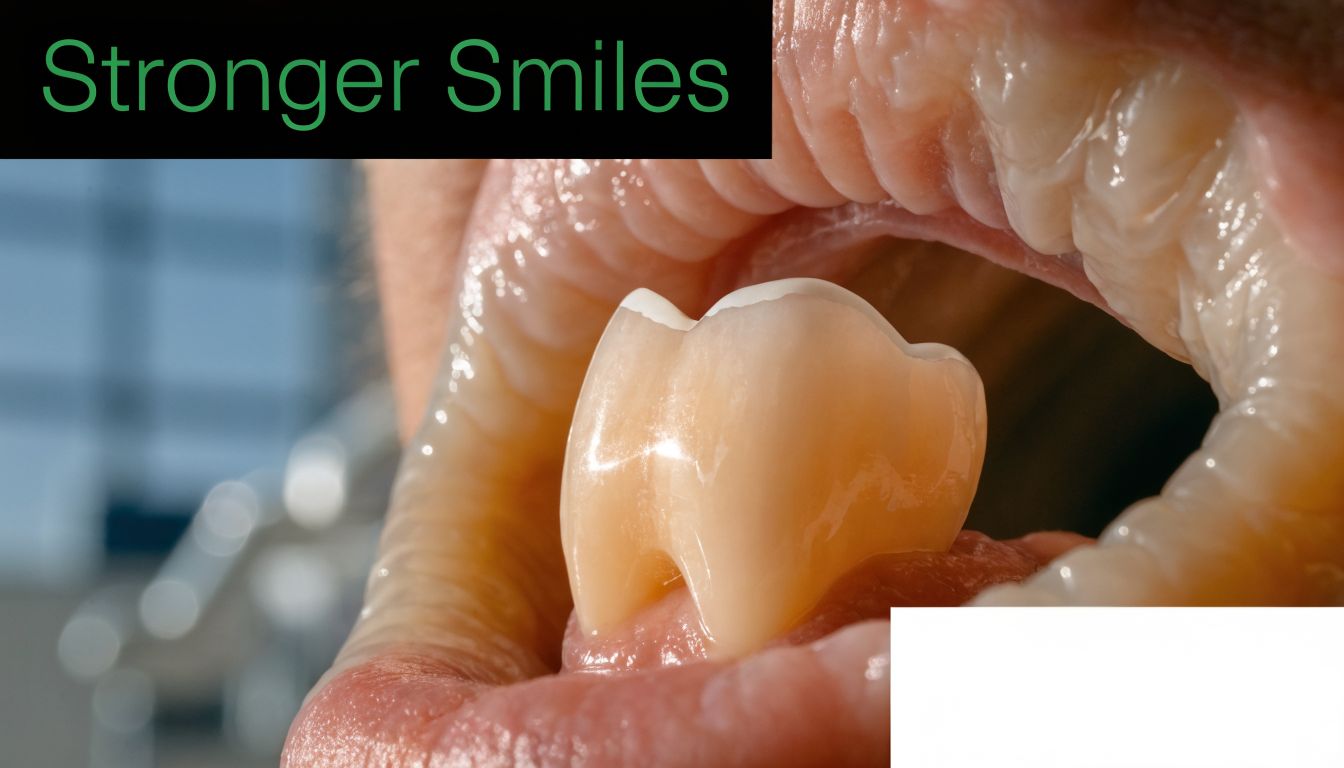
A cavity begins when decay weakens tooth structure. At first, that damage may be small and easy to miss. You might not feel anything. But once the tooth surface breaks down, the tooth can’t rebuild that missing structure on its own. It needs a restoration.
Small damage usually needs a filling
For a cavity or a minor chipped area, a tooth-colored filling is often the right choice. This restores the shape of the tooth and helps seal out food and bacteria. Because the material blends with enamel, the repair usually doesn’t stand out when you smile or talk.
People often ask whether a filling means the whole tooth is weak. Usually, no. It means one area needs support. Once the damaged portion is cleaned out and replaced, the tooth can return to normal function if the remaining structure is healthy.
Bigger cracks and wear may need a crown
A dental crown covers and protects a tooth that has lost too much strength for a filling alone. This is common after a large cavity, a fracture, or years of heavy wear. Think of a crown as a custom cap that fits over the remaining tooth so you can bite comfortably again.
Many patients worry that crowns take too long or require multiple rounds of temporary restorations. That’s why same-day CEREC crowns are so useful. They allow dentists to design and mill a custom crown in the office, which can simplify treatment and avoid the inconvenience of coming back for placement on another day.
A crown doesn’t mean a tooth is beyond saving. In many cases, it means the tooth is being saved before it breaks further.
Bridges still play an important role
When one tooth is missing, a dental bridge can fill the gap by anchoring an artificial tooth to the neighboring teeth. This can restore appearance and chewing function without surgery. For some patients, that’s a reasonable and practical option.
A bridge does have tradeoffs. It depends on the support teeth beside the gap, and those teeth must be prepared to hold the restoration. That’s one reason patients comparing long-term solutions often ask about implants next.
Why prompt repair matters
Restorative care isn’t just about fixing how a tooth looks. It protects how the mouth works. A small untreated cavity can turn into pain. A cracked tooth can split further. A missing tooth can change how you chew and how nearby teeth move over time.
Modern restorative dentistry helps families avoid that domino effect. It gives children, parents, and seniors ways to keep teeth functioning instead of waiting until a problem becomes much harder to solve.
Rebuilding Your Smile with Dental Implants and Reconstruction
When a tooth is missing, people usually notice the gap first. What they don’t always notice is what the gap starts changing. Chewing can shift to one side. Speech may feel different. Nearby teeth can drift. The jawbone in that area can lose stimulation over time.
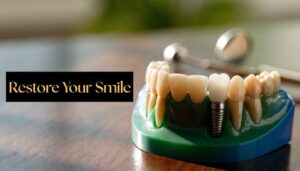
A dental implant is designed to replace the missing tooth from the root up. The easiest way to think of it is this. It acts like an artificial tooth root placed in the jaw, and it supports the visible replacement tooth above the gumline.

What an implant is made of
An implant restoration usually has three parts:
- The implant post sits in the jawbone and serves as the foundation.
- The abutment connects the post to the final tooth replacement.
- The crown is the part you see when you smile.
Patients often expect implants to feel mysterious or highly mechanical. In reality, the concept is straightforward. Replace the root. Then replace the tooth attached to it.
How the process usually works
The first step is a consultation and detailed imaging. That planning stage matters because the dentist needs to evaluate bone support, gum health, bite forces, and the ideal position of the future tooth. Good implant treatment begins long before placement day.
After planning, the implant is placed in the jaw. Then the area needs time to heal and integrate. Once the foundation is stable, the final restoration is attached. Some cases are simple. Others need a broader plan because several teeth are missing or the bite has changed over time.
Here’s where families often get confused. They assume implants are only cosmetic. They’re not. They help restore function. They can make chewing more comfortable, help support clearer speech, and give the jawbone stimulation that a removable replacement doesn’t provide in the same way.
What matters most: An implant isn’t just about filling a space. It’s about rebuilding support where the natural tooth used to be.
When one tooth isn’t the only issue
Some patients come in with more than one concern at once. They may have worn teeth, broken teeth, missing teeth, an unstable bite, or older dental work that no longer fits together well. That’s when full-mouth reconstruction becomes part of the conversation.
This kind of treatment combines restorative planning, bite analysis, and staged care to rebuild a smile in a way that is functional and manageable. For people exploring more complex treatment, this overview of full-mouth reconstruction can clarify what that process involves.
At Vienna Implant and Family Dentistry, that scope of care may include implant planning, same-day crowns, and reconstruction options within one practice setting.
Why families should care about prevention even here
Implants are advanced treatment, but the lesson starts much earlier. Early prevention can reduce the need for major reconstruction later in life. Early childhood caries is the most common chronic disease in U.S. children ages 2 to 5, and biannual fluoride varnish applications can reduce incidence by 37% to 43%, according to the NCBI review of early childhood caries.
That matters because the same family that’s planning a grandparent’s new smile may also be trying to prevent avoidable decay in a toddler. Dental care for the whole family works best when prevention and reconstruction are seen as part of one long timeline, not two separate topics.
A new smile should also feel usable
Individuals generally don’t ask for a more technical smile. They ask for a smile they can use. They want to bite into food without thinking about it. They want to speak without worrying that a denture will shift. They want a smile that feels secure and looks natural.
That’s the core value of implant dentistry. It turns tooth replacement into something more stable, more functional, and easier to live with day after day.
Cosmetic Dentistry for Your Most Confident Smile
A healthy smile and a confident smile usually overlap, but they aren’t always the same thing. Some people have healthy teeth and still hide their smile because of stains, small chips, uneven edges, or crowding. Cosmetic dentistry helps close that gap.
A common example is the parent who finally wants to do something about years of coffee staining before a wedding or work event. Another is the teen or adult who feels self-conscious in photos because one front tooth turns inward. A third is the person whose teeth are healthy but look worn or mismatched from older dental work.
Three common paths to a smile refresh
Some cosmetic concerns are simple. Professional whitening can brighten teeth more evenly than store-bought products and is often the fastest way to improve a smile’s appearance.
Other concerns involve shape, symmetry, or surface flaws. Porcelain veneers can cover several issues at once, including discoloration, minor chips, gaps, and irregular contours. Instead of correcting each flaw separately, veneers can create a more uniform look across the visible front teeth.
For patients bothered by crooked teeth but hesitant about metal braces, Invisalign offers a more discreet way to move teeth. Clear aligners appeal to both teens and adults because they fit more easily into school, work, and social routines.
What patients usually want to know
The first question is often whether cosmetic dentistry will look obvious. Good cosmetic work shouldn’t look artificial or overly uniform. It should fit your face, your bite, and the natural character of your smile.
The second question is whether cosmetic care is only about appearance. It isn’t always. Straighter teeth can be easier to clean. Replacing worn edges can help with function. Updating old restorations can make a smile feel more balanced and comfortable.
A cosmetic treatment plan should start with how you want your smile to feel in daily life, not just how it looks in one photo.
Some families also appreciate that cosmetic care doesn’t have to mean a complete makeover. Sometimes one small change, such as whitening or smoothing a chipped edge, makes a bigger emotional difference than expected.
Ensuring Your Comfort with Sedation and Emergency Dental Care
Fear keeps many people away from the dentist for years. Sometimes it starts with one bad experience. Sometimes it comes from embarrassment about how long it’s been. Sometimes children absorb that fear from the adults around them without anyone meaning to pass it on.
An estimated 36 million Americans avoid dentists due to fear, and family practices offering sedation dentistry can reduce this avoidance by up to 40% in adults, according to the MedAngel discussion of dental anxiety and access to care. That’s one reason comfort isn’t a side issue in family dentistry. It’s central to whether treatment happens at all.

Sedation can make care feel manageable
The word sedation can sound intimidating, especially if you’ve never had it before. For many patients, it provides added help relaxing during treatment. That may be useful for someone with strong anxiety, a sensitive gag reflex, difficulty getting numb, or a longer procedure such as implant work or extensive restorative care.
Patients often ask if sedation means being completely unconscious. Not necessarily. In many family dental settings, oral sedation is used to help patients feel calmer and more comfortable while still being carefully monitored.
Sedation can also change the emotional tone of care for a whole household. If a nervous parent has a calm appointment, children often notice. That can help break the pattern where one person’s fear shapes everyone else’s expectations.
Dental emergencies need fast, clear action
A dental emergency usually feels urgent because it is. Severe tooth pain, a knocked-out tooth, facial swelling, a broken crown, or trauma during sports can disrupt the entire day and create a lot of uncertainty.
The first step is to call a dental office right away and describe what happened. The second step is to avoid making the injury worse. For a broken tooth, save any pieces if you can. For swelling or pain, don’t ignore it and hope it fades. For a knocked-out tooth, time matters.
Families who want a practical guide before an urgent visit can review what to do in a dental emergency.
What helps anxious patients most
Not every anxious patient needs sedation. Many only need a more predictable experience. These factors often help:
- Clear explanations about what will happen and how long it may take
- Pacing that feels manageable, with breaks if needed
- A judgment-free conversation about fear, past experiences, or delayed care
- Same-day help for urgent issues, so pain doesn’t stretch into days of worry
If fear has kept you away, the first goal isn’t perfection. The first goal is getting through one appointment in a way that feels safe and respectful.
Emergency care and sedation belong in the same conversation because both remove barriers. One addresses pain and urgency. The other addresses fear and avoidance. Families need both.
Your Partner for Lifelong Family Dental Health in Vienna
Most families don’t need a different office for every stage of life. They need one dental home that can keep track of changing needs without making care feel fragmented. That’s the practical value of coordinated family dentistry.
A major gap in dental content is guidance on multigenerational oral health coordination. The California Dental Association article on access and coordination notes that 3.5 billion people globally face oral disease, and it highlights a 25% increase in family bundle inquiries post-pandemic for practices that provide under-one-roof efficiency. That reflects what many families already know from experience. Convenience matters, but continuity matters even more.
Why one dental home changes the experience
When care is coordinated, appointments can reflect the pace of family life. A child’s cleaning, a parent’s veneer consultation, and a grandparent’s implant follow-up don’t have to feel like three unrelated projects. They can be planned with the same records, the same communication style, and a clearer understanding of the family’s priorities.
That kind of coordination also reduces confusion. Parents don’t have to re-explain medical history to different offices. Adult patients don’t have to guess whether a cosmetic question should wait until after a restorative visit. Seniors don’t have to deal with separate teams for routine maintenance and more advanced tooth replacement.
What comprehensive family care looks like in practice
A true family-focused approach usually includes a mix of services rather than one narrow specialty. That may include:
- Preventive care for children and adults, such as exams, cleanings, fluoride support, and monitoring for developing problems
- Restorative treatment, including fillings, crowns, bridges, and care for broken or painful teeth
- Implant and reconstruction planning for patients dealing with missing teeth or more complex bite problems
- Cosmetic options like whitening, veneers, and Invisalign for patients who want a more confident smile
- Sedation and emergency access for those who need added comfort or urgent treatment
The important part isn’t just that these services exist. It’s that they connect. A family dentist who sees the full picture can help a patient choose treatment in the right order, with fewer surprises.
Good family dentistry is coordinated dentistry. The care makes more sense when prevention, repair, comfort, and long-term planning all live in the same conversation.
Affordability matters for long-term care
For many households, the hardest part of dental care isn’t understanding what’s needed. It’s figuring out how to keep up with it consistently. That’s especially true for families without dental insurance, families managing multiple treatment needs at once, or adults who’ve postponed care because finances felt uncertain.
That’s where an in-house option like a Smile Savings Plan can help. It gives families another path to budget for ongoing care without relying entirely on traditional insurance. For patients trying to balance a child’s preventive visits with an adult restorative need or an implant consultation, that kind of structure can make treatment feel more approachable.
Transparent payment discussions matter too. Families usually feel more confident when they know what’s urgent, what can be phased, and what choices exist. A thoughtful treatment plan should reduce pressure, not increase it.
The role of technology and communication
Families also benefit from modern tools that simplify care. Digital imaging, same-day CEREC crowns, implant planning technology, and online scheduling aren’t just conveniences. They reduce delays, improve precision, and make treatment easier to fit into a full calendar.
Still, technology alone doesn’t build trust. Clear chairside communication does. Patients want to know why a filling is enough in one case but a crown is smarter in another. They want a plain-language explanation of what an implant involves. They want reassurance that anxiety will be taken seriously, not brushed aside.
That’s especially important in a community setting. People in Vienna, VA and nearby Northern Virginia neighborhoods often aren’t looking for a rushed transaction. They’re looking for a long-term relationship with a dental team that understands family life, changing budgets, and the way oral health evolves over time.
A roadmap that grows with your family
Dental care for the whole family works best when it feels connected from start to finish. A toddler’s first exam, a teen’s Invisalign questions, an adult’s cracked tooth, and a grandparent’s new implant-supported smile all belong on the same continuum. They don’t need separate philosophies. They need one thoughtful roadmap.
Vienna Implant and Family Dentistry is located at 112 Pleasant St. NW, Suite H, Vienna, VA 22180, serving patients in Vienna, VA and surrounding communities in Northern Virginia. If your family is looking for one place to manage preventive care, restorative treatment, cosmetic goals, implants, or urgent dental needs, scheduling a consultation is the next practical step.
If you’re ready for a more coordinated approach, contact Vienna Implant and Family Dentistry to schedule a visit and build a plan that fits every stage of your family’s smile.